Saturday, July 15, 2006

Disguised Colonialism

For years now, Israel has been undermining and destroying the very Palestinian institutions of state that could bring about the stability that is required for peace. But whenever something goes wrong, whenever a Palestinian “terrorist” commits an act of violence against the Israeli state, Jerusalem points an accusing finger at whoever happens to be at the head of the ramshackle Palestinian “state” at the time. The blame takes two forms: either the Palestinian authority organized, facilitated, or condoned the attack, or it knew about it but didn’t do anything to stop it. Either way, Israel’s response has traditionally been to further erode and weaken the Palestinian authorities’ hold on the semi-autonomous state. It’s a little like blaming your neighborhood police station for every crime that is committed. And oh, as a consequence of failure to prevent every crime, we’ll destroy two of your patrol cars and cut your force by one third—that way you’ll do a better job protecting us. Or, to use another example of invidious accusation, it’s not unlike the Pentagon bombing the hell out of Canada whenever it suspects that its northern neighbor isn’t doing enough in the “war on terrorism.” Bomb the airport in Ottawa; blow up a couple of bridges; leave Petro Canada stations in flames; attack Rogers transmitters; and expect Canada to do a better job combating home-grown terrorism. And piss off the majority of Canadians in the process. Kill dozens of them, too. That’ll work.

The same fate is now being reserved for Lebanon, with Washington’s assistance. Following the February 14, 2005, assassination of Lebanese Prime Minister Rafic Hariri, pressure was brought to bear on Syria to remove its military and intelligence officers from within Lebanese territory. Out! Leave Lebanon alone, please. No more influence, no more meddling. Thanks for ending the civil war there in the eighties, but now get the hell out, and don’t expect to be thanked for it. In place, a fledging anti-Syrian government came into power while international pressure continued on Hezbollah to lay down its arms. Given the weakness of the Lebanese government, along with no small amount of popular support for the group within Lebanon, there was no chance that a Hezbollah disarmament and demobilization would ever take place.

The U.S. and Israel are now blaming Syria for backing the cross-border raid on Wednesday (or failing to prevent it), and pressure is being put on its government to rein in Hezbollah. But… wasn’t Syria kicked out of the very territory Hezbollah operates in? Perhaps Israelis and Americans both failed geography in high school. How can you blame a tenant who moved out more than a year ago for a fire that broke out in the apartment last week? There is no need for a Syrian presence in Lebanon, and there isn't one substantial enough to speak of. Hezbollah is proficient and motivated enough to carry its own weight.
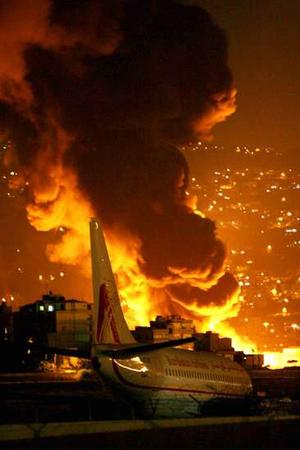
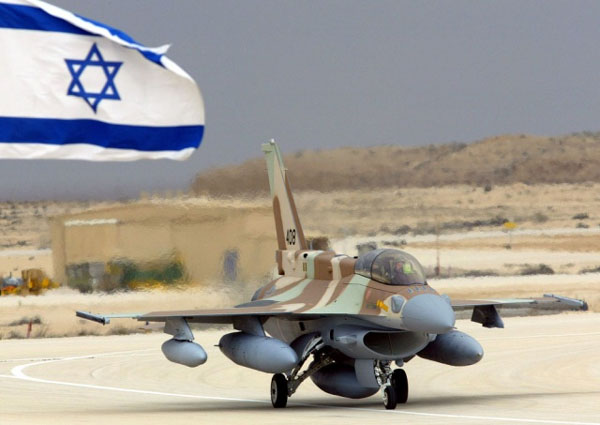
Furthermore, by repeatedly attacking Beirut International Airport (all flights canceled due to unusual atmospheric activity, as seen on the left), destroying roads, bridges, communication towers, gas stations and virtually isolating the country from the rest of the world—at great economic cost to the victim—Israel is weakening the very government that it blames for being unable to check Hezbollah’s power. The result is that Beirut now finds itself between a rock and a hard place: confront Hezbollah with very poor chances of success but the assurance of a costly civil war, or do nothing and get pounded by the strongest military in the region, which is backed by the most powerful military since the first monkey threw a rock at another monkey. Israel knows that, and so does the U.S.

In the end, Jerusalem and Washington are playing a dishonest game, one that undermines the very institutions that could generate the stability that is conducive to peace. Of course, this very instability can then be used to justify military incursions—witness the Gaza Strip, and now parts of Lebanon. It doesn’t matter that the failed or failing states are monsters that were created by the powerful members in the first place. It opens the doors. Ultimately, this is colonialism in everything but name.

Israel has a right to protect itself, chime Bush and his northern lap-dog. And what if Lebanon, if it had an army to speak of, were to retaliate in turn to protect itself against its neighbor’s aggression? Oh, but that would be terrorism, and surely Syria and Iran would have something to do with it. The situation is so skewed everything risks sliding into madness. Expect more of the same, if not escalation, for a while.

Friday, July 14, 2006

Welcome to Grozny, Beirut

As Israel intensified its savage lashing at Lebanon—operations which have now resulted in the deaths of more than 60 Lebanese civilians, the destruction of mobile phone antennas and fuel tanks, record-high oil prices and economic hardship in both Israel and Lebanon—the United States blocked an Arab-backed resolution, proposed today at the United Nations, demanding that Israel cease its aggression against Lebanon.

Meanwhile, during a visit to Germany U.S. President Bush defended Israel’s right to defend itself, a right that, to paraphrase Israel's Justice Minister, is proportional to Russian actions in Chechnya, or the U.S.’s in Iraq and Afghanistan. Wait a second—proportional to Russia’s actions in Chechnya? Hasn’t the entire international community, with the notable exception of the U.S., condemned the manner in which Russia has dealt with the breakaway province? Wasn’t Grozny leveled by the Russian military? And wasn’t the invasion of Iraq a stretch of legal recourse to war based on dishonest manipulation of intelligence with a strong dose of fear-mongering and opportunism? False analogies aside, one cannot equate the kidnapping of two soldiers, a cross-border skirmish, or even ineffective rocket attacks against an illegal settlement, with the bombing of embassies or the destruction of buildings in downtown Manhattan. But once again Israel is defending its actions by cynically blurring the lines between its regional conflict and the so-called “war on terror.” If I were Palestinian or Lebanese, I certainly wouldn’t take comfort in Israel’s assessment of its right to proportionality.

By warning Syria and Iran yesterday, the White House added unnecessary complexity to an already complex situation. The result? Today Iran warned that an attack against Syria would be construed as an attack against the entire Middle East. Additionally, by blocking today’s resolution at the U.N., the U.S. has once again demonstrated that when it comes to Israel Washington is a dishonest broker at best, a proposition that is sure to defeat any chance that the ongoing Iranian nuclear impasse will be brought to a peaceful conclusion. Such behavior is not only self-defeating, it almost reeks of a conspiracy to ensure that the Iran issue cannot be resolved by peaceful means.

By dint of confusing Israel's troubles with the partly global al-Qaeda insurrection and Russia's handling of separatism, events in the Middle East have become more connected than ever. Despite the fact that the organization has more immediate aims, al-Qaeda cannot be entirely dissociated from what’s going on in Palestine. In fact, al-Qaedaism wouldn’t have the support that it currently has were it not for Israel’s inhumane treatment of Palestinians and Washington’s support thereto.

Everything therefore seems connected. So polarized have perceptions in the Middle East become that a house leveled in Gaza, or a civilian killed in Beirut, are now part of the same chapter as Iran’s defiance of the international community, or its support for Hezbollah. More than ever, the Middle East is turning into a system wherein events in one corner inexorably impact upon the the entire system. Al-Qaeda feeds upon that. After all, false analogies aren't only useful to Israel and the U.S. All can be used as "proof" that the "West" is at war against Lebanon, Iraq, Afghanistan, Iran, the Palestinians. Against Islam.

Meanwhile, a lap dog if ever there was one, Canadian Prime Minister Stephen Harper fully backed Israel and the U.S., stating that the blame for the current crisis lay fully with those who kidnapped the two soldiers and that Israel’s response “has been measured.” Perhaps, rather than visiting St. Petersburg for the G8 Summit, Mr. Harper should go to Beirut to see what Israel’s “measured” response feels like. Oh, sorry, he couldn’t fly there, as the airport’s not in the best of shape at the moment—from Jerusalem, with love.

Thursday, July 13, 2006

Semantics and “Acts of War”

For some reason, the kidnapping of Israeli soldiers seems to strike a raw nerve in Jerusalem. Once again, such an act—this time of two soldiers by the Lebanese Hezbollah—has led to Israeli retaliation that, as France has already stated, is entirely disproportionate and which risks throwing the entire Levant into chaos. Calling the kidnapping an “act of war,” Israel responded by bombing areas in Southern Lebanon, bridges, the headquarters of Hezbollah-owned al-Manar television and, shockingly, two runways at Beirut International Airport (BIA), Lebanon’s only international airport. At least 36 Lebanese have been killed in the attacks. Israel has also imposed a naval blockade on Lebanon. Communication between Beirut and the southern part of the country has been disrupted by the attacks, and flights to Beirut have been diverted to Cyprus.

The paradoxical thing is that Israel did not characterize the killing of four and the injuring of two of its soldiers during heavy clashes yesterday (four others died when the tank they were in rode on a land mine), or the multiple rockets that Hezbollah fired into the coastal city of Nahariya in retaliation for Israel's bombings, killing one and injuring dozens, as acts of war. The “act of war,” according to Jerusalem, lies in the soldiers’ capture.

Oddly, the spokesman for the White House National Security Council stated today that it held Syria and Iran responsible for the attacks, as if Hezbollah were incapable of independent action. Comments such as these nevertheless add to the already real danger that the conflict will become internationalized.

Now, admittedly, Hezbollah does not make the best of neighbors, and the clashes, along with the kidnapping, appear to have been timed to coincide with ongoing Israeli incursions in Gaza, where yesterday aircraft launched missiles into the Palestinian foreign ministry building. In other words, it would not be surprising if behind closed doors some Palestinian elements had met with Hezbollah and decided that the time was ripe to stretch Israel’s powerful military by opening up a new front. After all, the Hezbollah/Palestinian nexus is no secret.

But once again, irrespective of the usefulness of and justification for yesterday’s attacks against Israel, and now the kidnappings, Jerusalem is punishing a huge swathe of a population for the actions of the few. Not only have innocent individuals been killed in the 40-odd targets that were attacked by Israel, but the economic and social disruptions resulting from the bombing of a civilian airport (which Israel claims is a central hub for the transfer of weapons) and the naval embargo are orders of magnitude greater than the severity of two kidnappings or the death of eight Israeli soldiers. No matter how one looks at it, these actions are overwhelmingly disproportionate. Furthermore, one would wonder what is to be gained by bombing a TV station, the latter being controlled by Hezbollah notwithstanding.

In both Gaza and now Lebanon, Israel is engaged in military operations against organizations that, despite their having come to power through elections, it refuses to see as anything other than terrorist. The problem with this obsessively unyielding view is that by bombing Hamas and Hezbollah, Israel is attacking entities and officials who were elected into politics by large constituent bases. Moreover, Israel’s disproportionate responses, which cannot but result in mass suffering of individuals—many of whom neither support nor condone Hamas’ and Hezbollah’s actions, I must add—is alienating large portions of those populations. Finally, the targeting of symbolic buildings—Palestine’s foreign affairs ministry, which in a way stands for Palestinians’ long-standing aspiration for a country of their own, and BIA, which was rebuilt after years of civil war and had been renamed in honor of Lebanese Prime Minister Rafic Hariri, who was assassinated in February last year—can only exacerbate the hatred.

Israel is lashing out left and right without any apparent logic or long-term view. While the invasion of foreign airspace and the subsequent bombing of a variety of targets is a safe and effective means to demonstrate one’s undisputable military superiority, the advantages of doing so are hard to imagine. If Israel and its regional opponents are intent on continuing their useless game of tit-for-tat, then the Jewish state should respond with kidnappings of its own. To leap from snatching soldiers to bombing civilian targets and imposing an embargo affecting thousands of people is just too strong an escalation, which in turn will surely invite acts in kind, as was the case today, with Hezbollah's rocket attacks.

Or perhaps there is a logic to Israel’s response. Perhaps it just doesn’t want to take a close look at the hundreds of Lebanese and Palestinians it currently holds in its jails, many unjustly. As the strategy behind Hamas’ and Hezbollah’s kidnappings of Israeli soldiers is to secure the release of those individuals in a prisoner exchange, there might be a desire in Jerusalem to avoid the issue. Its refusal to consider the prisoner exchange forces it into a corner. It cannot not do anything, for this would be interpreted as a sign of weakness. With exchange off the table, the only option left for Israel is to bomb.

Wednesday, July 12, 2006

Bilis Heads for Taiwan

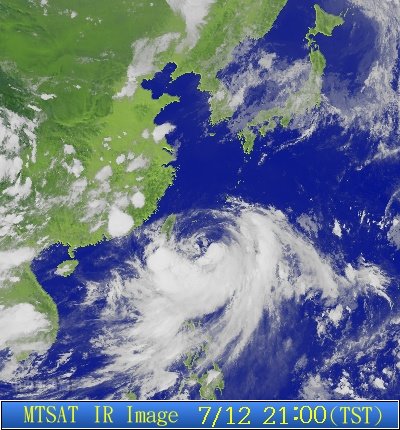
After a solid two weeks of beautiful weather, Taiwan is about to be hit by its fourth typhoon of the year, and at a 100-kilometer radius, Bilis (see mug shot below) looks like it’ll be the biggest yet. Still out in the Philippine Sea, the severe tropical storm, with winds reaching 25 meters per second (or 90 km/h), should hit us sometime tomorrow or Friday. Already, as it swirls towards Taiwan, Bilis has claimed four lives in the Philippines.

Despite the fact that the typhoon hasn’t reached us yet, the past 24 hours have been a schizophrenic blend of sudden extreme downpours and bright sunshine. One minute it’s clear blue skies, the next clouds appear almost spontaneously and down comes the milk-like rain, straight, diagonal, but always torrential. Then, as quickly as it came, it stops, and the umbrellas collectively close like flowers upon sunset. Minutes later, a new cloud arrives, the skies start sobbing anew, and the colorful umbrellas reopen in a frenzy as metallic roofs tap to the cadence of a million machine guns.

In August 2000, a similarly-named super-typhoon (a far more severe category 5, with winds of 140 km/h) caused twenty deaths in Taiwan. When a tropical storm hits, the operative word is: stay indoors, do not venture outside. Despite its being a smaller version of its namesake, Bilis Redux, as I’ll call the current one, risks interrupting exams scheduled for Friday. According to the media, as many as 170,000 Taiwanese students could be affected. Already, businesses are preparing for a typhoon day, meaning that everything will be closed. People who, prior to the arrival of the tropical storm, had already filed requests for Friday off are hurriedly pulling them back, knowing fully that Nature herself will likely be imposing rest on that very same day. In preparation for the almost inevitable hit, people are stocking up on water and emergency food—which thankfully the ubiquitous 7-Elevens around the city have plenty of. Water and electricity shortages usually accompany the severest of storms. It remains to be seen if this Bilis will visit that discomfort upon us.

As Israel bombs Hamas and Hezbollah, bombs go off in Baghdad and India, and North Korea plays bad neighbor, Nature grumbles and inhales deeply before she sets off to remind us, yet again, who’s boss in this world.

Sunday, July 09, 2006

Up and Mostly Down the River in Wu Lai


Given the fifty hours that I had spent last week in front of a word processor editing my book, something a little more physical was in order this weekend, and we found just what I needed. So with a former co-worker at the magazines where I work as editor and some of his friends, we set out, by this beautiful day following a near-miss typhoon, to Wu Lai, a location known for its nature and hot springs.

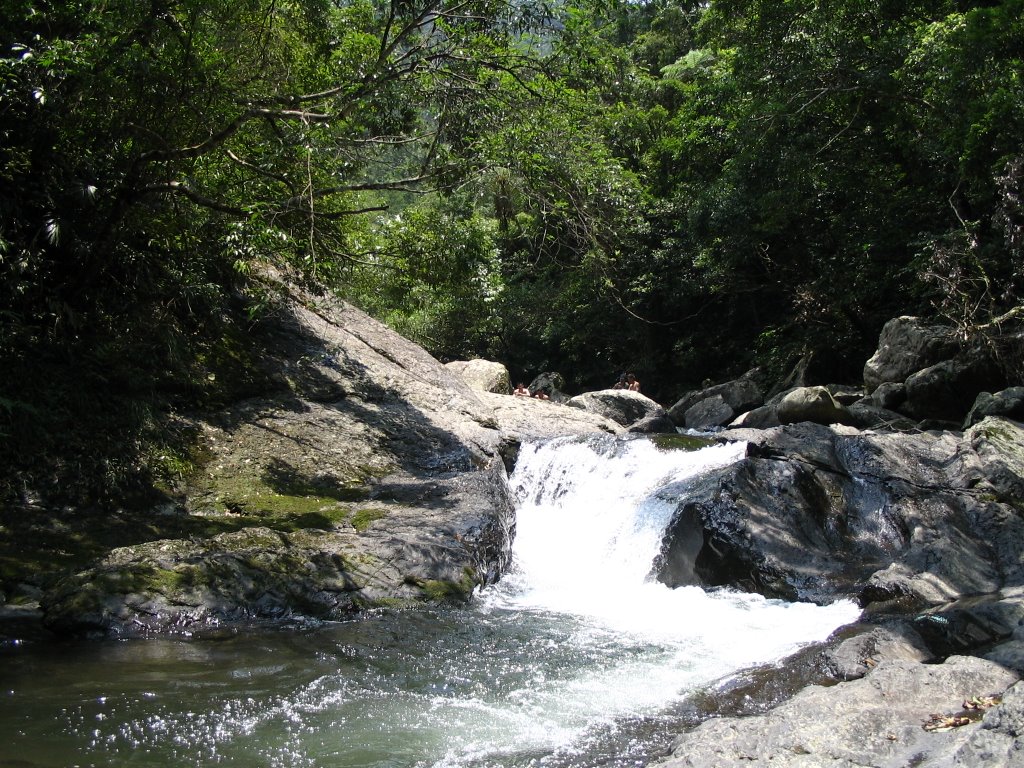
After a MRT ride and a crammed (there were six of us in the small Toyota Corolla) drive up and down the mountainous region, we finally reached our destination. We paid a whooping NT 100 for an old man, evidently an Atayal tribesman, to look over our car, crossed the brand-new bright-red bridge (seen here on the left), trekked for a while in lush nature, then went down to the river for river tracing and good old, refreshing fun in the water, what with the naturally-carved slides and pools. Though the first slide we went to flipped us over (Carol: there is no danger at all), the water level was a bit low and therefore it did not provide the excitement that we had been led to expect. The second one, however, offered a descent which lasted a solid fiver seconds and brought us at great speed into a natural pool. From 10:30am until around 16:00, we jumped from rock to rock, defied the strong currents, and occasionally ran into colorful spiders—usually a tell-tale sign of their being poisonous, but didn’t see any snakes, which also make the region home.

This is a beautiful area, filled with life from monkeys (it was too hot for them to come out today), to a tremendous abundance of brightly-colored butterflies (big blue ones congregating by the dozens by a rock, smaller yellow ones who invariably were attracted to all things yellow, including Chris’s bright yellow boots and water bottle). All around us dragonflies zipped and droned by, seemingly joining in the fun.

Minor bruises and sunburns notwithstanding, the seven of us—two Canadians, one Taiwanese, an Iranian, a German, an American and a Brit—had an absolutely fantastic day. Returning to our point of origin via the river, a hazardous but altogether enjoyable mix of rock-hopping to swimming, which took us a little more than an hour, we encountered fishermen and small families playing in the safer areas of the river. Unfortunately, the last ten minutes of this swim in paradise were marred by remnants of lunches and litter scattered along the river, an eyesore if ever there was one in such an otherwise pristine environment. Technically, having barbecues along the river is illegal (as is fishing, by the way), but people don’t really seem to care for those rules.

I provide a link to my photo albums in the “links” section, where, among other things, you will find other pictures taken today during this fantastic outing.

Body hurting all over and lots of sun under the skin, I hereby sign off for tonight.

Thursday, July 06, 2006

Eighty-Five Thousand Words Later

The past four days have proven extremely productive. In fact, after spending forty-one hours (11.5 today alone) of restless editing, rewriting, refashioning, deleting and moving stuff around, the manuscript is now completed. I have reread the whole thing twice, and will do so again from a printout—next week. It stands at 85,000 words, or about 250 pages. This represents a journey of eleven months—or forty, if one includes the entire experience that I write about in my book.

The whole endeavor represents a personal journey, and in the past few days I have gone through a series of emotions ranging from the pain of wounds that I thought had healed but that I now realize haven’t completely, to anger, rage, and a sense of alarm that something dreadful is being done to our country without us knowing it. All in all, the experience of writing this book has been cathartic, is undeniably part of my healing process, and now that it is complete I have a better understanding of what it has all meant for me. There is nothing like the act of writing to consolidate and clarify one’s thoughts. As long as they remain in the head, ideas and opinions are shapeless, elusive. Writing, rereading and editing them is part of a long discussion that the author has with himself. I have learned a lot about myself by writing this book, and that alone makes the hundreds of hours that I have spent researching and writing it altogether worthwhile.

So, one more reading and that stage of the journey will have been completed. The next one will be to find a publisher daring enough to make this work public. There’s still ways to go, some hoops to jump through, but the objective is now definitely within sight somewhere over the horizon.

Monday, July 03, 2006

The Closest Thing to a Bona Fide Summer Break

The Far-Eastern Sweet Potato will be slowing down a little for the next two weeks—though I promise that things aren’t grinding to a complete halt. It is not a hiatus, but a temporary shift to a slower gear. I am in the last stages of editing a non-fiction book I have been working on for almost a year now; in fact, I took two weeks off from my regular job so that I could work full-time on, and finally complete, this project. Today was the first day I did so, and I am pleased to report that I made good progress. While most of the manuscript is already written, I still have about 100 pages, or 37,000 words, to edit. (Readers who are not familiar with the project I am referring to might be interested to learn that it is specifically about one subject that I have frequently written about on this blog.)

For those among you who haven’t been able to keep up with my writing, this should provide the opportunity, if you so desire, to catch up.

Thank you for your understanding, and be assured that over the next two weeks I will do my best to provide the occasional piece.

Saturday, July 01, 2006

Happy Birthday from Afar

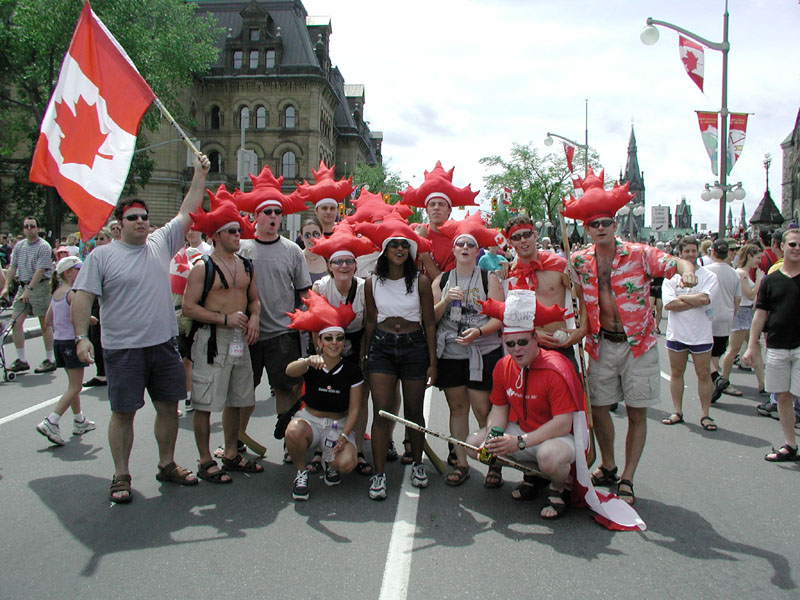
Today marks the 31st time that I celebrate the birth of the wonderful country I had the immense fortune of being born into. Unlike previous years, however, where I would gather with friends in Quebec City, Montreal, or on Parliament Hill in Ottawa to watch the fireworks and drink Canadian beer (once I had reached legal drinking age, needless to say), the celebration this year is much more sober, consisting of Japanese Kirin Ichiban beer (nothing says happy birthday Canada like Japanese beer) and a quiet evening at home. And, oh, I also happen to be 9,579 kilometers away from the point in Canada closest to Taiwan.

I have been away from Canada for seven months now, and over that period I have come to understand what it is that the many exiled thinkers—from Edward W. Said to V.S. Naipaul—meant when they wrote about the effect of exile on the individual. Distance from one’s home and immersion into another culture does, indeed, alter the manner in which one perceives the world he issues from.

Of course, my experience of exile probably differs by orders of magnitude from that of an individual who goes from, say, Kinshasa, or Kabul, to Toronto or London. For them, the contrast which results from a new, safer life underscores how ailing their country of origin really is. To mention Said again, though he built a new life for himself in New York City teaching comparative literature at Colombia University, the pull of his origins as a Palestinian always remained a powerful one, and the differences between his place of birth and the new world he had adopted were substantial ones. One was a world torn by conflict, displacement, injustice, poverty and instability; the other, a world of plenty and opportunity.

So it would be dishonest on my part to claim that the experience of exile has been on the same level as that of Said and Naipaul, who moved from Trinidad and Tobago to London. After all, I have relocated from a place of tremendous richness and opportunity, Canada, to a state (in everything but in name) whose young democracy is a healthy one and where opportunities are rife. True, there is always the distant threat of conflict across the Taiwan Strait, or the more immediate possibility that an earthquake or a typhoon will strike, but all in all, my exile has landed me in a modern state where one lacks of absolutely nothing.

All that being said, geographical and emotional distance from one’s country, regardless of the nature of the point of origin and that of arrival, still fundamentally changes how one perceives his birthplace. Ironically, my time in Taiwan has resulted in a somewhat stronger sense of nationalism (I bristle whenever I read a reference to the United States as “America”), and a belief in the importance of the Canadian experiment. More than ever, I am cognizant of the stark differences that exist between Canada and its mighty neighbor to the south, and how crucial it is that those differences be maintained. There is no homogenous “West,” in the sense that one often encounters in political discourse. Far too often, I have heard so-called political experts complain about how Canadians always come up short when they attempt to explain what it is that makes them different from Americans, and from this conclude that such failure must therefore mean that we are alike. Canada differs in many ways, from its political system to the way it engages the world to how it does a balancing act, however imperfect and costly, between socialism and capitalism.

Which brings me to the growing sense of alarm that I have experienced since I left Canada behind: namely, how, thanks to Canada’s involvement in the U.S.-led “war on terrorism,” those societal and political differences have been narrowing. It doesn’t help that in Stephen Harper Canadians have elected a leader who never hid his intentions of getting into bed with his counterparts south of the border. Even more so since the arrest, in early June, of the seventeen individuals who were allegedly planning a terrorist attack within Canada, the gap that distinguishes the Canadian experiment from the American one has been closing; more than ever, Canadian authorities, from the intelligence services to the Crown, have been behaving like those in the United States: access of the media to such items as government decision-making, the repatriation of Canadian soldiers who fell in Afghanistan, and the court proceedings of the Group of Seventeen has been curtailed to a dangerous level. Individual’s rights have been under threat, and the same type of crapulous hypocrisy and disregard for justice that has marked the Bush administration now seems to be rearing its ugly head in Ottawa. Moreover, Canadian soldiers in and around Kandahar seem to have departed from the original mission and are now, without the public’s approval or understanding of what it means to do so, engaging in what is virtually war-making, something that originally had only been the remit of U.S. soldiers.

From the benefit of my current distance, it has become increasingly obvious that Canada is losing some of its hard-earned and by no means settled identity because, since 9/11, it has been forced into, and has failed to oppose, a war that isn’t his. From its emerging type of institutional behavior to its view of the world, the Canadian government has been using the U.S.’s template as a model. In a way, Canadian authorities have failed to recognize what I stated above, that there is no “West” but rather a number of different countries located in this vague geographical area called the West. By failing to do so, our leaders have made it easy from themselves to believe such falsehoods as al Qaeda’s purported hatred of that which defines Western societies—that is, democracy, freedom of expression, a capitalist system, equal rights for women and homosexuals (if only), and so on. Systems that believe they are under siege because of those values will inevitably adopt similar means by which to defend themselves, hence the growing resemblance in how Canada has been reacting to the perceived threat of terrorism on its soil. They hate “us,” claim the powers that be—Americans, Brits, Canadians—so the only option must be to rally behind the flag of Freedom through alliances, whether that be in intelligence sharing or war-making.

But Canada is not like the U.S., and if it is hated by some adherents to the al Qaeda ideology it certainly is not because Canada is part of the so-called West. In fact, up to recently, Canada probably didn’t register much on the terror map. Only by becoming more like what it is that al Qaeda followers despise—a United States that they perceive to be assailing what they love most, namely their religion and their land—will Canada become a likelier target for terrorism. To them, Canadian war-making in distant Afghanistan cannot be seen as peacemaking or nation building: it is war, and war fought on U.S. terms for U.S. aims.

I cannot emphasize enough the fact that despite everything the leaderships in Washington, Ottawa and London claim, bin Laden and his followers do not hate us for who or what we are; they hate us (or don’t) for what we do, our actions. In its pursuit of alignment with Washington, which manifests itself in such incidents as how Canadian authorities have dealt with the Group of Seventeen to the increasingly belligerent activities of our soldiers in Afghanistan, Canada has only made it more difficult for the angry individuals in the Muslim world to see the distinctions between Canada and the U.S. If, at one point and as a result of its actions, Canada comes to be seen as a true participant in the U.S. crusade against the Muslim world, then and only then can we seriously start thinking about the possibility that terror will be visited on the streets of Toronto, Ottawa, Montreal, or Vancouver.

The Canadian experiment, with its rich diversity of peoples and ideas and ideals, immense resources both human and natural, and great fortunes of geography, stands as a precious example to the world. In all its imperfection, it is something that is to be cherished and which we must continue to improve upon. There are signs, sadly, that many of the differences that make this distinct societal and political entity so valuable are under attack—and the damage is not being caused by explosives going off in our public transit systems or inside our commercial buildings. No; that damage is being caused by something much more insidious: it comes from inside, from a failure to understand what it is that makes us different and, consequently, why we should be doing our utmost to protect that fragile gift. Who we bring to power, and what we allow our government to do, in our collective name, for the sake of security, is ultimately how we define who we are.

So, on that note, happy birthday from afar, Canada, and may the next year bring you many opportunities to further define who and what you are.

Friday, June 30, 2006

Simplifying the “Thank You” Guidelines

The U.S. House of Representatives adopted a measure on Wednesday that, should it subsequently be passed by the Senate, will grant Taiwan the diplomatic recognition that a normal, democratic state deserves.

Back in 2001, the nascent Bush government had established “guidelines” for how U.S. officials could deal with their counterparts in Taipei. Among other things, the guidelines banned visits by Taiwanese diplomats from visiting the White House and the State Department, prevented U.S. officials from attending 10/10 celebrations (the birth of the Chinese Republic on October 10, 1911) and made it illegal for senior U.S. military officials to visit Taiwan.

Oh, and the guidelines even had provisions on how government officials were to thank each other in diplomatic notes. One thank you too many, or a more heartfelt one than was permissible, and Beijing was sure to be offended.

In case you hadn’t figured it out already, the above guidelines were mostly, if not entirely, established so as to appease the powers in Beijing.

But the whole affair had an aura of falsehood round it; more than that, it made U.S. claims of being a friend and promoter of democracy ring hollow. How could Washington impose such restrictions on how it deals with one of the strongest, most vibrant democracies in East Asia, when it routinely deals with unsavory regimes the world over, from Uzbekistan’s to Saudi Arabia’s, for example, or even Beijing itself, whose unelected leadership has been treated to the red carpet on more than one occasion. More than just being counterproductive and hypocritical, this measure had managed, back in May, to humiliate Taiwanese President Chen Shui-bian (陳水扁) by denying him landing rights as he was transiting through the U.S. on a return flight from South America. While coverage of this even must have proven entertaining for the officials in Beijing, the ordeal was nothing but conduct unbecoming for the elected representative of a country that has quite successfully experimented with democracy.

Another irony of the guideline was that it needlessly complicated diplomatic exchanges with one side of a very complex and potentially explosive political conflict, that of the Taiwan Strait. To a lesser degree, this arrangement was akin to the U.S.’s position vis-à-vis the Israelis and the Palestinians, a relationship so skewed as to make the term “honest broker” look like the mother of all euphemisms. And given the U.S. military’s responsibilities towards Taiwan, as per Oplan 5077-04, in case of Chinese aggression (see “The Hot Cold War,” June 6, 2006), it makes absolutely no sense that high-level exchanges between the military leadership of the two armed forces wouldn’t be permissible. If, in case of armed conflict, Taiwan is ever to act as a force multiplier, then bilateral exchanges between the two militaries is crucial.

The response to the proposed amendment went as predicted, with Beijing voicing strong opposition and claiming that it goes against the spirit of the “One China” principle. For its part, Taipei welcomed the news with boundless (and perhaps hyperbolic) enthusiasm, calling this a watershed in Taiwan-U.S. relations.

One could wonder—if you’ll allow me this bit of speculation—if perhaps North Korea’s resumption of bad neighborly behavior, what with its threat to test-fire a long-range missile and its utter disregard for nonproliferation, might not have encouraged Washington to rethink how it treats its more civilized allies in the region.

Now, let’s see how Taipei’s next “thank you” note (for if this amendment passes one is sure to be dispatched) will be received back in Washington.

Thursday, June 29, 2006

Book Review:
Fires of the Dragon

David E. Kaplan's Fires of the Dragon (Scribner, 1992) skillfully balances biographical reconstruction with that of the historical and political currents that shaped the lives of the main participants in this gripping tale of espionage, intrigue, and murder. This is as suspenseful a page turner as any of Eric Ambler's or John Le Carre's best works. It is also superbly paced and has very few of the redundancies that so often haunt books of this genre.

Kaplan does a superb job at mingling the lives of the principal characters - writer Henry Liu (江南), the Chiang family back in Taipei, and a wide-ranging cast which includes Taiwanese, Mainland and American spies, government officials, and the criminal underworld - with the laden events of the Nationalists' "loss" of China to the Communists in 1949 and their exile to neighboring Taiwan. The author's portrayal of Taiwan under Chiang Kai-shek and his son, Ching-kuo (蔣經國), and of the repressive security apparatus they relied upon to sustain their power over the island, is thorough and altogether informative. The regime's aggressive intelligence activities overseas, which included influencing foreign governments (namely that in Washington), stealing weapons technology, spying on the Chinese diaspora and dissident groups, and - the backbone of the book - a direct role in the assassination, in 1984, of Henry Liu, a journalist who played all three countries' intelligence services to his advantage and who wrote a critical biography of Ching-kuo, are brought to light with a commendable attention to detail.

Buttressing the events so deftly described by Kaplan are the shifting grounds of politics of the period, as Washington switches its recognition from the Republic of China on Taiwan to that of the People's Republic of China. There, too, Kaplan excels at providing just the right amount of information to understand the history of the Washington-Beijing-Taipei triumvirate. Above all, his book demonstrates how the interplay of history and politics can affect the lives of those who choose to be participating citizens, as Henry Liu certainly was. It is, above all, the tale of one man who never shied from telling the truth to power and who unsparingly criticized both Beijing and Taipei. So incisive was the journalist's writing that, in the end, the underworld of Taipei's security apparatus, with help from criminal elements, extended their reach all the way to California and assassinated Liu at his residence.

Even though the book wraps up around 1992, at which point both Chiang father and son have left the scene and been replaced by the reformist Lee Teng-hui(李登輝), Kaplan's book still manages to retain its immediacy. More than fifty years after Mao's military victory on the Mainland, the Taiwan Strait issue remains unresolved. Not far behind that lingering diplomatic tension lurk old reflexes that, given the right circumstances, could undoubtedly give rise to reprehensible behavior of the kind that is so vividly exposed in this book. Taiwan's transformation, in so little time, from a state ruled by fear into an overwhelmingly vibrant democracy is nothing less than miraculous. Fires of the Dragon provides all the information one needs to fully realize why such a result indeed is the stuff of miracles.
The Key to Gaza

Sad and reprehensible as was the kidnapping of 19-year-old Israeli soldier Gilad Shalit during a cross-border raid on Sunday, the act does not warrant the kind of response that Israel has visited upon the residents of Gaza. Once again, Israel's reaction to acts of aggression against it is stunningly disproportionate. The bombing of bridges and the disruption of water supplies (an illegal act) to the city of 1.4 million Palestinians is punishing an entire population for the actions of a few. Added to low-altitude over-flight of Syrian territory by Israeli military aircraft, the arrest in the West Bank of 64 Hamas officials whom Israel accuses of being linked to terrorism, and military mobilization outside the Gaza Strip, the response is of such disproportionateness as to make one wonder if the kidnapping of the young corporal might not have provided the pretext that Israeli had sought so that it could re-enter territory that it evacuated a year ago. Hell, not even the kidnapping of American soldiers in Baghdad has ever led to such show of force.

Once more, Israel has demonstrated its contempt for the law of war that stipulates that military organizations are to use proportionality whenever they make recourse to force; in other words, the military advantages of bombing a target, for example, must overwhelmingly outweigh the loss of life attendant to that act. Similarly, reaction to the kidnapping of a soldier must make use of the same ratio. Clearly, given the nature of the crime, bombing bridges and depriving a population of access to potable water (let alone internationalizing the situation by invading Syrian airspace) are anything but proportional. Look at it from any angle, a ratio of 1:1,400,000 just isn't permissible.

Israel ostensibly wanted back into Gaza; unwittingly, corporal Shalit provided the key to the city.

Wednesday, June 28, 2006

Professional Improvisation

Many countries around the world, including Taiwan, are striving to make English a semi-official, or downright official, second language. What these countries hope is that by thus empowering the new and future generations of students, it will be easier for them to develop business links at the international level. The strategy is a sound one, and the difference in language skills between older generations and the new ones is already noticeable.

With this enthusiasm for English came business opportunities. Cram schools, after-school schools and specialized schools have proliferated all over the cities, and numerous specialized magazines have appeared on the newsstands. This, of course, created a second business opportunity, this time for foreigners, who poured into those countries with the expectation of finding well-paying jobs with little difficulty.

The problem, however, is that many of the expatriates who joined the linguistic gold rush are not properly trained, or do not have the necessary credentials, to operate in fields such as teaching, editing, and writing. While I am not in a position to directly speak to the quality of the education that is being provided by the foreigners, I can, however, comment on the quality of the so-called writers and editors who are hired by the local magazines and newspapers.

Consider this: in a recent issue of a magazine which I shall refrain from naming, young Taiwanese readers are being taught to avoid certain words and expressions which are now considered politically incorrect. So far, there is nothing wrong with the endeavor, and students should indeed avoid calling physically- or mentally-challenged individuals "handicapped" or "retarded," respectively, or Asians "Orientals."

Everything goes down the drain, however, when the factoid in which other examples are provided informs the reader that non-native people living in a country (yours truly, for example) should not be called foreigners, but rather ex-patriots. Hapless is the kid who absorbs the material and, perhaps years later, uses this hard-earned knowledge during an entry examination at some university abroad. Asked to describe how he sees himself, said student proudly recalls the lesson on political correctness and, intent on impressing his would-be future tutors with his command of English, he retrieves the secret weapon, the "ex-patriot."

The English vocabulary isn't colorful enough to describe the student's sense of existential angst when, upon receiving his exam results, he realizes that points were taken off for his use of "ex-patriot." What's wrong with this word, he asks around. It is a word, right? Well, it's a compound, alright, consisting of a prefix (ex-) and a noun (patriot). The problem, though, is that the magazine whose information the eager student faithfully swallowed many years ago had confused ex-patriot—meaning someone who no longer feels a sense of duty towards his country—with expatriate, the word used to describe someone who resides in a country other than that of his birth or of which he is a citizen. Though they sound alike, the twain clearly mean something different.

Now, there is nothing fundamentally wrong with mixing words; it happens to the ablest, most experienced editors. What is unpardonable, however, is for a magazine to publish so blatant an error when, in theory at least, no article appearing in a magazine goes to print without first going through a handful of editors for primary checks, proofreads, and final checks. For an error like this one to find its way into print, it means that it slipped through the hands of three or four editors, if not more—unless, that is, the editorial process was obviated, which would represent yet another case of professional irresponsibility.

But this example is but one lurid one among many. In the past months, I have seen 120-word articles employing as many as eighteen exclamation marks—the entire text had been taken over by an army of vertical lines and dots, as if the intent of the article were no other than to exercise the muscles associated with raising one's eyebrows. Like too much of a good thing, the result was that the sense of elation that usually accompanies an exclamation mark had lost all meaning, like a speedboat without an engine. Clumsy, run-on, illogical, redundant and just plain wrong sentences abound, both before and, sadly, after print.

There are many individuals working as writers here who would never manage to find similar work in their home country. I have come upon more than my share of articles written by freelancers who had better find another line of work soon lest they be ordered by the state never to come close to a pen or a word processor again, or else.

It is becoming increasingly clear that many expatriates are improvising themselves as writers and editors. Sadly, this implies that rather than receiving the skills that should given them a clear advantage at the global scale, entire generations of non-English-speakers are being exposed to amputated or deformed writing styles, poor grammar, and fitful syntax (I'd never thought that commas, columns and semi-columns could mystify such a number of people). Another consequence of this irresponsible act of improvisation is that it gives a bad name to those individuals out there who are professional editors who take their profession seriously.

In theory, there are mechanisms by which the bona fide writers and editors can be separated from the impostors. To take Taiwan's example, no foreigner can, in theory, obtain his work permit as an editor without having either a Master's Degree and/or a minimum of three years' experience working as an editor, with proven references. Unfortunately, employers have found a way round this requirement and simply obtain work permits through the far-less stringent system by which cram school teachers are employed. Once that permit has been obtained, the foreigner (I am being politically incorrect here) never sets foot in a school but instead is hired as an editor. Why? Too few qualified professional writers and editors are being attracted to the region; as a result, magazine publishers have no choice but to make do with unqualified personnel.

This, in a nutshell, accounts for the generally-poor or uneven-quality English-language magazines that one will find throughout East Asia and, I suspect, elsewhere. No one in his right mind would ever hire unqualified nurses or doctors. Why should it be different for those individuals who are entrusted with the ever-so-important responsibility of teaching people how to express themselves logically and eloquently?

The remedy—and there are signs that it is on its way, at least in Taiwan—is a government crackdown on companies that hire people who are illegitimate writers and editors. Absent such drastic measures, the future leaders of those countries will approach the outside world with great confidence, only to realize, rather painfully, as our imaginary student in the above scenario did, that the tools they were given were defective.

Tuesday, June 27, 2006

Absent Oversight, a Free Press

Bad, bad New York Times. As a result of its decision to publish a certain story on Washington's "war on terror," the reputable newspaper has had a finger-pointing U.S. President Bush accusing it of making the effort "more difficult." Vice-President Cheney, ever a friend of the free press, made similar accusations, pointing out that despite being told by high authorities not to disclose certain programs, the New York Times had gone ahead and had thereby caused "damage." The White House Press Secretary, Tony Snow, went even further, saying that the paper had betrayed the long tradition of maintaining state secrets during wartime (not to mention his making an invidious and atrociously misleading hint that the newspaper should feel responsible if people died as a result of its decision to publish the article).

The most recent incident involves a story published by the newspaper on the CIA's gaining access to the Society for Worldwide Interbank Financial Telecommunication, or Swift, a Belgium-based international financial database that routes about 11 million transactions daily among 7,800 banks in 200 countries. Now, in and of itself, this kind of access isn't necessarily a cause for alarm. If the intrusiveness is proportional to the benefits of the information obtained, and if this activity truly allows the authorities to obtain intelligence on the movement of terrorism-related money, than it could be argued that those measures are acceptable.

The heart of the matter, however, lies in the oversight, in the evaluation of the benefits versus the disadvantages of states engaging in activities of this type. And that's where the real problem exists and why newspapers like the New York Times are so important. Sad to say, the current oversight of intelligence matters around the world is risible, toothless, and at best a cosmetic contrivance to assuage the fears of the citizens. The truth is, there exists no serious and effective oversight of intelligence activities in the post-9/11 world; such bodies are under-staffed, under-funded, and treated with contempt and circumspection by the very agencies whose activities they are, by mandate, charged with overseeing.

The only true line of defense against abuse of power, therefore, lies in the press, and it is consequently no wonder that governments, both in the U.S. and in Canada (and elsewhere, obviously), will do their utmost to smother the information. That is why Ottawa imposed a publication ban on the prosecution of the Group of 17 (see "Walls," June 13, 2006), and why Bush et al are currently annoyed with the New York Times.

But where did the Times get its information on the program from? After all, details of such activities are classified, which means that (absent fabrication) there's only one possible source—the leak. The next logical question we should ask ourselves, then, is why someone, or a group of people, feel the need to hand over the classified information, at great personal risk, to the press. Again, the answer lies in oversight, or lack thereof. Someone, somewhere, had second thoughts or doubts about the legality of what the CIA was doing (as do some Democrats, by the way), and seeing that the existing institutions were unable to put a check on that, the only other option was to leak the story.

The language used by Bush, Cheney and Snow in particular is revealing. The Press Secretary states that we are in wartime and that as such military secrets should be kept close to the chest. As I wrote a few days ago (see Friday June 23, 2006), there is no such thing as a "war on terror," as terrorism is but a technique, a genie out of the bottle, existing out there, as a concept. By making war a perpetual one—and by inheritance Bush's is one, for there is no defeating a concept—the press now finds itself under the obligation not to write on such matters, ever. Moreover, as intelligence services have a tendency to classify everything and to over-classify everything classified, this would entail that the press is now in the unfavorable position of not being able to write anything about ongoing intelligence-gathering programs. This, for obvious reasons, is utterly unacceptable. Open societies should not—cannot—agree to an open-ended war that gives undue permissions to those in power, all in the name of so-called security.

The New York Times' dedication to exposing the activities of the United States government is commendable, and the editors should be applauded for standing firm on their decision to go ahead and publish—even if they risk, as has already been suggested, prosecution from the U.S. government. Sadly, as long as governments continue to regard oversight of intelligence matters as a nuisance rather than an important component of the activity, the only means by which abuses can be prevented, checked and exposed will lie in the free press.

Sunday, June 25, 2006

Going Not So Rapidly to the Rapids

There is a very good reason why I broke my 25-day writing streak this Saturday. This weekend, we set out to Kaohsiung, Taiwan’s second-largest city, located to the south of the island. Kaohsiung, which lies below the Tropic of Cancer, is almost as far south as Hanoi in Vietnam. It also happens to be one of the warmest places in Taiwan. But our final destination wasn’t the city itself, rather, it was Lao Nong river, one of the most exciting spots for rafting in the country.

We left Taipei City during the night of Friday to Saturday, taking the midnight bus leaving from Taipei Main Station. The distance, as the bird flies, between Taipei City and Kaohsiung is 290 kilometers (for the sake of comparison, that between Montreal and Quebec City is 270 km). This is close to the full length of the country itself, at approximately 360 km from the northernmost part to the southernmost one. In relatively flat countries like Canada, driving the 290 km would take around three hours, if not less. But Taiwan is, well, a bit different. The expressway which links the two cities is anything but straight; instead, it winds its way round mountains and goes through numerous changes in altitude. With a 40-minute break in the middle of the night, we arrived in Kaohsiung at 07:00 the next morning. In little more than six hours, we had covered the 290 km.

On the way there, and even more so on the way back, we could see how fecund the Taiwanese soil is: all around us, the country’s trademark bluish layered mountains hovered about; below them, thick forests bursting with life (there are more butterflies in Taiwan than anywhere else I have been to), flooded rice fields were brushing elbows with sugar cane fields, palm trees, bamboo, and mango trees. To prevent insects from eating the delicious fruit, every single fruit in a mango tree is covered by a bag.

But the discomfort of sitting on a bus was soon forgotten as we caught our first glimpse of the river we would soon be taking on. First, however, we needed to get our gear and stand in an oven-like hall while a burly Taiwanese explained in Mandarin how to properly harness our safety vests (do it the wrong way and as they pull you out of the water your family jewels will remind you that you should pay more attention next time). After we were done listening to the man (during which half hour I must have sweated gallons of water), we were put on a bus and headed for the embarkation area. Altogether, there must have been fifty eight-seater rafting boats on the river. We divided into teams and soon got on our boat.

We got to an ill-boding start. No sooner had we engaged into the water than we hit a small rock and two of our passengers went overboard. Once we’d recuperated our team members, we decided to reorganize who did what. As the heaviest person on the boat, I was put in front, one of the two rowers. Next to me, Chris, a Taiwanese editor at the magazines I work for, had the other paddle. We were the two men on the raft. Stephanie, sitting behind me, was the only crew member who’d ever done rafting before.

There are six official categories for whitewater rafting, though the sixth one doesn’t really apply to mortals. Class I is no rapids, smooth flowing water; II is some rough water, though the way is clear and easy to see; III is active but safe for large raft boats; IV is for experienced paddlers only; the route through the rapids may require quick maneuvering; V is worse; and VI is impassable, exploratory only. Ours was a IV. Chris and I weren’t bad on the paddling, but experienced we certainly weren’t. Still, we managed to do the entire river with relatively little damage. Many other rafts capsized at the more challenging points. Often, we’d see helmets, paddles and running shoes pass us by in the water. Whenever there were too many people in the water, the rule was that we were to wait for them on the bank while the rescuers, armed with speedboats (and one of them with a cigarette in his mouth, without fail) put everything back together. One area proved especially difficult on the rafters, so much so that their trip ended there and they were driven back to the base. The physical injuries were all minor, but the psychological damage was done; many swore they’d never set foot in water ever again.

But that wasn’t us. We cleared the waves, rocks and other obstacles with unexpected skill, and during the entire bumpy ride we only lost one more person (the lightest of us all, and she was, indeed, quite a diminutive Taiwanese). We also lost five or six shoes, but in the process we managed to get from two to four paddles (no one seems to know where they came from).

It was an amazing experience, demanding physically but quite cathartic. As I write this early Sunday morning, every muscle in my body, from the legs up, reminds me that what we did yesterday was no walk in the park. Rafting is an occasion to be in nature and to challenge yourself. Every now and then and depending on the level of difficulty, we are reminded that nature is in charge. You can maneuver, paddle and hold on to dear life; sometimes you’ll manage to alter the conditions so that the worst is avoided. But as with everything else in life, you can only do so much. Sometimes, you have no choice but to go with the flow. In a way, rafting provides a good metaphor for life. It teaches us, much like the wise Lao Tzu did a long time ago, that one need accept, as opposed to always fight, one’s fate, and to let life take us where we are meant to go.

Friday, June 23, 2006

Experts and the Inevitability of Terrorism

"We live in a world where [terrorism] is inevitable," Keith Weston, the former head of the counterterrorism unit of London's metropolitan police force, said during a disaster management conference held recently. Though he seems to think otherwise (he did say this, after all), Weston, who is now regarded as a so-called counterterrorism "expert," certainly isn't breaking new ground here. In fact, this statement is no more informative than if a baseball analyst, say, were to tell us that swinging a bat will always be inevitable in baseball.

How can an alleged expert (beware of anyone who calls himself an expert, by the way; there are so many of them out there that if I were Bin Laden I would have moved to the Moon by now), confuse a technique with geography? Of course terrorism is inevitable, as are dropping bombs or firing bullets in war. When Israel fires missiles into Gaza, some people on the ground are bound to feel terrorized. Is that inevitable? Yes; violence terrorizes. As long as there are asymmetrical conflicts, people to be swayed, governments to be intimidated, and political ends to be achieved, terrorism will continue to be resorted to, no matter what shape or form it takes. As a technique, it is but one of the multiple heads of the hydra, one among the many means by which humans can visit ills upon their brethren. Uppercuts, karate kicks and head butts are inevitable, too. Methods and techniques are nothing more than intellectual concepts transformed into action to achieve an end. They always have been and always will be with us. That is the reason, by the way, why Bush's "War on Terrorism" is such a misnomer—one simply cannot wage war on a technique (what do you shoot at? where? what with?).

Conversely, there is absolutely nothing inevitable about where terrorism will occur, and this is what really matters—even more so when the same expert claims to have been shocked by how Toronto was ill-prepared for and vulnerable to a terrorist attack. Put "inevitable," "vulnerable," and "Toronto" in the same sentence, are we'll soon all be hiding under our beds.

To make matters a little more simple (and I wish the "experts" could read this): the technique of terrorism is inevitable; it is part of the multi-pronged arsenal we have at our disposal. However, there is nothing teleological about the method of terrorism, as if it were some type of cancer that will only stop proliferating after it has enveloped the entire planet. Where terrorism occurs is predicated on the actions of states (its alliances, real or imagined, troop deployments, as well as political rhetoric) and specific circumstances. There was nothing inevitable about the London bombings, which for obvious reasons must have left an indelible, albeit judgment-clouding, impression on Weston. And Torontonians need not worry: a terrorist attack in the metropolis is anything but inevitable. It'll depend on how our government, our intellectuals, the media and the public choose to play the game.
Setting the Record Straight

Readers will notice that ever since I began writing this blog, one thing I haven't done is mince my words when I criticize something. From the government in Beijing to the mass media in Taiwan, from suffocating Kowloon to the security intelligence service in Canada and the whole recent "terror circus," all have been at the receiving end of my sometimes provocative (or so I like to think) opinions.

Though I do not always agree with everything Christopher Hitchens, the chain-smoking contrarian, says and writes, one thing I definitely admire in him is his great equanimity; no deserving soul, whether he be layman or former National Security Advisor, escapes his scathing and sometimes downright vitriolic remarks. If one is to speak truth to power, as the late Edward Said once wrote, then one mustn't shy away from using the pen or the spoken word against whomever or whatever deserves to be put in the penalty box.

That being said, I would like to preempt the criticism that I see looming on the horizon with regards to certain comments that I have made concerning the organization that I used to work for and in which many of my good friends still spend the majority of their time. As a number of my readers come from that organization, the last thing that I want is for my writings to be construed as a slight against them. Whoever you are out there, please be assured that my opinions, however incisive and contrarian, are in no way, shape, or form against the individuals. When I write about intelligence officers wasting away in their airless office corners, for example, I am not attacking the people themselves, but rather the organization, in this instance CSIS, and what it does to them and what it forces them to do. I am convinced of the altruistic intentions of most of the individuals who join that organization, and would be the last to claim that security intelligence is but a waste of resources and money. However, when the institution takes on a life of its own, and when its purpose becomes something other than the protection of the constituents, I cannot but put ink to paper, as it were, and reveal things for what they are. It is most unfortunate if, in the process, I end up ruffling some egos. But I won't apologize for it. At worst, battered egos are collateral, the by-product of the to-ing and fro-ing of intellectual debate. As the British writer and journalist Timothy Garton-Ash recently said in an interview in the Canadian magazine Maclean's, the job of intellectuals "is to find the facts as far as [they] can and then to tell it straight. Anyone who's involved in democratic politics has to work with half truth, [meaning that] the government gives one side of the story, one half of the story." That's where the clash comes from. As an intellectual who has spent some time within the halls of government, I feel it my duty, inasmuch as it is within my power, to tell both sides of the story.

Finally, I would like to use this opportunity to once again invite all the readers who feel the need to do so to share their comments on the things that I write about in here. Never have I claimed (nor will I ever) to hold unassailable truths on the topics that I tackle; what I write is nothing more than an informed opinion on certain things. If only my entries could spark debate, make people think and react, then I will have accomplished what I set out to do when I first started writing this blog.

Thursday, June 22, 2006

Please Don't Shoot, Kim

The entire East Asian region, along with the United States, is holding its breath as the incertitude over North Korea's possible long-range missile test launch continues. Defense scientists in South Korea, Japan, and the U.S. can't agree on how to interpret the imagery intelligence, or IMINT, on the launch site. Given the hermetic nature of a closed state like North Korea, human intelligence, or HUMINT, on the preparations for (and the goal of) the possible launch is sparse.

In the past few days, the Pentagon has hinted that should North Korea go ahead with its test, the U.S. might consider the option of intercepting or shooting it down with its anti-missile defense system.

But the likelihood that the U.S. would resort to this option is very low. There are three main reasons why this is so, which I list here in ascending order of importance.

First, as some commentators have pointed out, intercepting a North Korean missile would engender a strong reaction from the international community. Though very few people care for the regime in Pyongyang and would rather that it refrained from firing missiles left and right, the U.S. ballistic missile defense system also happens to be very contentious. It would seem that in certain countries, such global capabilities leave an unpalatable aftertaste of military imperialism. International opposition to this system notwithstanding, it is unlikely that Washington would allow itself be deterred (remember Iraq, anyone?).

The second, more serious possibility is that an interception would lead to an escalation of the conflict between North Korea and the U.S., as both sides (including regional allies) could interpret these actions as acts of war. We should always remember that once people leave the diplomatic table and start launching missiles and interceptors (tests or otherwise), we are one step closer to armed conflict. These are no accusations thrown across the negotiating room or documents tabled at the United Nations Security Council; missiles and interceptors are fast, hard, and laden with dangers. As Washington is already embroiled in Iraq and sees the Iranian threat looming dangerously close, it would be surprising if it chose to act in such a way as would increase tensions in the Korean Peninsula.

The third and likeliest reason why Washington will refrain from choosing the intercept option is more technical and lies in the fact that the anti-missile system is unproven. So far, despite billions of dollars in investment, the track record in intercepting missiles in flight, from the Patriot battery system deployed in Saudi Arabia and Israel during the Second Persian Gulf War of 1991 to test firings in recent years, has been an unexciting one. Technical challenges aside, numerous difficult-to-know variables such as decoys, multiple heads, or simply random inaccuracy resulting from poor missile design (in the one that needs to be intercepted, that is) make it so much harder to hit the bullet on the nose as it blazes through the sky.

But I digress. The heart of the matter is that nothing would hurt Washington more than to fire an interceptor at the North Korean missile, and to miss. In such a scenario, not only would Pyongyang successfully test-fire its missile, but more importantly Washington would lose face, thus sending a message of weakness around the world. The consequences for the regional powers' faith in U.S. military protection, from Japan to South Korea to Taiwan, would be immense. (I can already see Kim Jong-Il gloating, Chinese military officials toasting, and the higher-ups at the Pentagon scratching their heads.)

Given the unreliability of the interceptor system, I do not see the Pentagon making such a gamble—unless, that is, they see North Korea's launch not as a test but as a bona fide attack, which would lead us down an entirely different path.

For the time being, we can expect more diplomacy and pleas to Jong-Il. Please don't shoot, Kim.

Wednesday, June 21, 2006

The Monster on the Wall

I think I read that in a John Le Carré novel sometime last year, probably in Tinker, Tailor, Soldier, Spy or The Honorable Schoolboy, both part of the famous Karla Trilogy. I don't remember the exact wording, but it had something to do with intelligence agencies needing to overestimate the capabilities of their opponents so that they could inflate their own importance and justify their existence. After all, what use are we if the opponent, rather than being this formidable enemy, is an incompetent idiot?

The more I look at the Group of Seventeen in Toronto, the more obvious it becomes that they were, at best, a bunch of misguided youth who probably represented more of a danger to themselves than to the Canadian system. Yesterday, La Presse, a Montreal-based French-language newspaper, had an interesting article on the subject, in which it revealed, among other things, that the group may have been "dangled," in the language of the trade, by a source who had infiltrated their group. In other words, at the behest of Canadian authorities, the said source may have encouraged the group members to aim for something bigger than they were capable of, or had intended to accomplish. In law-enforcement jargon, this is called entrapment—and it is illegal. Law enforcement officials cannot lead an individual to commit a crime only to arrest that person for committing that crime.

What better reason would there be for a publication ban on the whole affair than the need to keep those facts away from the public? If this is the case, then I extend kudos to the people who orchestrated the whole thing, for the dog was deftly wagged. A situation was facilitated—or worse, created—by the authorities, who all along had a full view of what was going on. How else could we explain that, despite being aware that they were under surveillance, the Group of Seventeen continued planning whatever it is that they had in mind? Is it just me or might they not have been led to believe that no action would be taken against them? Remember, these are impressionable youth we are talking about, and if, as the authorities suggest, they were credulous enough to swallow an ideology of hatred, then what was there to prevent them from also swallowing whatever it is that the source wanted them to believe? Credulous individuals aren't credulous for one purpose but not for another. If they buy something idiotic once, chances are that they will buy again.

As they were partly the architects of the so-called terror plan, the authorities could take their time and were able to arrest the suspects with relative ease, albeit with great media fanfare. If, as seems to be the case, there wasn't much of a threat to deal with, then how can you make it appear as if the very end of the world was upon us? By dispatching hundreds of police officers, deploying the SWAT teams, and putting helicopters in the sky—in other words, by making a show of it. There was no use whatsoever for such show of force. I wouldn't be altogether surprised if it were at one point revealed that the screenwriters and directors of the popular TV series 24 had acted as consultants to the whole thing! Terror was used effectively, but Ottawa certainly doesn't want to share the making-of with the audience. Better keep it a mystery, lest people stop suspending their disbelief. People have seen the gigantic shadow of a monster-like insect on the wall; what they didn't see, however, are the minute insect and the spotlight behind it.

The whole affair reeks of fabrication. The Group of Seventeen probably matter little to the authorities; they are, after all, disposable, and in the Anti-terrorist Act we have all the dispensations that make it relatively easy to do so. What matters to CSIS et al is the illusion that we are indeed facing a grave threat from terrorism. It justifies budgets and new buildings, and it inflates the ego. The analysts in those little offices need that, as does the management, which suffocates if it runs out of the helium that keeps it afloat. What may come as a shocker to some readers is that because of compartmentalization (see "Walls," June 13 below), the majority of people within the intelligence community are also being played, and they have no access to the information and no means to ascertain its veracity. In a way, the publication ban ensures that critical minds within the community are also shut out and unable to expose the lie.

Ultimately, the function of terror as illusion is two-fold: it keeps the masses in a state of apprehension which inherently makes them more malleable; and it convinces the spooks that there is a meaning to what they do, that they are not wasting away in those little rooms of theirs for no conceivable reason.

Tuesday, June 20, 2006

No, No, This Isn't What We Meant!

Finally, it was starting to look like Beijing had a powerful propaganda item on its hands when, a little while ago, Taiwan President Chen Shui-bian's (陳水扁) son-in-law, Chao Chien-ming (趙建銘), was detained on suspicion of insider stock trading. Since that incident, the Taiwanese opposition has vigorously campaigned for Chen to step down. Across the Strait, the government in Beijing was salivating and spared no effort to illustrate how corrupt Taiwan had become. The People's Daily News and the Xinhua news agency, both apparatuses of the Chinese government, couldn't have been happier to publish articles on the matter.

And then the propaganda cocktail blew up in Beijing's face, as ordinary Chinese began commenting on how wonderful Taiwan's "true democracy" was, so wonderful, in fact, that even the President's son-in-law wasn't beyond the reach of the law—a development that is altogether unthinkable in today's China. Internet chat rooms soon filled with references to Taiwan's "enviable" state and China's "true decay," the very antipode of what Beijing had hoped its citizens would swallow. Chinese-style Orwellian furnaces and Google-assisted Internet police notwithstanding, that little fire is out and free.

Adding to the delicacy of the whole incident is the fact that Beijing University had intended to invite Chinese Nationalist Party (KMT) Legislator Chiu Yi (邱毅), who made the initial allegations about Chao, for a lecture, with the hope that he could kindle the flame of anti-corruption on the Mainland. As a result of the unexpected response to the news articles, however, Beijing has retracted its invitation, for fear that Chiu's visit would have an "undesirable" impact on Chinese society.

As experienced from the Taiwanese side, the entire recall motion against President Chen stinks of an opposition that has long waited for the opportunity to pounce, fangs drawn, upon its weakened prey. In many ways, it reminds me of Bill Clinton during the impeachment circus, with the Republicans gleefully feeding like vampires at a blood banquet. Nevertheless, it is admirable that the Taiwanese system would allow for high-ranking individuals or people who are connected to such people (Chao is married to Chen's only daughter), to face the full weight of the law with such expediency. If it ever chose to pay attention to the heart of the matter instead of trying to extract the propaganda juices from it, China certainly could learn a lesson or two from the Chao incident. And so could Canada, come to think of it.
The Essence Lies in the Timing

I find it particularly interesting that the Canadian Security Intelligence Service (CSIS) will usually openly discuss its foreign operations soon after a terrorism "incident" has occurred on Canadian soil. About two years ago, on March 30, 2004, Momin Khawaja, a resident of Orleans, outside Ottawa, became the first individual charged under Canada's Anti-terrorism Act. Two months later, CSIS was approaching the media and explaining that given the change in the nature of the threat, the Service had in recent years increased its activities abroad, which included dispatching Service assets (sources) to countries from which the threats emanated or developing more relationships with foreign agencies.

Fast-forward to early June this year, where seventeen individuals are nabbed in a massive anti-terror operation. For a solid 14 days, Southern Ontario's alleged brush with extremism was the news around town, and the agencies involved in the arrests basked in the spotlight of international media attention. No sooner had the terror been replaced by Edmonton's 7th-game loss to Carolina in the Stanley Cup Final than CSIS was once again making its case with the public. And the song sounds strangely familiar: given the changing nature of the threat, we need to (and we have) engage in more operations abroad, for which more money is required, et cetera et cetera et cetera. The one difference this time, however, is the admission, by Director Jim Judd himself, that CSIS is not only sending sources abroad, but that its very own home-grown operatives are doing the round trips, too—something that a few years ago no one at CSIS would ever have admitted to (in fact, during my time there, we were often instructed to deny that this was taking place).

There is no big surprise here. Like any other such agency around the world, CSIS is seizing the day and cashing in on the recent coup, just as the FBI, the CIA and MI6 (or BSIS) did after September 11, 2001. The opportunity is there, and the dread generated by the events that were not provides the momentum that the organization needs to make the final push towards becoming a foreign intelligence gathering agency. It's always been in the pipeline, and the moment is almost upon us.

Readers will note that this has happened gradually, with the nature of the foreign-based activities being revealed little by little. First, two years ago, we struck agreements with foreign agencies, or sent sources traveling. Now we're sending our own people. It reminds me of the frog that the scientist drops in a bucket of water. If the water's boiling, the frog will jump out to save its skin; increase the temperature gradually, however, and it will allow itself to boil to death.

In a way, the Canadian public is not unlike the unfortunate frog. Rather than being boiled to death, however, the instrument of fear is being used on them. Every two years or so, the sense of imminent danger is elevated a little. Nothing happens, mind you, but the doom and gloom is lurking just around the corner. It's a little more subtle than the color-based system that Canada's southern neighbor went for, but it operates in a similar fashion. Do this long enough, and the hitherto extremely contentious issue of Canada engaging in spying abroad has become an acceptable—in fact necessary—notion.

Is it just the summer heat, or are Canadians all sitting in one big soup pot, with the tribal people (for if nothing else, the game of spying is one big, expensive exercise in tribalism) dancing round it?