Sunday, January 30, 2011

Sea power with Chinese characteristics

In Red Star Over the Pacific, Toshi Yoshihara and James R. Holmes examine China’s navy and how it is influenced by Mao Zedong ... and a 19th century US Navy flag officer

China’s maritime capacity, two associate professors of strategy at the US Naval War College argue in an important new work, is close to reaching a point where its theories will be put into practice. What this commanding of the seas “with Chinese characteristics” will look like, and what it will imply for regional stability and the ability of the US to remain involved in the region, is the focus of Toshi Yoshihara and James R. Holmes’ Red Star Over the Pacific.

While there is no dearth of studies on the People’s Liberation Army Navy (PLAN), efforts to understand it have for the most part been limited to the Order of Battle — that is, tallying up what China currently deploys, plans to deploy and is developing. Much less effort, however, has been put into understanding China’s maritime doctrine, and this is where Yoshihara and Holmes’ book, which assesses a variety of Chinese-language sources and pronouncements on the subject, provides helpful illumination.

My review of Red Star Over the Pacific, published today in the Taipei Times, continues here.

Tuesday, January 25, 2011

National defense on the cheap

If Taiwan did not face a determined opponent like China, its armed forces would probably be adequate. But in the face of a rising and still belligerent power, the stalled modernization of the Taiwanese military is worrying — and largely the KMT’s making

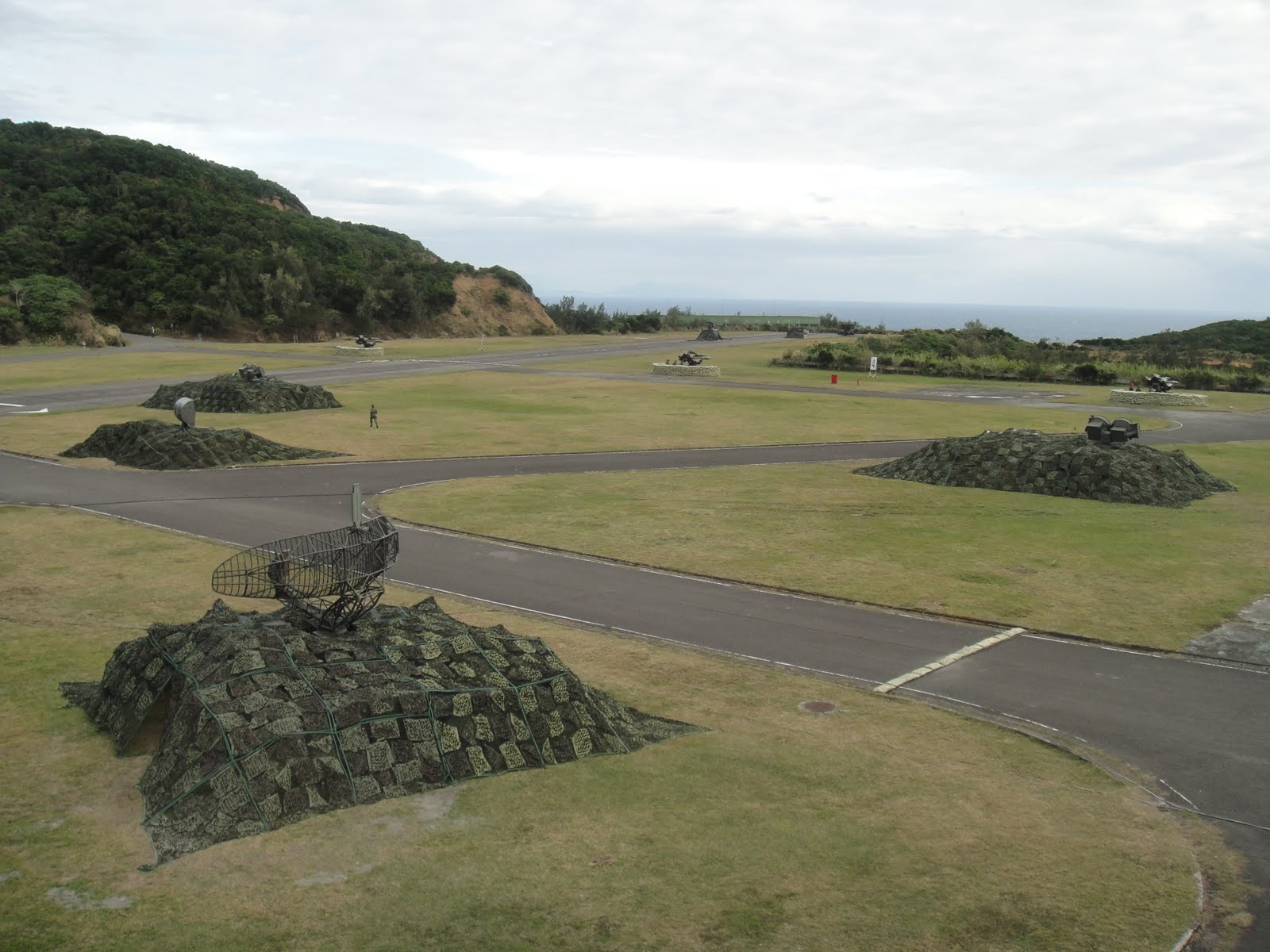
Last week’s United Air Defense Fire missile exercise — the largest since President Ma Ying-jeou (馬英九) took office in May 2008 — sparked consternation in many circles after six of the 19 missiles fired either misfired or encountered technical problems.

Although a hit ratio below 70 percent is considered less than optimal, what several media outlets omitted — fixated as they were on the failures — was the fact that some missiles, including the indigenous Tien Kung II “Sky Bow,” the only potential “game changer” on display last week, performed quite well.

Given the timing of the exercise and the fact that reporters were allowed on the Chung-shan Institute of Science and Technology’s (CSIST) off-limit Jiupeng missile testing base for the first time since 2002, the Ministry of National Defense was likely seeking to send a signal of strength to China. The failures and the subsequent media focus on the shortcomings indicate that that effort may have backfired and highlighted weakness rather than strength.

Ma, who attended the exercise, said after its conclusion that he was not satisfied with the outcome and called on the armed services to determine what went wrong and redouble their efforts.

While there is little to disagree with in Ma’s remarks, there is no small irony in the fact that his discontent targeted an exercise that fielded equipment that belongs in a museum rather than in the field facing a military giant.

My editorial, published today in the Taipei Times, continues here.

Monday, January 24, 2011

Beans are spilled — ECFA is political

Studies show that in the past decade, Taiwan trade with Asia performed as well as, and in some cases better than, countries that signed various trade agreements from which Taiwan was excluded

It may have been inadvertent, but recent praise by US Secretary of State Hillary Rodham Clinton and US President Barack Obama for the Economic Cooperation Framework Agreement (ECFA) cut through the smokescreen blown up by President Ma Ying-jeou’s (馬英九) administration by directly pointing to its political impact.

Ever since the idea of a free-trade-like agreement between Taiwan and China was proposed, Ma and his government have emphasized time and again that the pact was purely economic in nature and had no political ramifications whatsoever. This position, stemming from necessary constraints, dovetailed with Ma’s promise not to enter political dialogue with Beijing during his term in office.

Though critics of the ECFA have not been deceived by these pronouncements and have repeatedly assailed it over its political ramifications, and despite open references to it by Beijing officials as an instrument of unification, Taipei has been unwavering in its claim that politics are extraneous to the agreement.

However, no sooner had Washington begun praising the trade agreement in terms of its political benefits than Taipei shifted gear and interpreted this as encouragement for extended dialogue with Beijing. Speaking at the US Department of State on Jan. 14, Clinton praised the ECFA and called for more dialogue and exchanges.

My op-ed, published today in the Taipei Times, continues here.

Friday, January 21, 2011

Taiwan likely to hold second set of missile tests

The majority of missiles that failed in the NT$300 million (US$10 million) missile exercise earlier this week were foreign-made. Some of those will be re-tested during a second exercise later this year

Following a less-than-stellar major missile test on Tuesday, a military official yesterday said that a second exercise would likely be held in the second half of this year.

Of the 19 missiles fired during the United Air Defense Fire exercise, held at the Chungshan Institute of Science and Technology’s Jiupeng missile testing base in Pingtung County, two misfired and four encountered various problems resulting in failure to detonate upon nearing their target.

Following the exercise, President Ma Ying-jeou (馬英九) told media he was “not satisfied” with the results and called on the military to improve its performance.

Among those that failed were the indigenous Tien Chien II “Sky Sword” (TC-II) and French-made Mica — both air-to-air missiles — as well as the US-made surface-to-air Sparrow, which misfired and plummeted into the South China Sea.

In all, 11 types of missile were fired — almost every air-to-air and surface-to-air missile in the nation’s arsenal minus the AIM-120 AMRAAM and PAC-2 missile systems, Defense News quoted an unnamed defense official as saying.

My article, published today in the Taipei Times, continues here.

What failed on Tuesday:

- 1x Mica air-to-air (FR)
- 1x Dual-Mounted Stinger surface-to-air (US)
- 1x TC-II air-to-air (TW)
- 3x Sparrow (1x AIM-7 air-to-air and 2x RIM-7 surface to air) (US)

Wednesday, January 19, 2011

Ma ‘unhappy’ with major missile test

President Ma Ying-jeou and military officials deny a major missile exercise was in reaction to a visit to Washington by Chinese president Hu Jintao or the J-20 stealth fire recently unveiled by Beijing

President Ma Ying-jeou (馬英九) yesterday said he was “not happy” with the results of a major air defense missile test at a testing base in Pingtung County that coincided with the departure of Chinese President Hu Jintao (胡錦濤) for Washington on a state visit.

In the first major exercise open to the media at the Chungshan Institute of Science and Technology’s (CSIST) Jiupeng missile testing base in Pingtung County since 2002, three services — the air force, army and marine corps — fired 11 types of surface-to-air and air-to-air missiles, including the indigenous-made Tien Kung II “Sky Bow” (TK-II) and US-made RIM-7 “Sparrow.” A total of 19 missiles were fired during the air defense drill.

Months in the making and involving the participation of 576 members of the armed forces and the CSIST, the exercise showcased a number of platforms, including the F-16A/B, Mirage 2000, F-5E/F, Ching Kuo Indigenous Defense Fighter and AH-1W Cobra attack helicopter, as well as various ground-based launchers.

However, despite the impressive array, six of the 19 missiles encountered technical problems, with one Sparrow climbing about 200m into the air before radically changing direction and plummeting into the South China Sea. Of the six malfunctions, four involved missiles coming close to their target, but failing to detonate, while the other two missed their target altogether.

The TK-II, which has a range of 200km, performed handsomely, the military said, reportedly destroying its target at a distance of 100km. At its narrowest point, the Taiwan Strait is about 130km wide.

Air force Political Warfare Department director Pan Kung-hsiao (潘恭孝) told reporters at a debriefing that the military and CSIST were investigating the causes of the malfunctions. Early reports pointed to problems with tracking mechanisms and target acquisition.

At a press conference following the exercise, Ma, who had watched from a building overlooking the sprawling testing base located deep in the mountains, appeared unimpressed.

My coverage on location of the United Air Defense Fire exercise, published today in the Taipei Times, continues here.

Tuesday, January 18, 2011

Sweeping Taiwan under the carpet

Pretending that Taiwan does not exist will not succeed in convincing Hu Jintao that the subject should not be raised during his state visit. In fact, it is a sign of weakness

Briefing the press corps prior to a visit by Chinese President Hu Jintao (胡錦濤) to Washington this week, US National Security Adviser Tom Donilon made extra efforts to avoid mentioning Taiwan, leading some media to conclude that Taiwan perhaps would not be on the agenda.

At a time when Beijing’s political weight is in the ascendancy and that of the US is increasingly in question, the last thing Washington should do is send signals of weakness — and avoiding a topic, in the hope that somehow Beijing would forget, is just that.

If Donilon’s press conference is any indication of US President Barack Obama’s strategy for dealing with Hu, it shows us that rather than seek to set the agenda on a problem that continues to haunt Northeast Asia, Washington will allow the Chinese leader to do so, at which point US officials will have little choice but to backtrack or use soothing language that can then be exploited by Beijing.

My editorial, published today in the Taipei Times, continues here.

Friday, January 14, 2011

Taiwan rights ranking stable: Freedom House

In the fifth consecutive year Freedom House was reporting a decline in political rights and civil liberties worldwide, Taiwan remained stable, though the watchdog for the second year in a row raised questions over government interference in the media

US-based watchdog Freedom House released yesterday its annual Freedom in the World report, with little change in Taiwan’s ranking despite some concerns over continued government interference with the media.

Based on the organization’s initial findings for last year, which were to be made public at a conference in Washington, Taiwan scored 1 in the political rights sphere and 2 on civil liberties, the same as the previous year.

“Taiwan remained one of Asia’s strongest democracies,” Sarah Cook, Asia research analyst and assistant editor at Freedom House, told the Taipei Times by e-mail yesterday.

“Municipal elections held [on Nov. 27] were widely viewed as free and fair, despite a shooting at a rally the evening before the polls,” Cook said.

She did not mention, however, the rapid mobilization by some senior Chinese Nationalist Party (KMT) officials to exploit the shooting of Sean Lien (連勝文) for the party’s benefit the following day.

On the handling of the corruption charges against former president Chen Shui-bian (陳水扁), Cook said: “Procedural irregularities evident in earlier stages of ... [the] case did not appear to repeat as the case moved up the judiciary during the appeal’s process.”

My article, published today in the Taipei Times, continues here.

Tuesday, January 11, 2011

Taiwanese, Hong Kongers angry: panelists

Minority parties in Taiwan and Hong Kong face the remnants of a Leninist past and increasingly powerful conglomerates and vested interests, which bodes ill for democracy and good governance

Amid a growing sense of disenfranchisement, young people in Taiwan and Hong Kong are increasingly angry and want their governments to pay more attention to them, two panelists told a conference on democracy building in Taipei yesterday.

Speaking during a panel on majority and minority rights in government at the “Democracy Building in Interesting Times” conference organized by the Taiwan Foundation for Democracy, the Heritage Foundation and Institute for National Policy Research, Alan Leong (梁家傑), a pro-democracy activist and one-time contender for the post of Hong Kong chief executive, said that while about 60 percent of people in Hong Kong support full democracy, its advocates remain the minority in the Legislative Council.

“Functional constituencies” representing the interests of conglomerates, big business and other small groups, as well as interference by Beijing, ensure that these legislators are forever in the opposition, said Leong, leader of the Civic Party.

That system, he said, gives those “vested powers” de facto veto powers and ensures that the “fruits of economic success” are not shared evenly and remain in the hands of the few.

Leong also said that in light of the proposed electoral models for the elections of chief executive and the Legislative Council in 2017 and 2020 respectively, “there is practically no way that Hong Kong can see universal and equal suffrage” applied during the vote.

Speaking of the deficiencies in the system, Leong said: “It is indeed a coincidence that the Hong Kong people comes to expect so much from the opposition parties in a system where the opposition is supposed to be irrelevant and ineffective.”

“This is not what the designer of our political system had in mind,” he said.

My article, published today in the Taipei Times, continues here. 

The end of this article stemmed from a question — admittedly a loaded one — that I asked Mr. Leong, in that I prompted him to talk about identity. Unexpectedly, this engendered a response that included the contention that Taiwan is part of China, which to me confirmed yet again that even democracy activists in China and Hong Kong cannot necessarily be counted on to be supporters of Taiwan independence. Experiences can be shared, the desire for democracy can be common, but self-determination and the rights of minority, as Chinese academic Wang Lixiong (王力雄) has argued, are not necessarily matters such individuals are willing to support.

The ‘wayward cousin’ syndrome

Regarding the Chinese threat as the antics of a ‘wayward cousin’ rather than a classical external threat could account for the Ma administration’s apparent lack of seriousness on the subject

Even after North Korea invaded the South in 1950, sparking the Korean War, followed by decades of tensions marked by skirmishes, missile tests, nuclear detonations, artillery attacks and the sinking of a navy vessel, the authorities in Seoul have often been less strident about the North Korean threat than their allies like Japan and the US, a response that, at first glance, may seem counterintuitive.

Two phenomena could account for this reaction: cultural proximity — South Koreans often refer to North Koreans as “wayward cousins” involved in a family dispute — and the fact that South Korea would suffer the brunt of an attack by the North. As such, the leadership in Seoul has often gone to great lengths to avoid unnecessarily alienating Pyongyang.

In many ways, Taipei under President Ma Ying-jeou (馬英九) appears to have reached similar conclusions with regards to China. Amid a growing sense of alarm among regional powers at an increasingly assertive Chinese military, one of the few countries that has downplayed the threat is Taiwan. There is no small irony in this, given that Taiwan, despite supposedly warming ties with Beijing, remains the primary, albeit not the only, target of China’s rapidly growing and modernizing military.

As with Seoul vis-a-vis North Korea, Taipei has emphasized the need for dialogue, while Ma, who never misses an opportunity to remind Taiwanese of their “Chinese heritage” and the “Chinese nation,” also seems to regard Chinese as “wayward cousins” in an unresolved family feud. Ma’s tendency to look at Chinese as a misled family member, rather than the “other,” could help explain what comes across as his failure to fully account for the magnitude of the Chinese threat, or at least shed some light on his often fuzzy definition of Taiwan and Taiwanese, as is often the case with the two Koreas.

My unsigned editorial, published today in the Taipei Times, continues here.

Thursday, January 06, 2011

It takes two to play at detente

How much signaling can the Ma administration do before those efforts cross the line from olive branch to capitulation?

Detente is like a carefully orchestrated minuet, with each side reacting in accordance with the subtle shifts of the other. Only when participants abide by those governing rules, and when both operate under the assumption that the other will reciprocate, can bodily poetry avoid descending into artistic catastrophe.

When it comes to efforts at detente in the Taiwan Strait launched by President Ma Ying-jeou (馬英九), one side has shown a willingness to dance. Amid efforts to encourage better relations with Beijing, Taipei has repeatedly signaled that it is ready to de-escalate. The frequency of military exercises has been reduced and those that are held often do not involve live fire or invoke a Chinese attack. The overall military budget has been cut and now stands at about 2.5 percent of GDP, less than the 3 percent Ma had promised to secure for national defense. Officials inform us it is unlikely the military budget will increase significantly in the near future.

Budgets have tightened to such a extent that, citing “financial constraints,” the Ma administration announced in October that it would seek to defer payment on PAC-3 missile batteries and 60 UH-60M Black Hawk helicopters it has committed to purchase from the US, raising questions over the year of delivery.

Meanwhile, reports over the last six months claim that the National Security Bureau, the nation’s top civilian intelligence service, has been ordered to stand down on intelligence collection in China and may have become less generous in sharing signals intelligence on China with key allies, such as the US and Japan. Intelligence-sharing agreements being what they are, this will likely result in reciprocal stinginess and could be disastrous in terms of preparedness for the Taiwanese military.

My op-ed, published today in the Taipei Times, continues here.

Tuesday, January 04, 2011

An inconsistent Presidential Office

President Ma’s only consistency is his inconsistency, which makes it very difficult for the electorate to take him at his word

If futures were built on promises, Taiwan under President Ma Ying-jeou (馬英九) would be the envy of the international community — prosperous, dignified and safe from harm.

Sadly for Ma, running a country requires more than slogans designed to meet a moment’s requirements — statesmanship calls for vision, action and consistency, all qualities that our promise-prone president, after more than two-and-a-half years in office, has yet to show us he possesses.

While it would be unfair to expect politicians to deliver on every promise they make or to turn every slogan shouted at a podium into reality, they should nevertheless meet minimum standards of consistency. In other words, for promises to be part of a vision, they should be followed through with action, commitment and resources.

Ma’s promise to create an all-volunteer military by 2015 — a laudable, albeit costly idea — is one example of a plan that is unlikely to come to fruition as a result of lack of commitment and funding. The Ma administration’s vow to submit the text of the Economic Cooperation Framework Agreement (ECFA) signed with China last year to the WTO also looks like an empty one now that the “early harvest” list has come into force without the global trade body having seen the documents.

What Ma has delivered so far is a long list of promises, the implementation of which has left much to be desired and which do not appear to be part of an overall plan. In fact, his only consistency has been his inconsistency, with slogans thrown cheaply about depending on the nature of the audience being addressed. By dint of repetition, Ma has succeeded in undermining his credibility in the eyes of Taiwanese, who by now could be forgiven for taking a cynical view of his vows.

My unsigned editorial, published today in the Taipei Times, continues here.

Tuesday, December 28, 2010

Whither Taiwan’s free media?

Little by little, with subtle changes and amendments, the media environment in Taiwan is being boiled to death like the proverbial frog

The media environment in Taiwan is in a state of crisis, one that did not fully capture the public’s imagination until someone from deep inside said he’d had enough and resigned.

US-based Freedom House may have called it “one of the freest in Asia,” but Taiwanese media are under severe pressure and many indicators are pointing in the wrong direction. The signs were there, but it took reporter Huang Je-bing’s (黃哲斌) resignation from the China Times on Dec. 12, after 16 years of service, to draw attention to the severity of the problem and prompt fellow journalists into action.

The source of Huang’s discontent was the growing practice of government product placement in the media to promote its policies, which in effect constitutes the masquerading of propaganda as news.

The potential for abuse is self-evident, especially when we put it in the context of President Ma Ying-jeou (馬英九) administration’s friendly attitude toward one of Asia’s worst offenders in terms of media freedom: China.

My unsigned editorial, published today in the Taipei Times, continues here.

Wednesday, December 22, 2010

MOFA silent on Chinese patrol boats

The region is moving ever-closer to naval confrontation in the waters surrounding the disputed Diaoyutai Islands

The Ministry of Foreign Affairs yesterday would not comment on reports that China was allegedly on the brink of permanently deploying large fisheries patrol vessels near the Diaoyutai Islands (釣魚台) claimed by Taiwan, Japan and China.

Ministry spokesman James Chang (章計平) said the ministry was not able to comment, as the Mainland Affairs Council was responsible for assessing the authenticity of the information and communications with China.

Chang said the ministry would closely monitor reports on the matter and restated the ministry’s position that all parties should set aside disputes and handle the matter peacefully and rationally.

A diplomatic official told the Taipei Times on condition of anonymity that the deployment was related to Japan’s new defense guidelines, approved by the Diet on Friday, which painted China as a bigger threat than Russia and as a result was shifting its defense from the northern island of Hokkaido to the south, such as Okinawa and territories claimed by both Japan and China.

The Asahi Shimbun reported on Monday that an unnamed “senior Chinese official” at the Ministry of Agriculture’s Bureau of Fisheries had informed it in an exclusive interview on Saturday that China could soon permanently deploy large fisheries patrol vessels in waters near the Diaoyutais.

This article, published today in the Taipei Times, continues here.

Tuesday, December 21, 2010

Why has the WTO yet to be notified about ECFA?

With two weeks left before the full terms of a controversial trade pact signed between Taiwan and China in June come into force, the global trade body has yet to see the documents. Will it ever?

President Ma Ying-jeou’s (馬英九) administration and its counterparts in Beijing accomplished the nearly impossible this year by signing a complex trade agreement between two entities that are technically at war — and one of which does not recognize the other’s existence — in a matter of months.

While free-trade and free-trade-like agreements signed between two states on an equal footing (at least in terms of two-way recognition) usually require years of negotiations, the Economic Cooperation Framework Agreement (ECFA) signed between Taiwan and China on June 29 took a little more than five months.

Now, either officials from the Straits Exchange Foundation and the Association for Relations Across the Taiwan Strait, the two semi-official bodies that were charged with negotiating the trade pact, were incredibly talented and managed to resolve the immense hurdles that have haunted any type of relation between the two entities, or the two sides were too impatient and couldn’t wait to sign the agreement, which offered “proof” that Ma’s cross-strait policies were bearing fruit.

I leave it to the reader to decide which is likeliest, though I would strongly urge that we bear in mind William of Ockham’s sagacious case for parsimony when seeking to explain the cause of a phenomenon amid a plurality of hypotheses.

My op-ed, published today in the Taipei Times, continues here.

Ma’s delusions of ‘soft power’

Still sounding like he’s running in the 2008 presidential election, Ma Ying-jeou stole an overused term by a prominent US academic and used it to show how much nicer his policies are than those of his predecessor

After years of assailing our ears with notions of “win-win” situations President Ma Ying-jeou (馬英九) has now latched onto a new term that, unfortunately for us, he now seems intent on milking dry: “soft power.”

No sooner had US political scientist Joseph Nye (see above with Ma), the person who coined the overused and oft misused term, left after a quick visit earlier this month than Ma was borrowing it to describe his policies over the past two-and-a-half years. All of a sudden, Ma’s body of work appeared to blossom into a monument to so-called soft power, which, if we looked closely enough, was a euphemism for everything the administration of his predecessor, former president Chen Shui-bian (陳水扁), supposedly was not.

It was soft power, Ma claimed, that recently led the EU and Canadian governments to grant Republic of China (ROC) passport holders visa-waiver treatment. Never mind that governments decide whether to grant exemptions on the basis of such practical considerations as the security of travel documents. In this case, those requirements included the introduction of biometric passports in 2008 — first issued after Ma came into office, granted, but the result of policies implemented under the Chen administration.

In other words, visa exemptions were granted because manifold requirements were met, not because of soft power à la Ma.

My unsigned editorial, published today in the Taipei Times, continues here.

Tuesday, December 14, 2010

Giving in to local Chinese zealotry

We seem to have entered an era where state governors, mayors and officials in the world’s most powerful nations can be browbeaten by lowly Chinese officials who are slightly overzealous in their nationalistic entrepreneurialism

Over the years, Chinese authorities have relentlessly attempted to prevent Taiwan from joining international organizations lest this give Taipei the sovereign legitimacy that Beijing considers anathema to its “one China” principle.

Although such behavior has made it impossible for Taiwan to have its voice heard in international forums like the UN or the WHO, Beijing’s object was ostensibly the symbolism of Taiwanese participation rather than the practicalities and benefits that Taiwan would derive from membership.

Despite superficially warmer ties between Taipei and Beijing since President Ma Ying-jeou (馬英九) launched his cross-strait lovefest two years ago, Chinese officials have often overlooked the “goodwill” they are alleged to have showered on their Taiwanese compatriots by continuing to deny Taiwan international breathing space. This has targeted symbols of Taiwanese nationhood, such as a delegation of moviemakers at the Tokyo International Film Festival in late October attending under the name “Taiwan.”

However, behind such headline-grabbing acts of insanity lurk several instances of Chinese officials impeding Taiwanese efforts in a different sphere altogether: the economic sector. This is often the result of Chinese officials at the local level pressuring governments by raising the specter of Chinese “anger.”

My unsigned editorial, published today in the Taipei Times, continues here.

Sunday, December 12, 2010

‘Taiwan consensus’ is a travesty

Su Chi is back with a new consensus, an ill-defined rhetorical contraption that blames the DPP for cross-strait misunderstandings and that highlights his poor understanding of plurality

If one thing can be said of former National Security Council secretary-general Su Chi (蘇起), it is that the man is infatuated with consensuses.

It was he who, just as the Democratic Progressive Party (DPP) was coming into office after the nation’s first transition of power in 2000, came up with the ambiguous — and dubious — “1992 consensus.” And it was he who, now wearing his academic hat, told a conference on Monday that what the nation needed was a “Taiwan consensus.”

In prescriptions that, on the surface (and only there) may have come across as infused with wisdom, Su said that before Taipei can approach more contentious areas of negotiation with Beijing such as Taiwan’s sovereignty, the DPP should take the initiative and work with the Chinese Nationalist Party (KMT) in forging a consensus.

Leaving aside the fact that Taiwan’s sovereignty shouldn’t be negotiable (especially not under coercive terms), Su then conveniently forgot recent history when, using the analogy of the “small triangle” between the DPP, KMT and the Chinese Communist Party (CCP), he posited that the triumvirate was unstable because the DPP does not talk with the other two extremes of the geometrical object.

In other words, tensions in the Taiwan Strait, or lack of communication, are solely the DPP’s fault, as if the KMT didn’t have a long history of ignoring the DPP or stalling debate at the legislature — the nation’s democratic echo chamber, if you will.

My op-ed, published today in the Taipei Times, continues here.

US governor nixes visit due to China

Even on matters of trade, China continues to deny Taiwan the international space that would truly stand for goodwill

Missouri Governor Jay Nixon planned to visit Taiwan on a trade mission this week — until the Chinese consulate and business leaders said the visit could “anger” the Chinese government and harm an airport deal with China, forcing him to scuttle the trip, reports said.

Nixon, who last year attended the signing of an agreement between Taiwanese and Missouri business groups in his office, had announced on Dec. 1 that he would head a trade mission to Taiwan and South Korea from Dec. 10 to Dec. 16. While in Taiwan, the governor was scheduled to be party to the signing of a letter of intent on a US$600 million purchase of Missouri agricultural products by the Taiwanese government, the St. Louis Post-Dispatch reported. Nixon was to be accompanied by a large delegation of government and business officials, including representatives of agricultural organizations.

One day after Nixon’s announcement, Mike Jones, chairman of the Midwest China Hub Commission (MCHC), sent the governor a letter on behalf of the commission asking that the visit be postponed. A representative of the Chinese government was afraid the trip would be received negatively in Beijing, the letter allegedly said.

My article on the matter, published today in the Taipei Times, continues here.

Friday, December 10, 2010

What’s the issue here?

Language is often a reflection of hidden assumptions, and by dint of repetition we can lose sight of reality, especially on complex matters such as the Taiwan Strait

Part of my job as deputy news chief at the Taipei Times and columnist for a number of publications involves reading tremendous amounts of literature on Taiwan, not only so that I can keep pace with recent developments in the Taiwan Strait, but also to attempt, in all humbleness, to attain as thorough an understanding as possible of the story and history of Taiwan. This responsibility — and this is what it is, a responsibility — therefore, demands that I read newspapers, magazines, online articles, academic papers and history books, not only about Taiwan, but also China, Japan, the Asia Pacific, World War II, the US political system and so on.

What caught my attention recently is the recurrence of references to Taiwan not so much as an “island,” “Republic of China” or the despicable (and false) “province of China” — of which there are plenty, admittedly — but rather to Taiwan as an “issue,” “question” or “problem.” Such characterizations, which, I am sure, are in many instances the result of unconscious processes, turn a quantifiable plot of land (not to mention 23 million beating hearts) into mere abstracts, as if Taiwan were nothing more than a commodity to be divvied up, parsed out or handed over from one colonial master to another. We thus read about China “retaking the island,” the “Taiwan issue” affecting Sino-American relations, or Taiwan as an “unsinkable aircraft carrier,” with no reference to Taiwanese having a say over their own future. The problem is sanitized, the people taken out of the equation, just as they are in this era of electronic, long-distance warfare, where the living are killed with ever greater ease thanks to their being out of sight.

Does the world refer to Israel as “the Israel issue” when discussing the Middle East? Of course not: The US defends its ally, Israel, period. Even stateless Palestinians, who have more in common with Taiwanese than we are ready to acknowledge, are not reduced to an “issue” or “question”; instead, we talk about the Israeli-Palestinian conflict, the fate of Palestinians, et cetera. How, then, is it any more acceptable to obliterate Taiwanese and turn their nation into a commodity? Why can’t we refer to tensions in the Taiwan Strait as the Sino-Taiwanese conflict?

The great James R. Lilley, former CIA official, US ambassador to China and representative to Taiwan, who passed away last year, once told a young government official never to refer to Taiwan as an “issue.” Wise advice indeed, and something we should keep in mind when we add our own voices to coverage of Taiwan.

Thursday, December 09, 2010

Hollow victory for the KMT

No clear victory, no clear defeat in the special municipality elections on Nov. 27, and still a lot of uncertainty over their ramifications for the future

Despite a favorable outcome to the much-anticipated Nov. 27 municipal elections, the Chinese Nationalist Party (KMT) remained cautiously optimistic on Saturday after the opposition increased its lead in the popular vote.

After several weeks of boisterous campaigning, Taiwanese went to the polls on Saturday to vote for mayors, city councilors and borough chiefs in the special municipalities of Taipei City, Sinbei City, Greater Taichung, Greater Tainan and Greater Kaohsiung.

In what some had portrayed as a mid-term election for President Ma Ying-jeou (馬英九) and a preview of the 2012 presidential election, the KMT succeeded in retaining its hold in the northern municipalities of Taipei and Sinbei (Taipei County, which will be upgraded to special municipality status later this month) and Taichung, in central Taiwan. For its part, the Democratic Progressive Party (DPP) retained Tainan and Kaohsiung. Voter turnout was an impressive 71.71 percent.

In the lead-up to the elections, both parties had argued that winning three municipalities would be considered “overall victory.” During the last weeks of what turned out to be essentially clean electoral campaigns, the races in Sinbei, historically split between the pan-green and pan-blue camps, and Taipei, a pan-blue stronghold, became increasingly close — indeed too close to call.

The race in Taipei, the capital city, pitted incumbent Mayor Hau Lung-bin (郝龍斌) of the KMT against former premier Su Tseng-chang (蘇貞昌) of the DPP, with three other candidates running as independents. Despite Su running a highly successful campaign, and notwithstanding a Hau administration that was plagued with allegations of corruption over the Taipei International Flora Expo, the incumbent defeated his opponent by an unexpectedly wide margin, with 797,865, or 55.65 percent of the vote, against Su’s 628,129, or 43.81 percent.

In Sinbei, the nation’s largest municipality, former vice premier Eric Chu (朱立倫) of the KMT defeated DPP Chairperson Tsai Ing-wen (蔡英文) with 1,115,536 votes, or 52.61 percent, against Tsai’s 1,004,900, or 47.39 percent.

The greatest surprise occurred in Greater Taichung, where incumbent Jason Hu (胡志強) of the KMT, who was expected to easily defeat Su Jia-chyuan (蘇嘉全) of the DPP, only did so by a razor-thin margin, with 730,284 votes, or 51.12 percent, to Su’s 698,358, or 48.88 percent. It is also noteworthy that Su, who had been parachuted into Taichung only six months prior to the election, defeated the colorful, Beijing-born Hu in every riding in Taichung County.

The elections in the DPP strongholds of Tainan and Kaohsiung, meanwhile, were the only two races that were never close. In Greater Tainan, William Lai (賴清德) of the DPP obtained 619,897 votes, or 60.41 percent, against his KMT opponent, Kuo Tien-tsai (郭添財), with 406,196 votes, or 39.59 percent. In Greater Kaohsiung, incumbent mayor Chen Chu (陳菊) of the DPP won the three-way race with more than twice the votes of her two opponents combined. Chen obtained 821,089 votes, or 52.80 percent, to Yang Chiu-hsing (楊秋興) — who quit the DPP to run as an independent after losing the primary to Chen — with 414,950 votes, or 26.68 percent, and the KMT’s Huang Chao-shun (黃昭順), who came third with 319,171 votes, or 20.52 percent.

It remains to be seen if, or to what degree, a shooting incident on election eve in Yonghe City, Taipei County, involving former KMT chairman Lien Chan’s son, Sean Lien, who was shot in the face by a local gangster during a KMT rally, and in which a bystander was killed, affected the vote. Initial assessments put the impact at 3 percent, which though insufficient to alter the outcome in Taipei City, could have done so in Sinbei and Taichung.

In the city council elections, both parties ended up with 130 seats of the overall 314 in the five municipalities, with 45 going to independents and the rest to smaller political parties.

In terms of share of total vote, which is where the notion of a KMT victory may sound hollow, the DPP obtained 3,772,373 votes, or 49.78 percent, to the KMT’s 3,369,052, or 44.54 percent, a difference of almost 400,000 votes (independents accounted for 422,692 votes). To put this in context, during the presidential election in 2008, the KMT obtained 58.45 percent of the total vote against the DPP’s 41.55 percent. Consequently, Saturday’s election, which accounted for about 60 of the total electorate, can be regarded as a dramatic turnaround for the opposition party, which only two years ago, was devastated amid allegations of corruption against former president Chen Shui-bian (陳水扁) and badly defeated in legislative elections.

Forecast

For the DPP, Su Tseng-chang’s and Tsai’s defeats could be a blessing in disguise, as both had been touted as potential candidates in the 2012 presidential election, in which Ma is widely expected to run. Had they won, they would either have been unable to run, or would have faced the difficult choice of cutting their four-year term short and risk alienating the electorate. Su’s weaker-than-expected showing, however, may have undermined his prospects for a presidential ticket.

A power struggle over party leadership is now emerging, which could threaten Tsai’s position, and party stability, after she succeeded in reconsolidating the DPP. On Nov. 29, former vice president Annette Lu (呂秀蓮), along with “kung-ma” (or “elder”) faction members, called on Tsai to step down, a tradition in Taiwanese politics following electoral defeat. So far Tsai said she would not do so, and has the backing of the DPP legislative caucus.

As for the KMT, some officials and pan-blue media are portraying the results as endorsement for Ma, who campaigned energetically for the candidates of his party (of which he is chairman), and his pro-China policies. Conversely, others are arguing that the KMT’s loss in the popular vote could force the Ma administration to slow down cross-strait development.

In the end, however, references to the popular vote as an indicator of the 2012 election can only be taken so far, as Saturday’s elections involved predominantly local matters, while the presidential election will entail national policies, such as rapprochement with China, which remains controversial among the Taiwanese polity.

This analysis appeared in slightly different and abridged format in Jane’s Intelligence Weekly on Dec. 6. See also my comments on the elections in The Diplomat magazine [English] [Chinese].

Tuesday, December 07, 2010

Ready to talk with Beijing — again

Eager to present Beijing with a rosy picture of the situation back home, the KMT appears to have discredited itself in the eyes of its Chinese interlocutors, perhaps creating an opportunity for the DPP to be taken more seriously

Recent speculation that the Democratic Progressive Party (DPP) was becoming more amenable to talks with Chinese officials rang truer last week when DPP Chairperson Tsai Ing-wen (蔡英文) announced the creation of a party think tank which, among other duties, would encourage mutual understanding across the Taiwan Strait through dialogue.

Rumor even has it that the DPP recently allowed Chinese Communist Party (CCP) officials to enter its sacred ground — party headquarters in Taipei.

This occurs at a time when Chinese officials have allegedly complained to a pan-blue newspaper that information they have received from the Chinese Nationalist Party (KMT) painted such an incomplete picture of the mood in Taiwan that it prompted Zhongnanhai to look elsewhere.

Should this be true, Taiwan and China could be on the brink of taking their real first steps toward mutual understanding, or at least toward clearing the ideological air that has poisoned Chinese perceptions of Taiwan for so long. If the noise coming out of Beijing is true and the CCP is indeed realizing that its KMT interlocutors have not been straight with it on the Taiwanese polity’s reaction to President Ma Ying-jeou’s (馬英九) detente, this could signify that Beijing is becoming more attuned to the multiplicity of voices that characterizes Taiwanese society.

My unsigned editorial, published today in the Taipei Times, continues here.

Thursday, December 02, 2010

Taiwanese polity not an abstract

Whether it be in Beijing, Washington or Taipei, the elite political discourse oftentimes fails to listen to the voices that will ultimately make or break lasting peace in the Taiwan Strait: the 23 million Taiwanese

One, if not the, principal element that in the long term will hamper sustainable peace in the Taiwan Strait is the tendency of world leaders to edit out the principal stakeholders in the equation — the Taiwanese people.

It goes without saying that the authoritarian regime in Beijing, unreceptive as it is to the political grievances of its own people, would ignore the whims and desires of 23 million people across the Strait. This largely accounts for the behind-the-scene, technocratic approach to cross-strait negotiations that Beijing has taken with President Ma Ying-jeou’s (馬英九) administration and helps explain why Ma and his Cabinet have also acted as if the will of the people were more of a nuisance — or at the minimum something to be shaped and controlled — rather than that which, in a democracy, should be driving government policy.

Confucianism and lingering paternalistic tradition, however, only partly explain why the Taiwanese polity appears to have been abstracted from the political calculation in Taipei and Beijing, because other countries with no such ideological baggage often commit the same mistake.

As I argued in a recent op-ed piece in the Wall Street Journal Asia, the much-hailed lowering of cross-strait tensions that has occurred since Ma came into office in 2008 will not be sustainable as long as the cost of that rapprochement is the ignoring of the views of Taiwanese on identity and sovereignty.

My op-ed, published today in the Taipei Times, continues here.

Tuesday, November 30, 2010

No such restraint on Lien shooting

Overall, the two parties showed restraint during the campaigns for the Nov. 27 special municipality elections, with the KMT doing a little more sniping than the DPP. But a shooting incident on election eve revealed the KMT’s true colors

US academics over the weekend added their voices to the chorus of analyses following Saturday’s five special municipal elections, with highly laudatory remarks on the manner in which the campaigning proceeded.

While their argument that the two camps avoided highly ideological pitfalls and tried to appeal more to grassroots voters was for the most part accurate, the researchers were quoted by Central News Agency as saying that the parties had displayed “restrained reactions” to the shooting of Sean Lien (連勝文, left), son of former vice president Lien Chan (連戰), during a campaign rally for a Chinese Nationalist Party (KMT) candidate for Sinbei City councilor on Friday night.

Unfortunately for the academics, they stumbled on that one, or failed to watch the right TV channels in the aftermath of the incident.

Although it is true that on election day President Ma Ying-jeou (馬英九) and other KMT officials adopted a relatively neutral stance on the matter, on Friday night the KMT apparatus — and the pan-blue media — went into full gear insinuating that the attack was somehow related to the election and that the DPP stood for violence. They never said it directly, mind you, but when officials called for voters to “cast their ballots against violence” the following day, the implication was obvious.

My unsigned editorial, published today in the Taipei Times, continues here.

Tuesday, November 23, 2010

Bigoted response was shameful

If Taiwanese are to express their accumulated anger, they should learn to aim it in the right direction

The outbursts of anger some Taiwanese have directed at South Korea in the wake of the disqualification of Taiwanese taekwondo athlete Yang Shu-chun (楊淑君) at the Asian Games in Guangzhou, China, last week brought to the surface undercurrents that are certainly nothing to be proud of.

Not only was burning the South Korean flag, crushing instant noodles, hacking Web sites and throwing eggs at the Taipei Korean School misguided, these acts — with encouragement from some in the media — highlighted an underlying racism that does not put modern, democratic and pluralistic Taiwan in a favorable light. Such nationalistic bigotry, in fact, is the very poison that lies behind Beijing’s policy of isolating Taiwan and denying its people the right to a separate existence.

That some, though by no means all, Taiwanese would engage in such shameful behavior based on some subconscious hatred for another people makes the claims that Taiwan is a beacon of democracy in Asia ring hollow and, as such, it should be roundly condemned.

Yang’s mistreatment struck a nerve with many Taiwanese who otherwise tend to be apolitical and who have exhibited little or no nationalistic fervor. Whatever the trigger, to rally round the flag in time of crisis is not necessarily unhealthy, but to translate that energy spontaneously unleashed into acts of hatred against individuals, institutions or even entire countries that have nothing to do with the controversial decision is uncalled for.

My unsigned editorial, published today in the Taipei Times, continues here.

UPDATE

Admittedly, the Yang controversy is symptomatic of the “Palestinianization” of Taiwanese, who far too often are treated by the international community as stateless second-rate citizens whose aspirations and grievances are conveniently ignored. From that perspective, the disqualification and the ensuing eruption of anger could be construed as a necessary outlet through which Taiwanese can finally vent their pent-up frustrations after being silenced for too long.

However, what is more difficult to comprehend — and which delineates a moral paralysis on the part of the international community — is the almost unanimous characterization abroad of the controversy as “unjust” and “sickening.” Though true, we need to ask ourselves why aren’t the same people, who are so readily offended by an underhanded decision at a sports event, using similar language when China prevents Taiwan from participating in international organizations, or threatens to use military force against it. How do we explain the mobilization of indignation over what remains a trivial event, while rampant injustice cannot even register in people’s consciousness, let alone translate into calls for redress, which would see Taiwanese installed as a full and equal participants in the community of nations?

Correction: I have been informed that WTF secretary-general Yang Jin-suk, whom my editorial refers to as South Korean, is actually Korean-American and a US citizen.

Monday, November 22, 2010

China’s military prowess on full display at air show

China was anything but low profile on matters of military planning, and it was easy to imagine who the targets were

Efforts by the Chinese military to modernize its aerospace capabilities were on full display at the eighth China International Aviation and Aerospace Exhibition that concluded in Zhuhai, Guangdong Province, China, yesterday, with no less than 25 unmanned aerial vehicles (UAV) on display.

According to a report in Defense News, three Chinese companies — ASN Technology Group, China Aerospace Science and Industry Corp (CASIC) and China Aerospace Science Technology Corp (CASC) — produced the majority of the UAVs unveiled at the show.

The different models served various roles, from combat to battlefield reconnaissance, reports said.

The most sophisticated models, Defense News wrote, were -produced by CASIC and CASC — the main provider for China’s space program — which had systems designed not only to locate targets, but to destroy them as well.

One model, the CH-3 (right), was a multipurpose medium-range UAV platform suitable for battlefield reconnaissance that could be modified as a precision-attack platform using air-to-ground missiles similar to the US’ Hellfire.

This article, published today in the Taipei Times, continues here.

Thursday, November 18, 2010

War Clouds Over Taiwan

Beijing's expectations that Taiwanese will relinquish their separate identity will be disappointed

Two years into his term, Taiwanese President Ma Ying-jeou seems to have transformed the dynamics of his country's troublesome relationship with China. But this détente is only a temporary phenomenon. The risk of war in the Taiwan Strait is actually growing as Beijing's expectations for a political end to the unfinished civil war rise, and Taiwan's ability to defend itself against attack withers.

After years of cross-Strait tension under Presidents Lee Teng-hui and Chen Shui-bian, it's hardly surprising that everyone is breathing a sigh of relief now that the two sides are at least on civil terms. The international business community is taking a fresh look at Taiwan both as an investment destination and, given the linguistic and cultural similarities with China, as a bridge to the world's second-largest economy.

Underneath this façade, however, lies a dangerous reality: Beijing's recent "goodwill" toward Taiwan, which culminated in the signing in late June of the Economic Cooperation Framework Agreement, is fully in line with its stated strategy to complete the consolidation of China after a "century of humiliation." While the Ma administration maintains that the ECFA and other such deals are purely economic in nature and have no political implications, Chinese officials and leading academics are convinced that Taiwan is unwittingly preparing the way for eventual unification.

My op-ed, published today in the Wall Street Journal, continues here.

UPDATE

As I stepped into my office this afternoon, I received, on my landline at work, a most extraordinary phone call from a very, very angry vice chairman of a Shanghai-based global Chinese business organization (didn’t get his name, unfortunately). In good, if uncertain, English, the man started politely, telling me his office had been receiving “lots of angry phone calls” from Chinese all over the world — in China, Hong Kong, the US, Canada — who were complaining about “biased” articles in the Taipei Times. Recently, his office had received many more, he claimed. Why are we so biased, he asked. Why do we do this? He then turned to the article I published today in the Wall Street Journal, which he said made “a lot” of Chinese “very angry.” Again, why did I do that, when “the entire world” knows and agrees that Taiwan is part of China? I tried to say that people were entitled to their own views on the subject, but he always cut me off. Even the Canadian government agrees that Taiwan is part of China, he said — and you’re Canadian, right? Why do you do that? I then told him the 23 million people in Taiwan don’t agree with this view, whereupon he went ballistic and started screaming at me, so much so that I had to take the earpiece away. I tried to ask if he’d ever set foot in Taiwan so he could perhaps understand why his views didn’t dovetail with those of many Taiwanese, but by that point there was no conversation to be had. He said I “hated” China. I said I didn’t, and that instead I loved Taiwan and the fact that it’s people had a right to choose who rules them. Why do you attack China? He screamed. I don’t attack China; I replied, adding that it was “you guys who are pointing 1,500 missiles at us.” “F**k you!” he screamed, and hung up. I’d obviously touched a raw nerve. This is what we’re dealing with, folks, blind, ebullient nationalism that brooks no difference of opinion and shuts the door on any dialogue. Those who think the Ma administration can negotiate with those people — the same kind of nationalist people, plus the military they control — in a way that ensures Taiwan’s independent future should perhaps reconsider.

Dec. 1 update: CNA has Chinese-language coverage of responses to my Nov. 18 op-ed and related editorial in the Wall Street Journal. See also original letters in the WSJ.

Director at Freedom House objects to CNA’s coverage

Negligence or darker motives? A CNA piece on a speech by Christopher Walker on the weekend made him sound as if he was taking sides in the Chen Shui-bian controversy

The director of studies at US-based Freedom House yesterday accused state-owned Central News Agency (CNA) of “misapprehending” his comments regarding the judicial process in Taiwan and claiming that he saw a recent verdict against former president Chen Shui-bian (陳水扁) as positive for Taiwan’s democratic development.

The Formosa Foundation, a Los Angeles-based non-profit organization, invited Christopher Walker to give a speech on freedom in Taiwan on Sunday, in which he focused on democratic processes, institutional transparency and media freedom in Taiwan and the region.

However, a CNA report of the event released the following day misrepresented his remarks on the judicial process in Taiwan in a way that made it appear he was specifically commenting on the corruption cases against Chen, Walker said.

The Chinese-language report, which has not been translated into English by the wire service, read: “After former president Chen Shui-bian recently [on Nov. 11] received his final [guilty] verdict, Christopher Walker ... said he believes that while this was a tough choice to make, punishing a corrupt regime with jail will help Taiwan’s democratic system become stronger.”

This article, published today in the Taipei Times, continues here.

Tuesday, November 16, 2010

One ‘friendly reminder’ too many

Signs are emerging that the Ma administration is taking a soft authoritarian approach to freedom of speech

Seemingly isolated incidents observed over a given period of time can, if they occur frequently enough, form a pattern. This is what appears to be emerging under President Ma Ying-jeou’s (馬英九) administration in terms of how it handles the right of ordinary people and the media to freely express their opinions.

Though the origins of this process can be traced back to the early days of the Ma administration, this month alone confronted us with a series of incidents involving government intrusion into the realm of freedom of expression.

First was a notice by the Ministry of Education to the Professional Technology Temple’s (PTT) Gossip Board, a popular online bulletin board hosted by National Taiwan University, calling on administrators to request that users tone down their political rhetoric to ensure a “cleaner” environment. Although Minister of Education Wu Ching-ji (吳清基) called the notice a “friendly reminder,” PTT users by the hundreds saw it differently, referring to it as the imposition of “martial law on the Internet.”

Then, less than a week later, came the outburst over comments by political commentator Cheng Hung-yi (鄭弘儀), who during a public event used “improper” language when referring to Ma and subsidies for Chinese students. What should have been a minor incident was instantly turned, both by the Ma administration and pan-blue media, into the public crucifixion of an individual who disagreed with the administration’s policies.

My unsigned editorial, published today in the Taipei Times, continues here.

Saturday, November 13, 2010

Was the judiciary truly independent?

The Nov. 5 acquittal of former president Chen changes nothing about the heavy sentencing he faces, and provides the KMT with  the ammunition it needs to get the vote.  Accidental timing, or is something afoot?

The ruling by the Taipei District Court on Nov. 5 finding former president Chen Shui-bian (陳水扁) and his wife not guilty in a bribery case was construed by many — including this author — as a sign that the judiciary under the Ma Ying-jeou (馬英九) administration was beginning to reassert its independence. Reaction to the news by the pan-blue camp was so strident, and the decision so antithetical to what ostensibly has been a policy of keeping Chen in check, that the court appeared to have laid to rest fears that the judiciary had become little more than a conveyor belt for the Ma government.

Commenting on the ruling, some elements within the pan-green camp, meanwhile, said this was only part of a series of rulings that ultimately would fully exonerate the former president. Chen’s smile as he emerged from a police van on his way to court for another case earlier this week also spoke volumes about how he interpreted this unexpected development.

However, we should refrain from jumping to conclusions and assuming that this proves the independence of the judiciary. In fact, the timing — less than a month prior to the Nov. 27 special municipality elections — is itself suspicious. No sooner had Judge Chou Chan-chun (周占春) announced the decision than the KMT shifted into high gear and turned the court ruling and by rebound Chen, into an instrument to mobilize pan-blue voters.

This op-ed, published today in the Taipei Times, continues here.

Friday, November 12, 2010

Clinton is coming, but Bush Jr. and Gingrich couldn’t

Former US president Bill Clinton’s visit to Taiwan on Nov. 14, where he will deliver a speech, comes after unsuccessful attempts by former US president George W. Bush and former House speaker Newt Gingrich to visit Taiwan earlier this year

The Taipei Times has learned that Bush had initially intended to visit Shanghai, Hong Kong and Taipei, but after his office in Dallas, Texas, allegedly received multiple protests from Chinese officials, the former president’s office said Bush could skip Shanghai and Hong Kong altogether and visit only Taiwan.

Chinese officials then allegedly changed their strategy and shifted the pressure onto Taipei, whereupon the latter allegedly asked Bush to reconsider the timing of his visit, in reference to the Nov. 27 elections.

According to a source, Bush’s visit would not have received any funding from the Taiwanese government.

The Taipei Times has also learned that Gingrich’s visit, which would have been sponsored by a private firm, was initially planned for between June and August, and that the former speaker could not come to Taiwan any later than September, given the midterm elections in the US earlier this month.

After a series of delays, organizers allegedly appealed to the Chinese Nationalist Party (KMT) and the Presidential Office, but approval for the visit was received four months later, by which time Gingrich could no longer visit Taiwan.

The above section, which I wrote, is part of an article on Clinton’s visit to Taiwan this coming weekend published today in the Taipei Times.

Tuesday, November 09, 2010

Chen’s ghost returns to haunt Ma

The Ma administration reacts to a decision by the judiciary in a manner that, in its disdain for the law, is oddly reminiscent of the Chinese leadership 

Ever since he was taken into custody in December 2008, the Presidential Office has made sure that former president Chen Shui-bian (陳水扁) — the nation’s top “troublemaker,” if we believe the propaganda — did not make waves. It did so via a complicit judiciary that time and again denied the former president his freedom by using tenuous claims to justify extensions to his detention, which now approaches 700 days.

Although Chen managed to publish a few books and articles from prison, the government’s efforts to erase him from the political scene were largely successful, an accomplishment that, admittedly, was compounded by a decision by the Democratic Progressive Party — the party Chen once led — to distance itself from him as it sought to reconsolidate after difficult years. By neutralizing the otherwise ostentatious former president, President Ma Ying-jeou’s (馬英九) administration paved the way for its controversial rapprochement with Beijing, which, had he been a free man, Chen would surely have relentlessly attacked publicly.

That was until the Taipei District Court on Friday said it had found no evidence proving that Chen and his wife, Wu Shu-jen (吳淑珍), were guilty of corruption and money laundering in a bank merger deal. No sooner had the decision been made than Ma and the Chinese Nationalist Party (KMT) cried foul, prompting officials — with the president in the lead — to sound worryingly like their counterparts across the Taiwan Strait, where, as Richard McGregor writes in The Party, his study of the Chinese Communist Party (CCP), “judges must remain loyal — in order — to the Party, the state, the masses and, finally, the law.”

My unsigned editorial, published today in the Taipei Times, continues here.

Sunday, November 07, 2010

Book review: Deep inside the Chinese Communist Party

Two recent books add to the growing body of literature on the Chinese Communist Party and reach similar conclusions about its methods and future

The claim that the Chinese Communist Party (CCP) is misunderstood by outsiders has become something of a cliche recently, conferring upon the almost 80-year-old political organization an aura of impenetrability. This dearth of knowledge has slowly been remedied, however, with the publication in recent years of solid studies on the party’s philosophy, modus operandi and ability to defy the odds by remaining in power.

Two new books, The Party, by former Financial Times Beijing bureau chief Richard McGregor, and The Chinese Communist Party as Organizational Emperor, by National University of Singapore professor Zheng Yongnian (鄭永年), make important new contributions to our understanding of this most enigmatic of political parties.

This double book review, published today in the Taipei Times, continues here.

Tuesday, November 02, 2010

Weak defense, poor intelligence

When dealing with China, Taiwan cannot afford to cut on defense and neglect intelligence at the same time, yet this is exactly what the administration is doing

Recent news of a plan by the National Security Bureau, the nation’s top civilian intelligence agency, to introduce an award system to address low morale in the intelligence ranks is as a clear a demonstration of the state of affairs under President Ma Ying-jeou (馬英九) as we could get.

Amid cutbacks in the defense budget — with the Ministry of National Defense announcing last week that it had no choice but to defer payment on key defense items lined up for purchase from the US — and diminished emphasis on military exercises preparing for potential Chinese aggression, it is not surprising that Ma’s critics have pointed to his apparent lack of commitment to ensuring that Taiwan has the means and skills to defend itself.

This headline-making focus on the military aspect of Taiwan’s defense, however, has concealed what in many regards is an equally worrying trend under Ma — the undermining of the security intelligence apparatus that assesses and analyzes information pertaining to threats against national security.

My unsigned editorial, published today in the Taipei Times, continues here.