Wednesday, January 11, 2012

A plot against first-time voters?

For generational reasons, young voters tend to support the opposition DPP more than they do the KMT. And it is this group that faces extra hurdles in making it to the voting booth on Jan. 14

As many as 1.8 million Taiwanese, or close to 10 percent of the about 18 million eligible voters,* could cast their ballot for the first time in Saturday’s elections, a number that could be a deciding factor in what has been a neck-and-neck presidential race.

As a young democracy that held its first presidential election in 1996 after nearly half a century of authoritarian rule, the impressive voter turnout in major elections — which this year will once again be above 80 percent — is commendable, and highlights the commitment of Taiwanese to a system that became theirs after years of democratic struggle by their forefathers.

Sadly, it now appears that not all voters are equal.

Last year the Taiwanese government announced that, for the first time in the nation’s history, the presidential and legislative elections would be merged. As a consequence, the presidential election, which historically had been held on March 20, was moved up by more than two months, to January 14.

Although the authorities claimed the measure was adopted to cut expenses on expensive electoral campaigns — and no doubt holding the elections concurrently will achieve this aim — it also leaves some voters at a disadvantage. And this includes young voters.

My article, published today on the University of Nottingham's Ballots & Bullets Web site, continues here.

*The original numbers I gave in my piece were substantially lower than actual figures. I have fixed them here, and am hoping that Ballots & Bullets will be kind enough do so on their site as well. According to the Ministry of the Interior, the size of the population that is expected to reach voting age by election day is 1.8 million, not 760,000 as I originally stated in my article, making it about 10 percent of total voters, not 4.2 percent. If one reads the CEC figures carefully (which I did not), the number 760,000 represents the increase in registered voters from the election in 2008. That said, this figure does not take the mortality rate into account, which means that the number of first-time voters must be higher — the 760,000 plus the replacement for voters who died between 2008 and 2012.

Tuesday, January 10, 2012

MND closely monitoring Chinese SLBM tests [UPDATED]

After several years of delay, the PLA Navy could now able to launch submarine-based ballistic missiles at a near wartime frequency

The Ministry of National Defense yesterday said it was closely monitoring the situation amid reports that China had test-fired Julang-2 (JL-2, 巨浪-2) submarine-launched ballistic missiles (SLBM) before the New Year.

Chinese military bulletin boards recently lit up with reports that the People’s Liberation Army (PLA) Navy might have test fired as many as six JL-2 SLBMs near Dalian in Liaoning Province, China. At least two Type 094 Jin-class submarines in China’s Northern Fleet are known to operate out of Xiaopingdao Submarine Base close to Dalian (see satellite imagery below).

China plans to introduce up to five Type 094 second-generation nuclear-powered ballistic missile submarine (SSBN) armed with JL-2 missiles. Each Type 094 submarine can carry as many as 12 missiles. The JL-2, designed by China Aerospace Science and Industry Corp’s 4th Academy, is a solid-propellant derivative of the Dong Feng 31 (DF-31) intercontinental ballistic missile (ICBM). The JL-2, one of China’s three long-range strategic missiles, has a maximum range estimated at 8,000km and can carry a thermonuclear warhead with a yield ranging from 25 kilotons to 1,000 kilotons, or about 80 times the force of the nuclear device dropped on Hiroshima in 1945.

[...]

The state-owned Chinese-language Global Times reported yesterday that a Chinese fisherman in Shandong Province had retrieved cylindrical wreckage from what appeared to be a missile booster, which could provide confirmation of the SLBM test.

My article, published today in the Taipei Times, continues here. My coverage for Jane's Defence Weekly can be accessed here (subscription required). NOTE: While MND initially seemed to confirm in comments to the Taipei Times that the missile tests had taken place, it has since claimed that it neither confirms nor denies the reports.

Friday, January 06, 2012

Facing Reality in the Cross-Strait Balance of Power

Rather than enter a plane-for-plane arms race with China, Taiwan must adopt an asymmetrical strategy that involves a focus on offensive weapons and the means to render the cost of war too high for China

For years, defense experts have predicted there would come a time when the balance of power in the Taiwan Strait would shift in Beijing’s favor. That moment has arrived, and barring a catastrophic implosion in China, there is no going back. For more than a decade, the People’s Liberation Army (PLA) has benefited from substantial increases in annual defense expenditure. What are the implications for Taiwan, and how can Taipei best deal with the great changes brought about by the shift in the balance of power in the Taiwan Strait?

My full paper, presented to the Taiwan Society on Thursday, can be downloaded here. My presentation can be watched here.

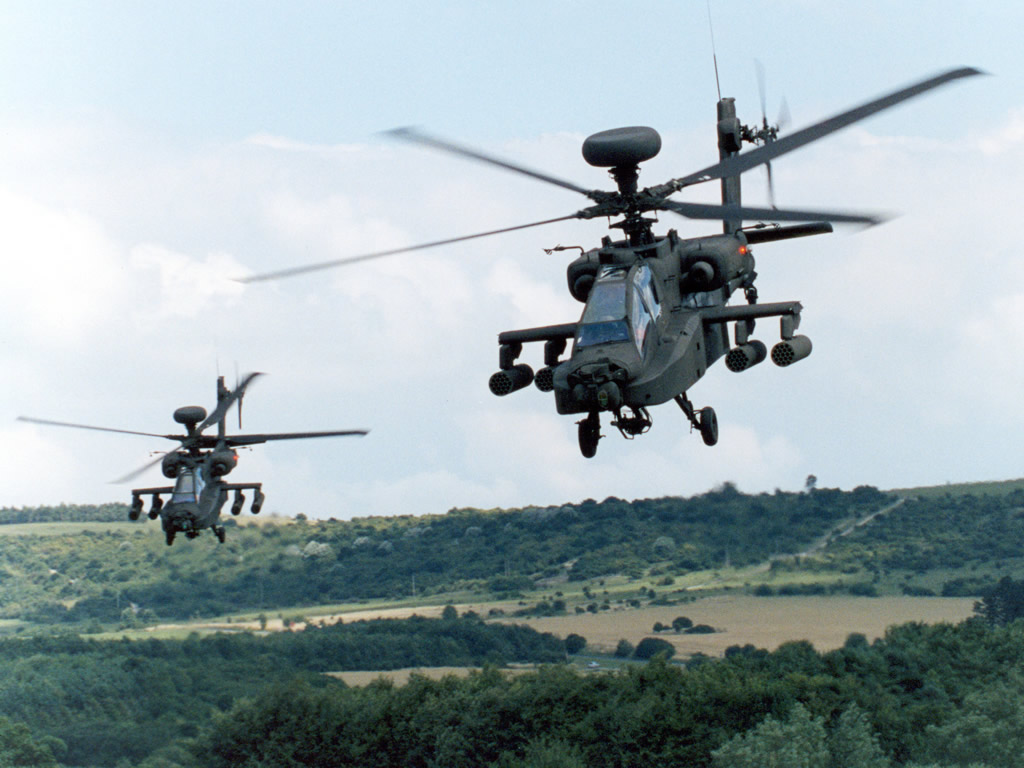
Taiwan first international client for AH-64D Apache Longbow [UPDATED]

The announcement confirms that Taiwan will be the first country outside the US to obtain the world's most advanced combat helicopter, whose fire control radar can locate as many as 128 targets within one minute

Taiwan has become the first country to make an international purchase of the Block III Longbow Fire Control Radar (FCR), a powerful target acquisition and prioritization system and a key component of the AH-64D Apache helicopter.

This was made official in a Lockheed Martin Corp press release on Wednesday, which stated that Longbow Limited Liability Co, a joint venture of Lockheed Martin and Northrop Grumman Corp, had received a US$181 million contract from the US Army for AH-64D Apache Block III Longbow systems.

According to the press release, the contract includes the first international purchase of the Block III Longbow Fire Control Radar (FCR), for a total of 15 Block III Longbow FCR systems.

My article, published today in the Taipei Times, continues here.

UPDATE: A source close to the defense industry informs me that due to cost considerations, Taiwan has for the time being delayed purchase of the AGM-114L Hellfire missiles included in the October 2008 package. In other words, the fancy FCR capabilities will be essentially useless.

Thursday, January 05, 2012

Rumors, scandal and the outcome of Taiwan 2012

In a presidential campaign that can only be described as underwhelming, the scandals have failed to convince voters to change their longstanding political preferences

The campaigns for the January 14 presidential and legislative elections in Taiwan will be remembered mostly for the allegations and counter-allegations made by the main contestants in the race rather than their policy platforms. It would therefore be logical to assume that the headline-grabbing scandals will be determinant factors in voting decision.

They will not. Despite claims, which first emerged in Next Magazine and have since been picked up by international media, that the National Security Council ordered the national security apparatus to spy on President Ma Ying-jeou’s opponents in the election, there is little evidence that such allegations have had any impact on expected voting patterns. This also appears to be the case with repeated allegations that cabinet officials have violated political neutrality by supporting Ma.

The same applies to the charges by Ma’s Chinese Nationalist Party (KMT) that Tsai Ing-wen, the Democratic Progressive Party (DPP) candidate, illegally profiteered from her role in Yu Chang Biologics Co when she was vice premier. In both cases (there were other, lesser ones), documents have been brought forth that appear to support the claims advanced by the accusers.

My article, published today on the University of Nottingham’s Bullets & Ballots Web site, continues here.

Tuesday, January 03, 2012

Chinese satellites turn ‘dumb’ bombs into ‘smart’ ones

China has been developing the GPS-based kit since 2003. Now that the Beidou positioning system is operational, the smart bombs have gotten smarter

Fears surrounding the commercial debut of the China’s Beidou (北斗) satellite navigation system last week have centered on the development by the Chinese military in recent years of a bomb kit that can transform “dumb” bombs into “smart” ones.

Chief among them is the Lei Shi-6 (LS-6, 雷石-6) “Thunder Stone” precision-guided glide bomb first unveiled by the Luoyang Optoelectro Technology Development Center in late 2006. The guidance “fit,” which is attached to conventional bombs and has deployable wings, can support a number of bomb weights, from 50kg to 500kg.

Once installed, a “dumb” bomb becomes a “standoff” maneuverable precision-guided bomb similar to the US-developed Joint Attack Direct Munition (JDAM), which relies on US satellites for guidance. Unlike laser-guided weapons, projectiles using satellites for guidance can be used in any weather conditions.

Relying on the navigation capabilities provided by the Beidou satellites, aircraft pilots could limit their exposure to an enemy’s aircraft and air defense system by releasing their smart bomb from a distance. The LS-6 has a range of 40km when dropped at an altitude of 8,000m and 60km at 10,000m, bringing its ordnance at a speed of Mach 1 to within 15m of a target.

My article, published today in the Taipei Times, continues here.

A professional military comes at a cost

Creating an all-volunteer force is a hugely expensive endeavor that requires fundamental changes in training and organization. Getting it wrong could severely undermine national defense

The Ministry of National Defense confirmed on Thursday that it would implement an all-volunteer military system next year and drastically cut down on the military training citizens born after 1993 will have to undergo.

Plans to create a professional military did not begin with the administration of President Ma Ying-jeou (馬英九). Not only did Ma allude to a similar commitment in 2008, but the idea was already being discussed under former President Chen Shui-bian’s (陳水扁) Democratic Progressive Party (DPP) government.

Why two administrations that tend to disagree with each other on so many issues have both expressed a desire to create an all-volunteer military is simple: It makes sense — at least on paper.

However, if such a plan were to materialize next year, the legislature would either have to be willing to release extraordinary budgets or substantially increase the annual defense budget. Judging from its performance in the past four years, the Ma administration, even with his Chinese Nationalist Party (KMT) enjoying a super-majority in the legislature, has shown no inclination to release such a budget.

My unsigned editorial, published today in the Taipei Times, continues here.

Friday, December 30, 2011

Chinese magazine pressured on Taiwan elections

Caijing, one of the rare independent publications in China, appears to have run into the limits of Beijing’s willingness to allow coverage on the election and Taiwan’s democratization

Despite signs the Chinese authorities are allowing unprecedented access to information about next month’s elections in Taiwan, Beijing remains intransigent on certain issues it regards as lines in the sand and it is taking action to ensure that its control remains unchallenged.

A senior editor at Caijing (財經), an independent Beijing-based publication that focuses predominantly on finance and politics, was recently invited by the Lung Yingtai Foundation in Taipei to visit Taiwan for a month to experience the elections, said Bruce Jacobs, a professor of Asian languages and studies at Monash University in Australia and a specialist on Taiwan.

Founded in 2005 by a group of entrepreneurs and intellectuals, the foundation is committed to fostering cultural exchanges, intellectual dialogue and enlivening a positive civic spirit within a democratic framework. The foundation has previously invited Chinese academics and journalists to visit Taiwan on cultural exchanges.

However, the senior editor’s application to visit Taiwan was rejected by China’s Taiwan Affairs Office (TAO), Jacobs said. Undaunted, the editor, whose identity could not be revealed for this article, decided to travel to Taiwan via Hong Kong. Within 48 hours of his arrival, the TAO had reportedly faxed a document to the magazine’s office asking it to explain what the editor was doing in Taiwan.

My article, published today in the Taipei Times, continues here.

Thursday, December 29, 2011

Beidou satellites raise fears of threat to Taiwan

With resolution reaching 10 meters next year, the Beidou constellation of orbiters could provide guidance coordinates for a number of military devices, from precision-guided munitions to unmanned vehicles

Defense specialists are warning that China’s Beidou (北斗) satellite-based navigation system, which began providing services on Tuesday, could pose a long-term threat to Taiwan’s security and they are calling for countermeasures.

Xinhua news agency announced on Tuesday that the Beidou (“Compass”) Navigation Satellite System had begun providing initial positioning, navigation and timing services for China and the surrounding areas. Hoping to diminish its reliance on the US’ global positioning systems (GPS), China began work on the Beidou system in 2000.

Ten satellites which form the Beidou “constellation” have been launched since 2007, with six more launches scheduled for next year to provide extended coverage for the Asia-Pacific region. By 2020, the Beidou constellation will comprise 35 satellites.

At present, only the US and Russia, with its Glonass constellation of 24 satellites, have fully operational satellite-based navigation services, with the EU’s Galileo expected to enter full service in 2013. According to an October 2008 article by Jane’s Defence Weekly, China’s involvement in the Galileo project might have benefited the development of the Beidou constellation, especially dual-use technology used by the EU consortium.

Although China claims Beidou will provide commercial services, such as mapping, fishery, transport, meteorology and telecommunications, the system could also be of great assistance to the People’s Liberation Army (PLA).

My article, published today in the Taipei Times, continues here.

Wednesday, December 28, 2011

Taiwan Air Force upgrading ‘Skyguard’ system

One defense analyst has called the upgrade the best development in the nation’s point defenses against precision-guided munitions

Taiwan’s ability to defend itself against Chinese aircraft and missile attacks is expected to receive a shot in the arm following the scheduled completion next year of an upgrade program for its “Skyguard” short-range air defense system.

As part of the three-year, NT$3.08 billion (US$101.6 million) “Tian Wu 7” (天武7) air defense upgrade program launched in 2009, Taiwan’s air force has been converting the GDF-003 Oerlikon 35mm twin cannons that are part of the Skyguard Air Defense System to a GDF-006 configuration, which will use Advanced Hit Efficiency And Destruction (AHEAD) munitions to shoot down manned aircraft, unmanned aerial vehicles, cruise missiles, air-to-ground missiles and other targets.

Each AHEAD round consists of a shell filled with 152 tungsten pellets with a small programmable charge timed to detonate several meters in front of the target, sending an expanding cone of pellets forward to destroy the incoming projectile.

According to this month’s edition of the Chinese-language Asia-Pacific Defense Magazine, the air force has 24 “Sky Sentinel” radar units and 50 Oerlikon 35mm twin cannons. Each barrel can fire 550 rounds per minute at an altitude of about 4km and within a range of 8.5km.

My article, published today in the Taipei Times, continues here.

Tuesday, December 27, 2011

Ex-AIT director taking fire in Hong Kong

First it was media mogul Jimmy Lai acting as paymaster to the opposition. Now Stephen Young is being accused of trying to create chaos in the territory. All signs that Beijing is nervous about 2012

Former American Institute in Taiwan (AIT) director Stephen Young has run into trouble with Chinese authorities in Hong Kong for reportedly ignoring “solemn warnings” to keep quiet about democracy in the territory, the Washington Post reported.

Young, who assumed the position of US consul-general in Hong Kong in March last year, has in recent months faced accusations by Chinese Communist Party (CCP)-controlled media in the territory of being part of a US plot to sow discord in the territory to “keep China down.”

Leading the attacks against Young, the Chinese-language and pro-Beijing Wen Wei Po has said the diplomat comes from “an anti-China, anti-communist family,” adding that “wherever he goes, there is trouble and so-called color revolution.” The paper has also reportedly launched attacks on academics who favor democratic reform in Hong Kong.

The Mandarin-speaking Young was AIT director from March 2006 until July 2009, and US ambassador to Kyrgyzstan from 2003 until 2005, when the former Soviet republic was rocked by a democratic uprising.

The severity of the campaign against Young climbed a notch after Lu Xinhua (呂新華), head of the Hong Kong branch of the Chinese Ministry of Foreign Affairs, made a personal rebuke during a meeting with reporters in Hong Kong recently.

My article, published today in the Taipei Times, continues here.

Bad, bad timing on visa waiver announcement

Both the DPP and the KMT deserve praise for the achievement. But the US timed its announcement in a way that invites exploitation by the KMT ahead of crucial elections

Some great news came Taiwan’s way on Thursday when the American Institute in Taiwan (AIT) announced that Taiwan had been put on the candidate list for the US’ visa-waiver program, taking the nation another step closer to sealing the coveted agreement.

However welcome the news may have been, the timing could hardly have been worse, coming as it did a mere three weeks before the closely fought presidential election. Washington’s decision to make the announcement when it did can be explained in two ways: either is it naive and unaware of the political uses that could be made of the news or, despite its professions to the contrary, it is taking sides in Taiwan’s elections. Either way, this does not reflect too well on Washington’s ability to remain neutral in the electoral affairs of a democratic ally.

Reporters had hardly made their way back from the AIT when Deputy Minister of Foreign Affairs Tung Kuoyu (董國猷) was heard hailing the announcement as reflecting Washington’s high degree of confidence in President Ma Ying-jeou (馬英九) and the Chinese Nationalist Party (KMT). For his part, KMT Legislator Lin Yu-fang (林郁方) compared the nomination to a “cardiac stimulant” that gave Ma an advantage over Democratic Progressive Party presidential candidate Tsai Ing-wen (蔡英文) in the election.

My unsigned editorial, published today in the Taipei Times, continues here.

Wednesday, December 21, 2011

First Chinese aircraft carrier could soon embark on third sea trial

Less that two weeks after completing its second sea trial, the Varyag looks set to embark on a third journey at sea

China’s Liaoning Air Police on Monday issued a navigational warning for a zone northwest of the Bohai Sea, east of Dalian, where the country’s first aircraft carrier is berthed, amid reports that the refurbished Soviet-era vessel could soon embark on a third sea trial.

The 60,000 tonne Kuznetsov-class Varyag returned to Dalian Port on Dec. 11 after completing a 13-day sea trial, its second since the carrier was officially unveiled to the world.

Quoting military enthusiasts at Dalian, the reports said the Varyag was docked at the pier and that “faint smoke” was emanating from the vessel, a sign that the engines were running.

[...]

In addition, the life rafts had not been removed and weapons systems were not covered by protective sheeting, reports said. Unnamed sources said landings could be attempted during the third sea trial. No date has been given yet for the operation.

My article, published today in the Taipei Times, continues here.

Tuesday, December 20, 2011

Calm down, no DF-21D’s heading our way

There’s already enough speculation about China’s intentions out there. We don’t need journalistic irresponsibility to amplify the problem

Readers who are feeling a sense of alarm over recent reports in Taiwanese media that China could test-fire a Dong Feng-21D anti-ship missile in the Taiwan Strait prior to the Jan. 14 elections in Taiwan should note that the article in Defense News from which those claims originate was in fact a Nov. 21 op-ed by Roger Cliff, formerly of RAND Corp and now at the Project 2049 Institute. Once again, media here are omitting to mention that very crucial factor in news making — neglect that got me into no small amount of trouble when a certain newspaper failed to mention that when it did a write-up of one of my op-eds in the Wall Street Journal.

Besides the fact that firing a DF-21D (or any missile, for that matter) off Taiwan mere days prior to a key presidential election in Taiwan would be the height of folly on Beijing’s part (one assumes it learned its lesson from the missile crisis of 1995-96), what Cliff does in his op-ed is merely speculative, based on the auspiciousness of one-one-one, added to the fact that China has used Jan. 11 on previous occasions to conduct “surprise” military tests.

There is a very real difference between “hard news” and opinion. Had that distinction been made, no journalist would have asked a Ministry of National Defense spokesman at a press conference today (and in the process, made a fool of himself) to comment on “alleged plans by China to fire a ‘carrier killer’ missile near Taiwan before the elections.”

A tyrant, a dissident and a writer

Three larger-than-life men passed away in the past few days, and each, in his own way, will leave a mark on history

North Korean leader Kim Jong-il, who for more than 17 years led an autocratic economic system that could only be described as the very antithesis of capitalism, would have taken delight at the irony that stock markets across Asia had dropped following the announcement of his death.

Equally ironic, albeit for different reasons, is that his death occurred within 24 hours of that of another man at the other end of the political spectrum, former Czech president Vaclav Havel, and within 48 hours of that of a staunch opponent of totalitarianism, Christopher Hitchens.

More than the era in which they lived unites the trio, as each played a role in defining our times, and each was an actor on the stage where totalitarianism collided with liberty.

My unsigned editorial, published today in the Taipei Times, continues here.

Sale of additional PAC-3 units to Taiwan proceeds

After initial fears that the year-end deadline to sign the LOA would pass, the agreement is finally inked

Raytheon has signed a US$685.7 million Foreign Military Sales (FMS) contract to provide two additional new fire units of the combat-proven Patriot Air and Missile Defense System for Taiwan, the company announced.

In a press release last week, the defense contractor said the fire units would feature new advanced technology, improved man-machine interface and reduced life cycle costs.

In 2008, Raytheon was awarded a contract to upgrade Taiwan’s existing Patriot Advanced Capability-2 (PAC-2) systems, followed by a second one in 2009 for new systems. The first PAC-3 upgraded radar system was delivered to Taiwan earlier this year, 10 months ahead of the original program plan requested by the Taiwanese Air Force.

The new fire units were part of the US$6.4 billion arms package agreed by the administration of US President Barack Obama in January last year.

My article, published today in the Taipei Times, continues here.

Monday, December 19, 2011

US qualms may have nixed Taiwan space launch program

Potential military applications may have prompted Washington to apply pressure on Taiwan not to embark on an indigenous satellite launcher program

US fears that an indigenous satellite launcher capability for Taiwan could help it develop longer-range missiles may have forced Taipei to abandon, or at least delay, the project, sources told the Taipei Times.

After years of relying on foreign space-launch capabilities to lift payloads into space, reports began emerging in 2008 that Taiwan’s National Space Program Office (NSPO) had long-term plans to develop an indigenous satellite and launcher for scientific use.

At the Fourth Asian Space Conference that year, a paper presented by NSPO officials said the agency’s first choice to launch FORMOSAT-6, a micro-satellite under development to carry out scientific investigation, would be the Taiwan Small Launch Vehicle (TSLV).

[...]

A cable from the American Institute in Taiwan (AIT) dated April 6, 2009, reported that then-NSPO director-general Miau Jiun-jih (苗君易) had informed the AIT five days earlier that the agency’s long-term plan called for Taiwan to develop an indigenous satellite and launcher and that Taiwan was “very keen for US reaction to that plan.”

The cable said Miau had told the AIT that the TSLV would be locally built in cooperation with CSIST and used to propel locally made satellites weighing between 50kg and 200kg into orbit. A test launch for a 50kg satellite — very likely FORMOSAT-6 — was scheduled for next year to collect data on disaster management and environmental observation.

Based on the lack of progress in developing a TSLV, it appears the US reaction to the plan was negative.

My article, published today in the Taipei Times, continues here.

Friday, December 16, 2011

In memoriam: Christopher Hitchens

Writer, journalist, book lover, renaissance man, Christopher Hitchens passed away yesterday at age 62, after a battle with esophageal cancer

Often controversial, Mr Hitchens never minced his words and would not self-censor for the sake of political correctness. Everybody, and every subject, was fair game, from Henry Kissinger to Mother Theresa. Even religion.

It would be impossible, given his body of work, to agree with everything the man wrote; for me, his apparent volte-face on Iraq following the Sept. 11, 2001, attacks on the US, after years of taking up the Palestinian cause alongside the likes of his friend Edward Said (whom he still does not spare in his memoir, Hitch-22), was one such occasion where we parted ways ideologically (not that he was alone, as another inspiration of mine, Michael Ignatieff, made a similar U-turn).

The occasional disagreement notwithstanding, Mr Hitchens served as a tremendous inspiration on my career as a journalist. The breadth of his knowledge (there isn’t a book he doesn’t seem to have read; his collection of essays, Arguably, makes that pretty clear) and the sheer musicality of his writing soared to such heights as I cannot ever hope to achieve, though both remain, fixed high above, as a reflection of what I aspire to. (Some critics of my writing style, which tends to favor long, complex sentences, should know that Mr Hitchens shares some of the blame. He is also partly to blame for the piles of books that occupy a lot of floor space at my house.) 

Whether one liked or disliked him — and there are plenty in both camps — Mr Hitchens’ departure is a great loss to journalism, literature, and all of us who continually strive to make sense of this complex, mad world of ours.

I wish I could write something better to do the man justice, but this is all I can summon for the moment. Cheers, Mr Hitchens.

Thursday, December 15, 2011

Taiwan giving up on US subs, eyeing local plan

MND has reportedly commissioned a local shipbuilder to contract a country other than the US capable of building submarines for cooperation in building conventional subs

Taiwan has all but given up on acquiring diesel-electric submarines from the US and is expected to embark on a domestic program with assistance from abroad, a leading defense analyst told the Taipei Times.

Longstanding plans to augment Taiwan’s small and aging submarine fleet gained momentum in 2001, when the administration of US president George W. Bush offered to provide eight diesel-electric submarines to Taiwan for about US$12 billion.

With efforts going nowhere, in 2003 the Pentagon suggested that Taiwan consider buying refurbished submarines from Italy, and Rome reportedly agreed to sell four Nazario Sauro-class boats and an additional four following their decommissioning by the Italian Navy. However, Taipei rejected the offer, saying it wanted new submarines.

As a result of political wrangling in Taiwan’s legislature, moves by the Chinese Nationalist Party (KMT) and the US to appease Beijing amid efforts at cross-strait reconciliation, and pressure from China on Washington, Bush’s deal never materialized. [...] The arms package announced to the US Congress by US President Barack Obama in October did not include submarines, or even a feasibility study.

This could be about to change, with a US defense analyst familiar with the Taiwanese military saying he feels positive the navy will move ahead on the submarine program in the not-so-distant future.

My article, published today in the Taipei Times, continues here.

Wednesday, December 14, 2011

Ministry in F-16 upgrade wrangle

The Taiwanese Air Force could save a lot of money if it asked suppliers to bid on the jets’ upgrade, but the Ministry of National Defense seems to have only one supplier in mind

The Ministry of National Defense could be contravening a legislative directive if it does not request that the US government perform an open competition bidding process for suppliers involved in upgrading its fleet of 146 F-16A/Bs.

In a meeting on Oct. 12 attended by legislators from the Foreign Affairs and Defense Committee, Minister of National Defense Kao Hua-chu (高華柱) and a representative from the Directorate-General of Budget, Accounting and Statistics, the legislature stipulated that to ensure the proper use of government public resources, the ministry’s Letter of Agreement for the upgrade package for the F-16A/Bs “shall not specify any supplier and shall request the US team to perform open competition.”

Despite this directive, the ministry appears to have only one supplier in mind — Lockheed Martin Corp — and does not seem to have asked the US to facilitate competitive bids for avionics and weapons systems integration.

This comes as Lockheed Martin is locked in competition with BAE Systems over a program for avionics upgrades and weapons systems integration for 135 KF-16C/Ds for the South Korean air force (ROKAF) worth about US$1 billion.

My article, published today in the Taipei Times, continues here.