Sunday, July 03, 2011

Varyag sits tight despite rumors of first sea trial

For mechanical reasons or fears the sea trial would complicate an already tense situation in the South China Sea, China’s first aircraft carrier missed the CCP celebrations on Friday

The much-anticipated first sea trial of China’s refurbished aircraft carrier Varyag has been postponed until August at the earliest because unspecified mechanical problems, according to Chinese media.

Earlier reports had said the Kuznetsov-class carrier would go to sea on 1 July to coincide with the 90th anniversary of the founding of the Chinese Communist Party. However, an unnamed Chinese military official told Hong Kong media that certain parts and components of the 60,000-ton, Ukrainian-built ship needed “repair and maintenance.” 

There is also speculation that ongoing tensions in the South China Sea were behind the decision to postpone the launch, in case the dispute involving China, Vietnam and the Philippines was exacerbated.

My article, published on July 1 in Jane’s Defence Weekly, continues here (subscription required).

Friday, July 01, 2011

Air force receives first upgraded fighters

While good news for Taiwan, some the release of the upgraded indigenous fighters could serve as ammunition to the US State Department, which could argue that Taiwan doesn not need the F-16s

With efforts to acquire F-16C/D aircraft from the US in limbo, the air force was yesterday given a shot in the arm when it received the first six of a planned 71 upgraded multi-role Indigenous Defence Fighters (IDF).

The F-CK-1A/B MLU (“mid-life upgrade”) was unveiled during a handover ceremony at the Aerospace Industrial Development Corp (AIDC, 漢翔航空) plant in Shalu (沙鹿), Greater Taichung, attended by top brass and scores of politicians, including President Ma Ying-jeou (馬英九), Deputy Minister of National Defense Chao Shih-chang (趙世璋) and Taichung Mayor Jason Hu (胡志強).

Years in the making, the upgrade involves a revamping of the aircraft’s avionics and flight control systems, a triple-color heads-up display and anti-electronic jamming functions, as well as the full integration of air-to-ground and air-to-air missiles developed by the Chungshan Institute of Science and Technology (中山科學研究院), such as the Tien Chien II “Sky Sword.”

My article, published today in the Taipei Times, continues here.

Thursday, June 30, 2011

What Robert Gates leaves behind

His hands full with two major wars and an unstable North Korea, US Secretary of Defense Robert Gates made sure the Pentagon did not contradict the White House and the NSC on Taiwan and China

In his book Obama’s Wars, Bob Woodward writes that rather than take the lead on policy, Robert Gates tends to carefully evaluate which direction the wind is blowing in Washington before committing himself. This assessment of Gates’ personality as an old political survivor is supported by his role in shaping — or not shaping — US policy on Taiwan.

Over the years, few things have encapsulated Washington’s relations with Taipei as arms sales to Taiwan, an exercise whose significance goes well beyond the actual military items acquired by the island. In fact, arms sales have become a symbol of Washington’s commitment to the Taiwan Relations Act, which was signed into law in 1979 after the United States switched diplomatic ties from Taipei to Beijing.

During Gates’ tenure, the Pentagon was largely uninvolved in decision-making regarding the balance of power in the Taiwan Strait. The US, per its commitments under the TRA, must endeavor to ensure that Taiwan has the means to defend itself against China. That the balance of power has been allowed to shift to such an extent in Beijing’s favor is a reflection of policy preferences at the White House, the National Security Council and the State Department.

My take on Gate’s legacy, part of a photo essay in The Diplomat, continues here. Don’t miss the assessments by other commentators on Gates’ impact on the region.

Wednesday, June 29, 2011

Losing the new intelligence war

The Ma administration is orchestrating a fundamental reorientation in Taiwan’s posture vis-a-vis China that has created unprecedented opportunities for PRC espionage 

Despite a rapidly changing international context during the past half-century, the task of Taiwan’s national security apparatus has remained surprisingly stable and to this day continues to revolve around the sole principle of defending the nation from external aggression.

From the moment Chiang Kai-shek’s (蔣介石) Chinese Nationalist Party (KMT) abandoned its policy of “retaking” China from the Chinese Communist Party (CCP), the nature of the Taiwanese military turned into one that was — and is — predicated on homeland defense. While this may seem self-evident, it nevertheless contrasts sharply with other militaries whose mission is often capabilities-based, where technology and the options to which it gives rise drive policy.

Capabilities-based military forces, such as that of the US and, increasingly, China, are by default outward-looking, scanning for contingencies that reflect the latest weapons systems that are being developed or fielded. To a large degree, the Taiwanese military, and to a similar degree the South Korean military, look at their role from the opposite direction, developing policies and technologies to meet the very specific purpose of defending the nation. Theirs is therefore an inward-looking posture.

My op-ed, published today in the Taipei Times, continues here.

MND denies claims new F-16 bid failed

More confusion over attempts by Taiwan to purchase advanced fighter aircraft from the US

The Ministry of National Defense yesterday denied reports that Taiwan’s latest bid to purchase new F-16 aircraft was turned down by the US Department of State on Friday.

In an article on Monday, Defense News reported that the State Department had turned down a request by the Taiwan Economic and Cultural Representative Office (TECRO) in Washington to submit a new official letter of request (LOR) to the American Institute in Taiwan (AIT) for the 66 F-16C/Ds, which Taiwan has sought to purchase for years.

The article said the State Department had blocked the request on behalf of the US National Security Council.

A US source independently confirmed to the Taipei Times yesterday that the request was turned down.

This would be the fourth failed attempt to submit an LOR for the F-16s and the first by President Ma Ying-jeou’s (馬英九) administration. The first three bids were made between June 2006 and February 2007 under former president Chen Shui-bian (陳水扁).

My article, published today in the Taipei Times, continues here.

Tuesday, June 28, 2011

Leaked memo highlights CCP fear of Taiwan

In addition to directives constraining what Internet commentators can write about Taiwan, the US and democracy, a large number of keywords has been blocked on Sina Weibo, one of the most popular social media platforms in China

Leaked internal directives from Chinese Communist Party (CCP) provincial authorities to Internet commentators issued in the past week highlight fears in Beijing of the potentially “negative” impact of closer contact with democratic Taiwan.

The leaked memo, posted by the China Digital Times on Friday last week, instructs Internet commentators in China to exercise caution when discussing sensitive matters such as Taiwan and the US.

“In order to circumscribe the influence of Taiwanese democracy, in order to progress further in the work of guiding public opinion, and in accordance with the requirements established by higher authorities to ‘be strategic, be skilled,’ we hope that Internet commentators conscientiously study the mindset of netizens, grasp international developments, and better perform the work of being an Internet commentator,” the notice says.

My article, published today in the Taipei Times, continues here.

A small victory for freedom

An agreement between the largest telecoms operator in Taiwan and New Tang Dynasty Television gives hope that whenever pressure is strong and sustained enough, Taiwan can retain its hard-earned liberties and values

Under an administration that has faced its share of criticism by free speech advocates and journalists’ associations over the past three years, news last week that a row between New Tang Dynasty Television (NTD) and Chunghwa Telecom had been resolved was reason to rejoice.

Following weeks of uncertainty over whether Chunghwa Telecom, Taiwan’s largest telecommunications operator, would reverse its decision not to renew the broadcasting contract for NTD once it switched transmission to a new satellite in August, officials confirmed that an agreement had been reached and that the 3 million or so people in Taiwan who subscribe to the channel would continue to be able to watch it.

Chunghwa Telecom’s initial reaction, which contained both contradictions over alleged technical limitations and signs of intransigence, only inflamed speculation that the decision to drop NTD, well known for its critical reportage on the Chinese Communist Party, may have been political. The fact that the initial decision coincided with news that Chunghwa Telecom was expanding into the Chinese market could only compound fears that the company had struck a Faustian deal for reasons of access to the huge market across the Taiwan Strait.

My unsigned editorial, published today in the Taipei Times, continnues here.

Monday, June 27, 2011

CCP official ‘honeybaited’ by Taiwan: cable

News that former Chinese officials may have been seduced by an alleged Taiwanese spy come amid reports that China has been opening a series of ‘spy schools’ on university campuses

When Chinese authorities announced that former Chinese minister of finance Jin Renqing (金人慶) was stepping down in August 2007, they claimed he was doing so for “personal reasons.” According to a series of classified US diplomatic cables recently released by Wiki-Leaks, the real reason behind Jin’s resignation was his romantic involvement with a woman who was linked to several other prominent Chinese officials.

That woman [I have just learned she is being referred to as “Li Wei, 李薇”], it is alleged, was a Taiwanese intelligence operative.

One of the cables, sent by the US consulate in Shanghai and dated Sept. 7, 2007, described how some members of the top echelons of the Chinese Communist Party (CCP) would pass mistresses around and how one woman — described by a US official as “a promiscuous socialite” — had been involved romantically with at least three of them.

Aside from Jin, former Sinopec Corp (中國石化) chairman Chen Tonghai (陳同海) and former Chinese minister of agriculture Du Qinglin (杜青林) were suspected of ties with the woman.

My article, published today in the Taipei Times, continues here.


Note: It is said of “李薇” (whom reports say could also be one “Li Jie, 李姐”) that though she was not a “stunning beauty,” she had good conversation manners and used gentle words, “with gentle femininity.” Described as low-key, when major decisions needed to be made, she could “stroke the table to set the tone,” and was “vigorous and resolute.”

Saturday, June 25, 2011

US senator ups ante on stalled F-16 sale

A curveball by the senator from Texas could force the hand of an Obama administration that has been loath to anger Beijing over arms sales to Taiwan

In a surprising turn of events over US arms sales to Taiwan, a US senator said he would use his powers to block a full Senate vote on the appointment of a new deputy secretary of state until Washington approves the sale of F-16C/D aircraft requested by Taipei.

US Senator for Texas John Cornyn, a member of the Armed Services Committee, said the US Department of State must inform Taipei that it would act on a formal Letter of Request (LOR) from the Taiwanese government to purchase 66 new F-16C/Ds. Should Washington fail to do so, Cornyn said he would use his powers to block a full Senate vote on the nomination of William Burns, currently US undersecretary of state for political affairs, as deputy secretary of state, the Washington Times reported on Wednesday, citing information from Senate aides.

Cornyn’s threatened hold also applies to the release by the Pentagon of a long-delayed report to Congress on the balance of air power in the Taiwan Strait.

My article, published today in the Taipei Times, continues here with comments by Rupert Hammond Chambers and Joseph Wu.

Friday, June 24, 2011

Ex-US Army chief of staff visits Taiwan

Such visits, though low profile, are nevertheless perceived as a symbol of continued US involvement, both at the official and unofficial level, in the defense of Taiwan

A little more than two months after retiring as US Army chief of staff, four-star General George Casey Jr is visiting Taiwan at the invitation of the Republic of China Army, sources have confirmed to the Taipei Times.

Among other activities, Casey was scheduled to address National Defense University sometime this week. Although the American Institute in Taiwan (AIT) would neither confirm the visit nor provide an itinerary, Casey is believed to have visited the AIT’s office as well as the site of its future home in Neihu (內湖). Unconfirmed reports say Casey has also visited a number of military bases and is being escorted around by a Defense Intelligence Agency official from the institute.

A spokesman for the Ministry of National Defense, who also would not confirm Casey’s visit, said it was not unusual for Taiwan to extend invitations to recently retired senior US military officers.

My article, published today in the Taipei Times, continues here.

Thursday, June 23, 2011

US, Japan call for strong Asia-Pacific defense

While it strove to avoid singling out China, the joint statement of the 2+2 ministerial was a clear indicator that Beijing is increasingly a source of worry for the region

Top US and Japanese defense and foreign affairs officials on Tuesday reaffirmed the US-Japan Alliance and called for peaceful resolution of disputes in the Taiwan Strait through dialogue, while admitting that plans to relocate US troops from a military base in Okinawa would miss their deadline.

The Security Consultative Committee meeting, held in Washington, involved US Secretary of State Hillary Rodham Clinton, US Secretary of Defense Robert Gates, Japanese Minister of Foreign Affairs Takeaki Matsumoto and Japanese Minister of National Defense Toshimi Kitazawa. This was the first meeting of the committee, informally known as the “2+2 ministerial,” in four years.

In a joint statement, the committee said it recognized the need to address a number of challenges in an “increasingly uncertain security environment,” which included expanding military capabilities and activities in the region, as well as the emergence of non-traditional security concerns.

The US government reaffirmed its commitment to the defense of Japan and to peace and security in the Asia-Pacific region, including through regional alliances and the full range of US military capabilities, both nuclear and conventional.

My article, published today in the Taipei Times, continues here.

Who’s in charge of policymaking?

It would be in the interest of the Ma administration to call China’s Taiwan Affairs Office to account over recent comments that make a mockery of the sovereignty of Taiwan

More and more, China’s Taiwan Affairs Office (TAO) is behaving as if Taiwan were under the administrative control of the People’s Republic of China (PRC). Two recent instances suffice to highlight the matter — one involving a soon-to-be-implemented policy allowing individual Chinese to travel to Taiwan and the other concerning reports that the Taiwanese navy would send vessels to patrol waters surrounding contested islands in the South China Sea.

In both cases, comments by TAO officials purposefully gave the impression that real decision-making powers existed not in Taipei, but rather in Beijing. Whether those comments were propaganda efforts or stemmed from a firm, if confabulatory belief that this is the case is not as important as the fact that the government in Taipei failed to counter the claims with the decisiveness that the situation called for.

My op-ed, published today in the Taipei Times, continues here.

Wednesday, June 22, 2011

China’s first aircraft carrier set for sea trial next week

Symbolism and signaling are both behind the decision to take the ‘Varyag’ on its first venture away from port

After years of refurbishing in Dalian, the Soviet-era Varyag will embark on its first sea trial on July 1 to coincide with the 90th anniversary of the founding of the Chinese Communist Party — and to send a signal to neighboring states amid rising tensions in the South China Sea. Chinese officials, however, say a number of variables, including bad weather, could force a rescheduling.

As to the official launch of the yet-to-be named carrier (“Shi Lang” is just one of many options, officials claim), we’ll have to wait until Oct. 1, 2012, with a solid year of work remaining to be completed on weapons systems and other devices.

My article, published today in Jane’s Defence Weekly, continues here.

PLA Navy JT-9 trainer aircraft unveiled

The new trainer aircraft is yet another piece falling into place in China’s aspirations for an aircraft-carrier force

The People’s Liberation Army Navy last week made public footage of its brand new JT-9 advanced carrier-borne training aircraft, which Chinese media claimed was “superior” to the US’ T-45 “Goshawk.” The JT-9, which initial reports had referred to as the JL-9H, is expected to become the main platform on which Chinese navy pilots practice takeoffs and landings on a carrier deck. Several months of training (and some losses) lie ahead for PLAN pilots before they attain the skill levels needed to be operational at sea.

My article, published today in Jane’s Defence Weekly, continues here (subscription required).

Tuesday, June 21, 2011

Blame the pirates, not Washington

Taiwanese officials who are growing impatient with the US over the death of a Taiwanese ship captain earlier this year should think twice before lodging accusations

Taiwan is no stranger to the threat posed by piracy at sea and the death of captain Wu Lai-yu (吳來于) last month during a gun battle between NATO and Somali pirates, who were keeping him captive on his ship, is a stark reminder of that reality.

Since the incident was made public, Taiwanese authorities and fishermen’s organizations have become increasingly vocal in their claims that US and NATO authorities have failed to provide a full account of what went wrong during the operation against the hijacked Jih Chun Tsai No. 68.

While it is perfectly reasonable for Wu’s family and Taiwanese authorities to expect answers on the matter, Wu’s accidental death should not be used to drive a wedge between Taipei and Washington, which it threatens to do as senior Taiwanese officials signal their impatience.

Unfortunate as Wu’s death may be, we should not forget that ultimately it was the Somali pirates, and not the officers on board the USS Stephen W. Groves or NATO members involved in counterpiracy efforts, who bear responsibility for his death. Had Somali pirates not broken international law and hijacked his vessel, Wu would be alive today, and no amount of finger pointing or proclamations of patience running short will resuscitate him.

My unsigned editorial, published today in the Taipei Times, continues here.

Saturday, June 18, 2011

Taiwan adopts leniency provision to address growing espionage problem

Facing an overwhelming espionage threat, Taiwan is adopting counter-intelligence measures that, at best, will only provide stopgap benefits

In the wake of the nation’s worst spy case in half a century, Taiwan’s legislature has passed an amendment to regulations that would grant lenient treatment, and in some cases pardons, to double agents who voluntarily turn themselves in.

Under existing law, spies who surrender to the authorities still face up to life imprisonment. The amendment, introduced in early June, is seen as an incentive to prevent additional damage to national security. Lin Yu-fang (林郁方), a legislator from the ruling Kuomintang who initiated the legal revision, said recent major espionage cases, such as that involving Major General Lo Hsien-che (羅賢哲), had underscored the shortcomings in the existing law.

However, closer cross-strait ties are making it more difficult for counterintelligence agencies to monitor every target and possible recruits, while ambiguous mandates and intelligence turf wars are creating further opportunities for penetration by Chinese intelligence. Ongoing efforts to divorce the Chungshan Institute of Science and Technology (CSIST), Taiwan’s premier defence research institute, from the defence ministry — a move that could occur as early as 2012 — could also present a serious security challenge, given the interest of the Chinese intelligence apparatus in the organization behind key technologies such as the Hsiung Feng IIE cruise missile.

My article, published today in Jane’s Intelligence Weekly, continues here (subscription required).

Tuesday, June 14, 2011

Abdicating sovereignty, one step at a time

From Chiang-era anti-communist propaganda on Green Island to the .tw suffix on tourism Web sites, Chinese sensibilities are being hurt, and Taiwanese are under pressure to rectify the matter, or else risk being marginalized

Despite the touted economic benefits of flourishing Chinese tourism to Taiwan, it is becoming increasingly clear that the dividends are coming at a price — one that, sadly, some seem willing to pay.

With some People’s Republic of China nationals able to travel independently to Taiwan beginning later this month, the Yilan County Business and Tourism Department last week announced it wanted to open a Web site in China and, in doing so, would likely drop the “.tw” suffix to make itself more palatable to Chinese authorities.

A representative from the Yilan County Lodging Association also said that homestays and bed-and-breakfast operators in the county would probably encounter severe difficulty attracting Chinese tourists if they insist on using the “.tw” suffix, an indication that operators and officials may have little compunction in making such a sacrifice in the name of business.

Ostensibly seen as a small compromise on the part of Yilan officials, their willingness to abandon yet another symbol of Taiwan’s sovereignty nevertheless risks engaging the nation further down what could be a very slippery slope. Not only is this flexibility voluntary, it sends a signal to Beijing that a simple nudge or threat will likely suffice when it wants to exact further concessions from Taiwan in the future.

My unsigned editorial, published today in the Taipei Times, continues here.

Monday, June 13, 2011

Analysis: Demystifying China’s ‘red line’ on the F-16s

While they should not be taken lightly, threats of retaliation by Beijing over arms sales to Taiwan are often more bluster than a real promise of pain

With pressure mounting on the administration of US President Barack Obama to release the 66 F-16C/D aircraft requested by Taipei, Chinese officials have threatened that such a sale would cross a so-called “red line” that risked damaging relations between Beijing and Washington.

As defense experts and officials endeavor to explain Washington’s reluctance to release the fighter aircraft — touted as necessary to maintain a balance of air power in the Taiwan Strait — many have concluded that crossing Beijing’s red line would come at an unbearable cost to the US. However, beyond Beijing’s threat of once again suspending military exchanges with the US, the consequences of crossing the red line remain largely undefined.

When asked by the Taipei Times to help define what those costs might entail, a number of experts seemed to agree on the following conclusion: Not only would Beijing have limited retaliatory options, but the US could mitigate their impact with relative ease.

Furthermore, if the past 20 years of cross-strait negotiations are any indication, there is no correlation between major US arms sales to Taiwan and a chill in relations between Taipei and Beijing — in fact, major arms packages released in 1992, 2008 and last year were accompanied by diplomatic breakthroughs across the Strait.

My article, published today in the Taipei Times, continues here.

Tuesday, June 07, 2011

Liang’s ‘olive branch’ is (also) a threat

How Beijing defines expansionism, or lack thereof, differs markedly from the norm. We ignore that difference at our own peril

Addressing the Shangri-La Dialogue in Singapore on Sunday, Chinese Minister of National Defense General Liang Guanglie (梁光烈, pictured above) struck all the right notes when he said that China would not become a military threat and would never seek hegemony or military expansion.

While undoubtedly reassuring, that “solemn pledge” by Beijing to the international community was, as is often the case with such proclamations by Chinese officials, more revealing for what it didn’t say.

It is true that China does not have expansionist or imperial designs on its neighbors in the Western understanding of the term. It does not seek to occupy other countries or overthrow governments whose policies it finds disagreeable, nor does it want to impose its own political system on others. In that regard, Beijing has been consistent in its adherence to the principle of non-interference in the domestic affairs of other countries and Liang’s comments were a reflection of that policy from the military.

What he did not say, however, is that Beijing’s concept of expansionism differs from the way it is normally understood, and therein lie the seeds of potential future conflict.

My unsigned editorial, published today in the Taipei Times, continues here.

Wednesday, June 01, 2011

PLA sets up cyber security team

A former Taiwanese NSC official says the fact that the unit is under regional, rather than central, command is a sign that it is not highly sensitive

China has established a cyber security unit to upgrade the Internet security of its military, a Chinese defence spokesman confirmed on 25 May. The PLA’s elite ‘cyber blue team’ comprises about 30 Internet specialists and was deployed under the Guangzhou Military Region in southern China.

My article, published in Jane’s Defence Weekly on May 31, continues here (subscription required).

NTD-AP angry at lack of progress in Chunghwa dispute

The station, known for its critical reportage about the Chinese government, says it is still awaiting answers by the telecoms operator and a government watchdog for the decision not to renew its broadcasting contract

New Tang Dynasty Television Asia-Pacific (NTD-AP) on Monday lamented what it called a lack of progress in an ongoing dispute with Chunghwa Telecom, which on April 11 announced that it would not renew the station’s broadcasting license after it expires in August.

During an interdepartmental meeting on Tuesday last week attended by officials from the Ministry of Transportation and Communications (MOTC), the National Communications Commission (NCC) and representatives from NTD, Premier Wu Den-yih (吳敦義) said Chunghwa needed to protect Taiwan’s democratic -principles and to continue its satellite contract with NTD-AP.

In remarks seen as promising by the station, Wu said he wanted Chunghwa to give NTD-AP priority on a new satellite that will enter service in August and that if there really was insufficient bandwidth, as Chunghwa says, the company should rent another satellite with the same coverage as the current one and continue servicing NTD-AP.

My article, published today in the Taipei Times, continues here.

Tuesday, May 31, 2011

Analysis: China eyes ‘extraterritoriality’ through use of UAVs

As China gains self-confidence, it could begin exercising certain rights that for the past two decades have been principally a US prerogative. UAVs could be that first challenge

“Unmanned aerial vehicles [UAV] and helicopters will play a bigger role in anti-terrorism missions in the future, both at home and abroad,” Ma Tenglong (馬騰龍), a marketing manager at the Aviation Industry Corp of China (AVIC), China’s largest aircraft manufacturer, said at the 4th China (Beijing) International Exhibition and Symposium on Police Equipment and Anti Terrorism Technology and Equipment (CIPATE) earlier this month.

Although Beijing’s interest in UAVs has been known for years, it wasn’t until the 8th China International Aviation and Aerospace Exhibition (Airshow China) in Zhuhai, Guangdong Province, in November last year that the scope of Chinese capabilities in that department was fully unveiled. In all, more than 25 models of UAVs were showcased and a good number of them had dual-use capabilities, meaning that they had both civilian and military applications.

While the development and deployment of unmanned vehicles by the Chinese military and security apparatus adds to an already complex situation in Asia, it is a perfectly natural consequence of China’s rise and Beijing is only following the example set by other modern militaries the world over.

However, what is more worrying, experts say, is that Chinese officials appear to have been impressed by, and to have learned lessons from, precedents set by the US.

My article, published today in the Taipei Times, continues here.

Tsai seeks talks, but does Beijing?

Only the insane repeat failed behavior with the expectation that the outcome will be different

Ever since it became clear that Democratic Progressive Party (DPP) Chairperson Tsai Ing-wen (蔡英文) would lead the pan-green camp in next year’s presidential election, she has made much of the fact that her party is willing to enter into dialogue with Beijing and had set up a think tank specifically to meet that need.

Tsai’s affirmation that the DPP would adopt a “pragmatic” approach to cross-strait relations and seek dialogue with various segments of Chinese society is not only a welcome development, but also a necessary one. Given China’s clout in practically all matters nowadays, from the environment to the economy, a small nation like Taiwan cannot afford to pretend that the giant next door doesn’t exist.

Although Tsai’s strategy for such dialogue remains somewhat vague, from what we have been able to glean so far, it represents a continuation of the opening orchestrated by President Ma Ying-jeou (馬英九) over the past three years, with a few more red lines and a stricter adherence to the principle of Taiwan’s sovereignty.

Welcome though Tsai’s remarks may be, we should remember that the DPP has already gone down that road.

My unsigned editorial, published today in the Taipei Times, continues here.

Saturday, May 28, 2011

The diplomatic games they play

President Ma has been a model leader for US President Barack Obama’s administration, and yet Washington has not reciprocated with moves that could be helpful to his re-election campaign

Several Taiwan watchers reacted in anger earlier this month when the Presidential Office said it would turn to the European Parliament for help over the “Taiwan, Province of China” name controversy at the WHO. Why, several asked, would President Ma Ying-jeou’s (馬英九) administration not turn to its oldest ally, the US, for help on the matter and seek succor instead from the Europeans, whose assistance could be expected to bring but the most marginal of results?

It would be easy to assume that Ma’s decision was in fact based on the expectation that the EU would do nothing that risked causing anger in Beijing. By so doing, Ma, who is seeking re-election in January, would meet expectations at home that he do something to redress the slight, while ensuring that the outcome wouldn’t undermine relations with Beijing, which remains the core of his current and future policy.

While there may be some validity to this contention, the context in which the controversy emerged provides alternative explanations.

My op-ed, published today in the Taipei Times, continues here.

Friday, May 27, 2011

NSB director confirms PRC deployment of ‘new’ missile unit in Guangdong Province

In addition to medium-range missiles, the unit, whose existence has actually been known since at least July last year, could be the first in China to deploy the DF-21D anti-ship ballistic missile, analysts say

National Security Bureau (NSB) Director Tsai Der-sheng (蔡得勝) confirmed that China had deployed a “new” missile unit near Taiwan, a Chinese Nationalist Party (KMT) lawmaker said yesterday.

Tsai described the new unit, located in Guangdong Province, while replying to queries last week by KMT Legislator Lin Yu-fang (林郁方).

“The unit, carrying the code number 96166 ... is indeed a new unit, probably a new ballistic missile brigade,” a statement by Lin quoted Tsai as saying, without providing further details.

Chinese media and US defense analysts have been reporting on the unit for several months, from which more information can be gleaned.

Xinhua news agency on July 28 last year reported the construction of facilities for a new Second Artillery missile brigade, known as the 96166 Unit, in Shaoguan, Guangdong Province, which was already home to the 96169 short-range ballistic missile unit in Meizhou.

My article, published today in the Taipei Times, continues here.

Thursday, May 26, 2011

Defense minister to lead China’s Shangri-La delegation

The latest in a series of efforts by Beijing to ‘normalize’ its military relations with the rest of the world

During its second regular press conference on 25 May, the Chinese Ministry of National Defense announced that Defense Minister Liang Guanglie (梁光烈) will be leading the Chinese delegation at the 10th Shangri-La Dialogue in Singapore next month, the first time a Chinese defense minister will attend the annual security conference.

My article, published yesterday in Jane’s Defence Weekly, continues here (subscription required).

Tuesday, May 24, 2011

Chen Bingde wasn’t lying, entirely

Chinese officials aren’t being vague out of carelessness or some ideological proclivity for imprecision. They know exactly what they are doing

People’s Liberation Army (PLA) Chief of General Staff Chen Bingde (陳炳德, pictured left), who visited Washington last week, caused a bit of a stir when he claimed that China only had a garrison deployment across from Taiwan and did not have operational deployments, much less missiles, stationed there.

While those comments were immediately ridiculed by Taiwanese authorities and the US Department of Defense, the fact of the matter is that Chen wasn’t lying outright — the veracity of his claim depends on how one defines “across from Taiwan.”

One thing that history should have taught us about negotiating with China is that it’s all about the context. If what Chen meant by “across from Taiwan” was China’s Fujian Province, then technically he was telling the truth, as the Second Artillery — the unit responsible for the bulk of China’s missile arsenal — has maintained a garrison in Fujian for more than a decade and it is not altogether impossible that missiles are not permanently deployed there.

My unsigned editorial, published today in the Taipei Times, continues here.

Monday, May 23, 2011

Analysis: Questions remain on China’s nuclear stance


Various hurdles make it nearly impossible to assess the true scope of the Chinese nuclear arsenal, and doubts remain over its no first use policy

A recent report on China’s nuclear weapons capabilities has re-ignited debate on the country’s nuclear policy and the overall lack of transparency surrounding the People’s Liberation Army (PLA).

In its China’s Nuclear Arsenal: Status and Evolution briefing paper released on Monday last week, the Union of Concerned Scientists (UCS) said the Chinese government had no intention of reaching numerical parity with the US on nuclear weapons and did not have the nuclear material to do so.

Released to coincide with the arrival of PLA Chief of General Staff Chen Bingde (陳炳德) in Washington, the paper said recent advances in China’s nuclear forces were intended to ensure the arsenal would survive an attack and preserve China’s ability to retaliate.

Beijing was not focused on increasing its offensive capability, it said, and its relatively small nuclear arsenal is solely for deterrent purposes.

[...]

Seen as the latest salvo in an ongoing debate on China’s nuclear missile arsenal and strategy, the report has been met with some skepticism by defense experts, who say that the UCS may have underestimated the number of nuclear warheads in the PLA arsenal.

My analysis, published today in the Taipei Times, continues here.

Sunday, May 22, 2011

Taiwan stuck in a ‘Red Queen race’

Not so long ago the battle was waged on the beaches of ‘Taiwan’ versus ‘Chinese Taipei.’ Taiwanese have now been forced to retreat to defensive battles of ‘Chinese Taipei’ versus ‘Taiwan, province of China’

One can sense that elections are coming when President Ma Ying-jeou’s (馬英九) camp resumes its use of the word “Taiwan,” a term that has become close to verboten in both official declarations and abroad in the three years since he took office.

The recent controversy over a leaked WHO memo instructing staff at the global health body to refer to Taiwan as “Taiwan, province of China” has Beijing’s fingers all over it — there is confirmation that the designation was the result of a memorandum of understanding signed by China and the WHO in 2005.

However, one need not look across the Taiwan Strait for signs that the designation Taiwan is under assault. Under Ma, an unwritten rule has emerged whereby government agencies now refer to the country as the Republic of China (ROC) rather than Taiwan, a policy that has been appropriated by the state-owned Central News Agency in both its Chinese and English-language coverage.

My op-ed, published today in the Taipei Times, continues here.

The China Post responded to my op-ed on May 26 with an editorial that is not only factually wrong, but, even more reprehensible, is downright xenophobic and engages in conspiracy theories — standard operating procedure for the pan-blue camp when responding to criticism nowadays. The editorial was also reproduced on the National Policy Foundation (KMT think tank) Web site.

Tuesday, May 17, 2011

Beijing will not go to rehab

Beijing once again demonstrated at the weekend that it is not ready to act as a responsible stakeholder, and no amount of goodwill on our part will change that

In recent months, a number of Chinese apologists have made the case that “abandoning” Taiwan to China would help improve strategic cooperation between Washington and Beijing. In their view, Taiwan remains the last impediment to a flourishing relationship between the two giants, and therefore yielding to Beijing’s irredentist claims on Taiwan would somehow unlock a future of manifold promises and stability.

In the name of journalistic neutrality, this newspaper has given space for this argument and has allowed those who disagree with such a strategy to also make their case. However, facts alone suffice to discredit calls for the international community — and ultimately on Taiwanese themselves — to sacrifice Taiwan for a more constructive relationship with Beijing.

One need look no further than news over the weekend that Beijing prevented the release of a damning UN document on missile proliferation involving Iran and North Korea, as well as the possibility that China may have acted as a transshipment point for related prohibited technology.

My unsigned editorial, published today in the Taipei Times, continues here.

Saturday, May 14, 2011

China inches towards openness with monthly press briefings

Despite the long history of the Chinese military, the organization only held its first regular press conference on April 27, and will now do so once a month. As the PLA unveils ultramodern platforms like the J-20 stealth fighter, the need for better communication can no longer be ignored. How much valuable information will emerge from this exercise remains to be seen 

The Chinese Ministry of National Defence will hold a regular monthly press conference to enhance openness and communication with the rest of the world, Chinese media have reported.

The press conferences, which will be held on the last Wednesday afternoon every month, will be hosted by ministry spokesman Geng Yansheng or Yang Yujun, deputy director of the ministry’s Information Affairs Office. The first regular press conference was held on 27 April.

‘Our press conference aims to spread important information about China’s national defence and military buildup in a timely matter and to help the world better understand China’s armed forces’, Xinhua quoted Geng as saying.

My article, published today in Jane’s Defence Weekly, continues here, with reactions from the Pentagon and Taiwan’s Ministry of National Defense (subscription required). My Taipei Times piece on the same subject, published on May 16, can be accessed here.

Thursday, May 12, 2011

Changing China is a pipe dream

As Friedrich Nietzsche once wrote, when you look long into an abyss, the abyss also looks into you

It’s hard to tell whether President Ma Ying-jeou’s (馬英九) administration is being naive, cynical or deceitful when it rationalizes ever-increasing engagement with China as part of a strategy to “change” its giant neighbor’s behavior.

Ever since it launched its policy of loosening up restrictions on all things Chinese nearly three years ago, the Ma administration has argued that closer ties between democratic Taiwan and authoritarian China could help foster reform in the latter.

From utterances of “Taiwan’s experience can serve as a reference for the future development of mainland China” during his New Year address on Jan. 1 to “We must continue to carry out exchanges with mainland China in order to have any influence over them ... otherwise, we will not be able to convey to them the meaning behind the values ... of freedom, democracy, human rights and rule of law that we have in Taiwan” during an interview with Der Spiegel published on Thursday last week, Ma has sold a policy that from the time China first “opened” to the West has failed miserably.

There is no reason to believe that Ma will succeed where countless others have floundered.

My op-ed, published today in the Taipei Times, continues here.

Wednesday, May 11, 2011

China unveils V750 drone helo

China is getting closer to deploying VTOL unmanned aerial vehicles for platforms such as Type 056 corvettes or for providing midcourse guidance for over-the-horizon SSMs

Chinese state media on 7 May announced the successful flight test of what has been described as the country’s largest unmanned helicopter. The test was held at Weifang Tianxiang Aerospace Industry Co Ltd test center in Weifang, Shandong Province, on Saturday, Xinhua news agency said. The medium-sized, 757kg V750 helicopter hovered for about 10 minutes, performing a few maneuvers before stably landing.

My article, published today in Jane’s Defence Weekly, can be accessed here (subscription required).

Tuesday, May 10, 2011

Hsiung Feng-III SSM deployment isn’t news — it’s old news

Unable to provide any deliverables on defense, the Ma administration has resorted to news recycling to give the appearance that it remains committed to a strong military

A number of newspapers and wire services in recent of days, among them the Chinese-language United Daily News and state-owned Central News Agency, have reported that the Taiwanese military has begun deploying Hsiung Feng-III (HF-3) anti-ship missiles on destroyers and corvettes ahead of the expected release later this year or early next year of China’s first aircraft carrier.

Although the news has been splashed all over the place and picked up by various online defense forums, one caveat is in order: Before you get too excited about this, it should be said that Taiwanese authorities have been saying pretty much the same thing since at least 2006. In fact, one Kidd-class destroyer was observed sporting four HF-3 launcher tubes while berthed at Suao in 2006. That same year, Taipei was announcing a budget for the production of 120 HF-3s and plans for their deployment at sea.

Chinese Nationalist Party (KMT) Legislator Lin Yu-fang (林郁方), who sits on the legislature’s Diplomacy and National Defense Committee, has taken the lead in ensuring the story gets as much exposure as possible.

Rather than actual news, this “revelation” is nothing more than deception, an attempt by the Ma Ying-jeou (馬英九) administration to prove, amid clear signs to the contrary, that it is doing something about national defense.

With efforts to acquire F-16C/Ds stalled in Washington and Taipei struggling to find the money to implement an all-volunteer military (which led to reports earlier this week that Taiwan could seek payment deferrals on some weapons systems already approved for sale by the US), Ma’s KMT may be desperate, especially as presidential elections will be held eight months from now. (Although the Ministry of National Defense refuted the report on the payment deferral, it has yet to account for a post on its Web site at the weekend that said pretty much the same thing as the China Times article on Monday. Someone with access had to post the report!)

Once we look through the smokescreen, it becomes painfully apparent that in the three years since Ma came into office, Taiwan’s ability to defend itself has suffered tremendously — and fabricated “news” about a supersonic SSM deployment will not resolve that problem.

How to lose ‘hearts and minds’

One thing Chinese officials still don’t get is the fact that Taiwanese don’t like to be told what to think or how to vote. An even worse, self-defeating tactic is to threaten them. Jia Qinglin, CPPCC chairman, did both at the weekend

It is fascinating how an otherwise sophisticated united front campaign initiated by Beijing to win the “hearts and minds” of Taiwanese can, in some instances, descend into a crude and self-defeating tirade — and nothing draws the worst out of Chinese officials like the idea that democracy could generate outcomes that depart from Beijing’s plans.

The latest instance came over the weekend, when Chinese People’s Political Consultative Conference Chairman Jia Qinglin (賈慶林, pictured above) told Taiwanese during a cross-strait forum that they should “choose the right person” and “vote for the right people” in next year’s presidential and legislative elections.

There is little doubt that by “right person,” Jia meant President Ma Ying-jeou (馬英九) and that the “right people” are Chinese Nationalist Party (KMT) candidates.

Of course, it is beyond Jia’s comprehension, along with that of his political masters, that he has no right to decide for Taiwanese who the “right” person to represent them might be. It is also ironic that an official operating in an authoritarian system where the party, then the state, dictates what is “best” for its citizens, would presume to educate a polity that has cultivated democracy — and used it as an instrument of empowerment — for 15 years.

My unsigned editorial, published today in the Taipei Times, continues here.

Saturday, May 07, 2011

NTDTV contract (non-) renewal explanation falls short

There is less, and there is more, to the story behind the decision by Chunghwa Telecom not to renew the contract for New Tang Dynasty Television

The explanations provided by Chunghwa Telecom (CHT) for its decision not to renew the contract of Falun Gong-sponsored New Tang Dynasty Television (NTDTV) contradict information uncovered by the Taipei Times and raise questions about possible pressure from the Chinese or Taiwanese authorities.

Since 1998, CHT has relied on the ST-1 satellite to transmit TV signals to Taiwanese subscribers. With the satellite scheduled to cease operations in August, on Sept. 18, 2008, Chunghwa Telecom Singapore, a fully owned subsidiary of CHT, formed a joint venture with Singapore Telecommunications Ltd (SingTel) to build a new satellite, the ST-2. Information released by CHT showed that its subsidiary would take about a 38 percent stake in the joint venture, with SingTel taking the remaining 62 percent. CHT and SingTel also jointly operate ST-1.

In a press release dated April 5, SingTel announced that the assembly, integration and testing of ST-2 had been completed and that the satellite was being shipped to its launching site, where it is to be launched in the middle of this month.

Responding to criticism over the decision not to renew NTDTV’s contract, meaning its broadcasts will cease in August, CHT said the ST-2 had fewer transponders and therefore had lower bandwidth to ensure a quality service.

However, CHT’s explanation contradicts what its partner said on April 5.

My article, published today in the Taipei Times, continues here.

Thursday, May 05, 2011

China likely stole Russian Iskander design for own SRBM

China continues to act as a proliferator of missile technology. The latest instance involves the theft and marketing of one of the best short-range ballistic missile systems available on the market

Sources said it wouldn’t be surprising if reports that China had stolen the design of the Russian-made 9K720 Iskander (SS-26 Stone) short-range ballistic missile for its M20, which was unveiled at the International Defense Exhibition (IDEX) in Abu Dhabi in February, were true.

Although China has yet to make public the specifications for the road-mobile M20, allegations that it shares a strange resemblance with the Iskander would dovetail with repeated accusations by Russian defense firms in recent years that China was stealing Russian technology for military purposes. Repeated attempts to obtain comment from Rosoboronexport, Russia’s state-owned defense exports corporation, as well as KB Mashynostroyeniya, the manufacturer of the Iskander, did not elicit answers in terms of conformation or possible retaliation by Moscow.

While sources said they were unaware of China purchasing the Iskander directly from Russia, they pointed to the high likelihood that the technology was acquired via Ukraine or Belarus.

Like the Iskander-E, the Aerospace Long-March International Trade Company of China-produced M20 is reportedly intended for the export market. With Russia reportedly struggling to secure clients for the Iskander, the introduction of the ostensibly cheaper M20 could further complicate its sales efforts.

The 8,400lb, single-stage solid propellant Iskander was developed in the late stages of the Cold War and entered Russian military service in 2006. The Iskander-M, intended for Russian forces, has a range of 400km, while the Iskander-E’s is 280km.

The Iskander and M20 bring to the field a missile fuselage shape designed for greater maneuverability and depressed trajectories needed to evade missile defenses. Although it has yet to be confirmed whether the M20 shares those features, the Iskander has built-in countermeasures against theatre missile defence systems such as the United States’ PAC-2/3. It is reported to be very accurate, using infrared homing for terminal guidance to a circular error probable of 10-30 metres. According to KBM, the missile carries an 880lb warhead and can deliver cluster, high explosive fragmentation, penetration, and high explosive incendiary warheads.

China does not appear to have fielded the M20, as it already has similar theater missiles in the form of the B-611M and P-12.

Unpublished JDW article, as I could not get Russian authorities to provide confirmation.

Wednesday, May 04, 2011

Wires, financial markets show their bias

On the road to next January, not only will the DPP face a tough battle convincing the electorate that it is suited for the job, it will also have to conjugate with institutional biases working against it

In its “Key political risks to watch in Taiwan” fact box on May 3, Reuters, if perhaps unwittingly, highlighted the handicap that the Democratic Progressive Party (DPP and its candidate, Chairperson Tsai Ing-wen (蔡英文), will be facing in next year’s presidential election. Discussing the candidates’ likely electoral platforms, Reuters writes:

President Ma Ying-jeou (馬英九) of the Chinese Nationalist Party (KMT) will run for a second term, touting the success of his pro-China economic policy … A clear victory for Ma is the most favored outcome in financial markets because it would signal a continuity to that policy, which has been a boon to the economy. Markets would accept with less enthusiasm a Ma victory with a reduced majority … A DPP victory is the least favored outcome because of the uncertainty it is seen bringing to the relationship given China’s strong dislike of the DPP and the DPP’s wariness of China.

Once again, the argument isn’t so much about what’s good for the nation, but rather what’s good for the markets. It also claims Ma’s pro-China policy has been “a boon to the economy,” but does not provide any macroeconomic data to support this argument. (Hard facts: in the first quarter of this year, and despite the ECFA, Taiwan dropped one notch, to No. 6, as a source of imports for China.) Here Reuters is irresponsibly regurgitating the old line that the KMT is better for Taiwan’s economy than the DPP, without providing any evidence as to why this is so.

China beefing up maritime patrol fleet

China continues to expand its vessel fleets to protect its maritime rights, some of which are disputed by neighbors. The trend is toward more tonnage, and there are signs the hitherto unarmed platforms might now be outfitted with weapons

The State Oceanic Administration’s China Marine Surveillance (中國海警) announced on 2 May it would increase personnel, upgrade its existing fleet and acquire 36 new surveillance ships to patrol its territorial waters over the next five years.

As part of the 12th five-year plan approved by the State Council, 36 ‘Haijian’ surveillance ships will join the CMS fleet, which currently consists of about 300 cutters, including 30 with displacement over 1,000 tonnes. Those additions are part of the third phase of a CMS expansion project launched in 2000. According to Asian reports, seven 1,500-tonne, fifteen 1,000-tonne and fourteen 600-tonne ocean surveillance ships are to be acquired during that period. Other projections indicate the CMS may seek vessels with higher displacement, including three in the 5,000-tonne class, as it begins patrolling further out at sea.

My article, published on May 4 in Jane’s Defence Weekly, can be accessed here (subscription required).

Tuesday, May 03, 2011

The threat of terrorism remains

The last thing terrorist groups want is for the rest of the world to believe they’re history. Influential though he may have been, Osama bin Laden’s departure does not change a thing in terms of the root causes of terrorism

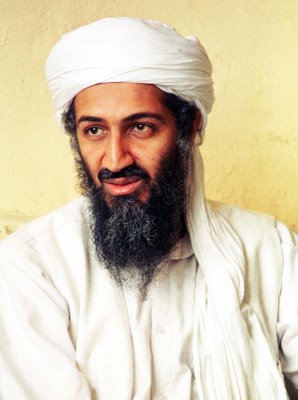
After nine-and-a-half years of pursuit, one of the world’s most dangerous men reaped what he sowed, early yesterday morning. Osama bin Laden, the exiled Saudi millionaire who left a trail of death and devastation behind him, is dead.

Despite what is already being hailed as a victory for embattled US President Barack Obama, the death of the al-Qaeda leader will not bring an end to the threat of international terrorism for several reasons — some of which were probably foreseen by bin Laden himself.

Since the devastating Sept. 11 terror attacks on the US, which reinvigorated the hunt for a man who had already been sought by the US for about a decade, bin Laden’s organization has become increasingly decentralized, so much so that terrorism experts and intelligence agencies are often at a loss to determine whether certain terrorist organizations are part of bin Laden’s network or not.

My unsigned editorial, published today in the Taipei Times, continues here.

Monday, May 02, 2011

Analysis: China’s new aircraft carrier changes strategic map

When it embarks on its maiden voyage later this year, the PLAN’s first aircraft carrier will not have an immediate impact on regional security. But unless Taiwan and the region act accordingly, its deployment could mean serious trouble a few years from now

Reports last month that China’s first aircraft carrier could embark on its maiden voyage sometime this year, added to speculation that the Chinese navy’s first carrier-based aircraft could be operational by 2015, point to the high likelihood that Taiwan’s security dilemma is about to become even more complex. That said, Taipei and the region need not panic just yet, analysts say.

My article, published today in the Taipei Times, continues here, with comments by James Holmes and Toshi Yoshihara of the US Naval War College, and Rick Fisher of the International Assessment and Strategy Center. In addition to the Varyag, my article also takes an in-depth look at the eventual introduction of the J-15 carrier-borne aircraft.

Sunday, May 01, 2011

Navy captain leaves lasting legacy after untimely death

Taiwan lost a true patriot last week, a man of integrity who made substantial contributions to Taiwanese security and diplomacy over the years. His departure is also a great loss to reporters, towards whom he often extended unusual generosity

Winston Li (李豫明), who passed away on Monday of heart complications, may have been little known to the public, but behind the scenes this implacable force of nature made several contributions to Taiwan’s security over the years — contributions that will linger on well after his premature exit.

Born in Taiwan on June 29, 1958, Li graduated from the Republic of China (ROC) Naval Academy in 1981 and received a master’s degree in acoustics from the US Naval Postgraduate School in Monterey, California, in 1987.

After serving in various assignments in the ROC Navy, Li was posted to the Taipei Economic and Cultural Representative Office (TECRO) in Washington as deputy naval attache in 1997.

He returned to Taiwan in 2000 and, prior to his retirement from the navy, worked as a section chief at N-5 (a section now known as the Integrated Planning Section) and later served as deputy director of planning at N-5 and director of intelligence at N-2.

Since 2009, Li had served as a legislative aide to Chinese Nationalist Party (KMT) Legislator Herman Shuai (帥化民), who is a member of the legislature’s Foreign Affairs and National Defense Committee.

Following his death, a number of officials, reporters and academics who worked with Li over the years — including Deputy Minister of National Defense Andrew Yang (楊念祖) — paid tribute to his many contributions to the nation. Some of them shared their reminiscences with the Taipei Times.

My article, published today in the Taipei Times, continues here.

[This part was cut from the print version] For reporters covering defense issues, Li’s passing is also a great loss, especially under an administration that in recent years has proven less than generous with information. Not only did he have superb connections and was generous with what he shared with reporters, but he also never hesitated to tell them off when they were wasting their — and his — time following dead-end leads.

The sheer succinctness of his last-ever answer to me, a few days before his untimely death, was testimony of that unwavering, no-nonsense professionalism.

“Routine task, no further comment.”