Friday, October 14, 2011

NTU drops ‘national’ when cooperating with China

Aside from the name change, a list of visiting scholars at the department of humanities and social sciences shows that of the 52 foreign academics taken in this year, 46 are from China

Almost every department at National Taiwan University (NTU), the nation’s top academic institution, is dropping the “N” from the school’s initials when it holds joint conferences with Chinese schools or cooperates on academic work, sources said yesterday.

The practice, described as “university-wide,” began more than a year ago, a source at the university told the Taipei Times on condition of anonymity, referring to official documents on conferences and panels held with Chinese universities.

According to another academic at the school who was also in a position to see the documents, the removal of the “N” in the university’s official initials — a source of pride for many Taiwanese — applied to “a lot of, if not all departments” involved in exchanges with China. However, it has yet to be determined whether the practice is now official policy at the university or was initiated by department heads or individual academics.

My article, published today in the Taipei Times, continues here.

Wednesday, October 12, 2011

Antelope air defense systems on Taiping Island?

The plan is a sound one, except that its proponent fails to mention the most belligerent and powerful protagonist in the dispute

Rarely a week goes by where Chinese Nationalist Party (KMT) Legislator Lin Yu-fang (林郁方) of the legislature’s Foreign Affairs and Defense Committee does not propose the development, or deployment, of a new weapon system.

While a good number of the proposals he has made over the years never saw the light of day, and although Lin has a long history of voting according to the direction of the prevailing political winds, he raised some interesting points in the legislature today that warrant further consideration.

During a Q&A with Minister of National Defense Kao Hua-chu (高華柱), Lin said the military had an obligation to assist the Coast Guard Administration (COA) in defending islets in the South China Sea that are the object of a longstanding dispute between Taiwan and other claimants.*

One of those islands is Taiping Island (太平島), which is administered by Taiwan and is also claimed by Vietnam, the Philippines and China. Taiwan completed a 1,150m airstrip on the islet in 2008 under the Chen Shui-bian (陳水扁) administration.

Saying that the 20mm and 40mm machineguns used by the CGA on Taiping were insufficient, Lin asked Kao whether the military could augment defenses by deploying either the Air Force’s Antelope air defense system — a derivative of the indigenous Tien Chien I “Sky Sword” (天劍一, TC-1) air-to-air missile used on the CK-1 Indigenous Defense Fighter — or the US-made (and ageing) M48A2 “Chaparral.”

Kao said such deployments were feasible, provided a request by the CGA was made and the appropriate funds released.

Where things get really interesting, however, is not so much what Lin said to sell the idea, but rather what he didn’t say.

Vietnam, Lin said, has 27,000 marine personnel, and the Philippines have 8,300, adding that in two to three years, Vietnam’s fleet of Su-27SK and Su-30MK2 combat aircraft could expand to as much as 36. Those pose a serious threat to the country’s defense arrangements on Taiping Island, Lin said.

So here we are. Not once did Lin (or Kao) mention the other claimant to the disputed islands, the one that has been the most belligerent and whose military within the same timeframe will be more formidable by orders of magnitude than that of Vietnam of the Philippines: China.

I leave it to the reader to draw his or her own conclusions from this, and will only add that Chinese officials, as well as a good number of academics on both sides of the Taiwan Strait, have in recent months called for the joint defense of the Spratlys and other contested islands in the South China Sea.

*The Marines pulled out in 1999, ceding responsibility to the CGA.

Former US defense chief Rumsfeld lauds Taiwan

In town to attend the Republic of China 100 celebrations, the indefatigable career government official shared his views on the challenges and opportunities facing the region

Taiwan is a model for Asia and more specifically for China, a former US secretary of defense said during a keynote speech in Taipei yesterday, calling on Washington to sign a free-trade agreement (FTA) with its Asian ally.

In Taiwan to attend the Republic of China centenary celebrations, former US secretary of defense Donald Rumsfeld was invited by the Prospect Foundation, a Chinese Nationalist Party (KMT)-affiliated think tank, to share his views on future challenges in Asia.

The sprightly 79-year-old, who stepped down as former US president George W. Bush’s defense chief in 2006, said the US supported a peaceful resolution to differences across the Taiwan Strait and that progress in that direction in recent years was welcome.

“A stable and secure relationship between Taiwan and the mainland [China] is good for both parties, for the region and for the US,” said the career government official, who first visited Taiwan in 1969.

Despite those developments, Rumsfeld said, progress was likely to continue only if both parties recognized that armed conflict was an unacceptable option, which meant Taiwan should maintain its defense and expand ties with regional allies.

My coverage of Rumsfeld's luncheon address in Taipei continues here.

Kurt Campbell faces heat in Beijing

Prior to lecturing the visiting diplomat, a Chinese official seemed to indicate that Beijing did not want its expression of anger on arms sales to Taiwan to sour the overall mood for the talks

US arms sales to Taiwan were one of the main topics raised by China during a visit to Beijing yesterday by US Assistant Secretary of State for East Asian and Pacific Affairs Kurt Campbell.

The meeting was part of a second series of talks on Asia-Pacific affairs to boost bilateral communication and address regional and global issues, co-chaired by Campbell, who is currently visiting the region, and Chinese Vice Deputy Foreign Minister Cui Tiankai (崔天凱).

Cui said US arms sales to Taiwan jeopardized China’s core interests and Sino-US relations and constituted a disruption in the course of the “peaceful development” in the Taiwan Strait.

Such sales will be harmful to US interests in the long term, he said, adding that he hoped Washington would not become involved in any further arms sales to Taiwan, the state-owned Global Times reported last night.

My article, published today in the Taipei Times, continues here.

Tuesday, October 11, 2011

PLA Air Force denies news of advanced fighter crash

The State Internet Information Office has ordered that the individual who published the 'fake' news and the Web site that carried it be punished according to the law

The People’s Liberation Army Air Force (PLAAF) on Sunday denied rumors that one of its experimental fighter aircraft had crashed during a test flight in Shaanxi Province after Hong Kong and Taiwanese media reported the news.

The reports said that an all-weather, single engine J-10B multirole fighter aircraft had crashed at the China Flight Test Establishment in Xianyang, Xi'an, adding that the pilot was killed in the accident as he attempted to save the aircraft.

Chinese officials said no aircraft had crashed and that no pilot had been killed, calling the story pure fabrication and adding that the rumor had been traced back to the personal blog of a worker in Beijing, the People’s Daily said yesterday.

The Global Times said the allegations first emerged in a sina.com microblog post on Friday and had been picked up by the Hong Kong-based Sing Tao, which ran a story on Saturday. The report was widely circulated and was eventually picked up by Taiwanese media, the PLAAF said.

My article, published today in the Taipei Times, continues here.

Beijing’s nuclear sleight of hand

Negotiators in Washington, Moscow and at the UN should be aware that once parity approaches, Beijing could prove much less willing to abandon its own nuclear ambitions

Officially, Beijing’s position on nuclear weapons is one of complete and thorough disarmament globally. This view was reaffirmed by Wang Qun (王群), China’s disarmament ambassador to the UN at the UN General Assembly on Friday.

Wang said nuclear disarmament should be based on the principle of global strategic stability and involve a “viable long-term plan” composed of “phased actions.” Meanwhile, Beijing has voiced support for efforts by Washington and Moscow to reduce their nuclear stockpiles to between 1,500 and 1,675 warheads each as part of a successor to the START treaty.

While it is difficult to disagree with calls for nuclear abolition along a moral line — current stockpiles, albeit reduced, are still enough to blow us out of existence many times over — Beijing’s enthusiasm on the matter is far less humanistic than it would like us to believe.

Key for China, as stated by Wang, is strategic stability, which at present it does not enjoy. Despite the impressive modernization of its military, China’s estimated 200 nuclear warheads are insufficient to deter rivals such as the US or Russia, whose arsenals remain in the thousands. Beijing is aware that a country that seeks to become the dominant power regionally, if not globally, cannot hope to freely flex its muscles with a nuclear component about the size of the UK’s.

My unsigned editorial, published today in the Taipei Times, continues here.

Monday, October 10, 2011

Thoughts on the ROC’s 100th

For the good and the bad, the ROC is an intrinsic part of Taiwan’s complex history. Ignoring its impact on modern Taiwan, and vice versa, would be intellectually dishonest

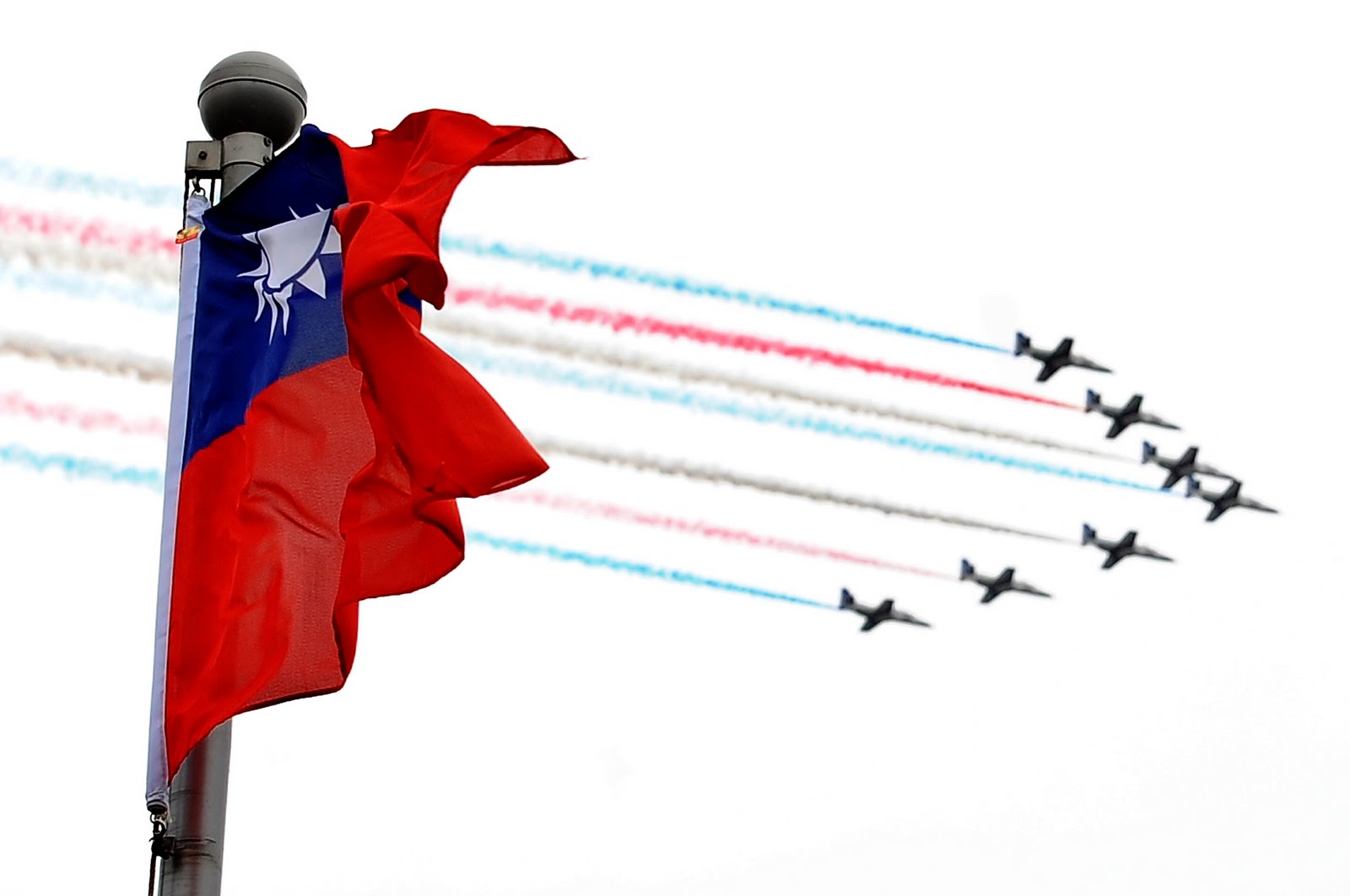
Celebrations were held across Taiwan today for the Republic of China (ROC) centennial, with hundreds of foreign dignitaries attending a military parade and various colorful performances in front of the Presidential Office in Taipei.

It is perhaps testimony to the complexity of the political situation facing Taiwan that several people, including some publications abroad, would refer to the Double Ten festivities as Taiwan’s 100th anniversary. It is one thing to say that the ROC equals Taiwan — and in the public mind, or for foreign consumption, this simplification is arguably acceptable. However, to say that Oct. 10, 2011, marks Taiwan’s 100th anniversary is historically inaccurate, as Taiwan existed well before Sun Yat-sen (孫逸仙) and his followers put an end to dynastic rule in China with the Xinhai Revolution in 1911.

At the time, Taiwan was part of the Japanese empire, and had been so since 1895 following the Treaty of Shimonoseki, which ended the first Sino-Japanese war. Prior to 1895, Taiwan, though on the peripheries of the Chinese empire, was not officially or legally part of it, despite revisionist claims to the contrary by Beijing.

And while it can be said that Sun’s dream came to fruition in Taiwan, no person living in Taiwan at the time of the ROC’s founding participated in the rebellion or in drafting the articles of the Republic. It should also be said that, as envisioned by Sun, the ROC was terribly flawed and less than an ideal democracy, with its founder making no secret of his opposition to the emergence of any organized political party other than the KMT.

A truly democratic ROC only emerged decades after the Republic had imposed itself upon Taiwan, and only from that point on could it be said that Taiwanese became participants in the ROC experiment. Nevertheless, without the ROC and despite the colonial — and oppressive — nature of its arrival in Taiwan, chances are that Taiwan today would be a province of the People’s Republic of China, run by an authoritarian regime that continues to make a travesty of the more noble ideas propounded by Sun.

Exogenous nature of the ROC notwithstanding, it cannot be denied that Taiwan would not be what it is today without the ROC, just as the US, Canada or Australia wouldn’t be where they are without the British colonial experience, which, for good and bad, was, and always will be, a key ingredient to the modern countries as we know them today. As such, despite the 228 Massacre and the White Terror that followed the arrival of the KMT on Taiwan, one cannot dissociate the ROC as a formative component from Taiwan, nor should that aspect of Taiwan’s history be ignored. There is nothing wrong in celebrating the ROC — a transformed, localized ROC that now stands for Taiwan —, nor does doing so signify one’s abandonment of the conviction that Taiwan is an independent country. In fact, ignoring the ROC would be to ignore a very significant, and in fact intrinsic, aspect of Taiwan’s modern history.

One therefore need not be ashamed to wish the ROC a happy 100th anniversary, nor does doing so by any means signify support for unification with China.

Sunday, October 09, 2011

India claims PLA presence in Pakistan-controlled territory

Non-military and government sources say the publication of comments by senior military officers is timed to sabotage diplomatic efforts between New Delhi and Beijing

Indian Army chief General V K Singh claimed on 5 October that People's Liberation Army (PLA) combat engineers are present among 4,000 Chinese construction workers in Pakistan-occupied Kashmir (PoK).

My article, published on Oct. 7 in Jane's Defence Weekly, continues here (subscription required).

Friday, October 07, 2011

More Chinese espionage, this time against Russia

Analysts tend to focus on Chinese espionage against its traditional adversaries, such as the US and Taiwan. But Beijing is increasingly stealing military secrets from its ally Russia, and now Moscow may be pushing back

Back in May I reported that China had allegedly stolen the design of the Russian-made 9K720 Iskander (SS-26 Stone)* short-range ballistic missile for its M20, adding that this followed upon repeated accusations by Russian defense firms in recent years that China was stealing Russian technology for military purposes.

It’s an open secret that in recent years relations between China and Russia, Beijing’s principal source of advanced weapons systems in recent decades, have soured, with Moscow becoming reluctant to sell Beijing its most advanced weapons. Part of this is the result of Moscow growing increasingly wary of China’s intentions as it gains strength, as well as Russian manufacturers’ inability to produce enough systems to satisfy the demand of both the Russian and Chinese militaries.

What is also troubling the relationship is growing evidence that China has been stealing military secrets from Russia and using that information to manufacture its own equivalents — only to turn those into cheaper export versions that threaten to edge Russian foreign military sales out of the market.

It now looks like China’s been at it again, this time trying to obtain classified information on the S-300PMU (SA-10 “Grumble”) long-range, high-altitude surface-to-air missile system. Although the arrest occurred on Oct. 28 last year, the Federal Security Service only made the news public this week, occurring as it does one week before Russian Prime Minister Vladimir Putin embarks on a state visit to China.

The suspect, identified as Tun Sheniyun (童中雲), allegedly worked as a translator for official delegations. Tun is said to have attempted to obtain technological and maintenance documents on the S-300PMU. He now faces a sentence of 10 to 20 years in jail for espionage.

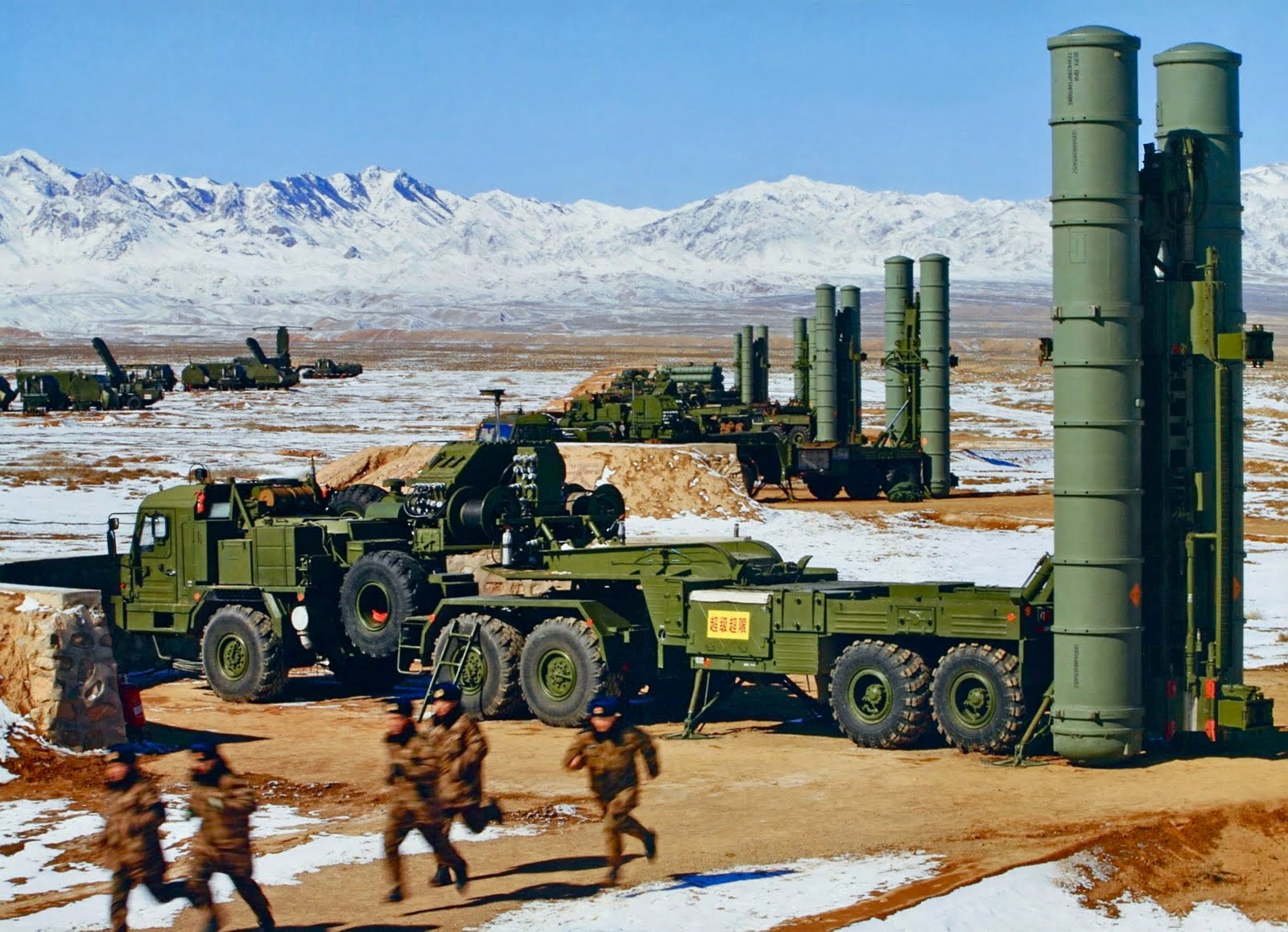
Russia has sold S-300PMU, S-300PMU-1 (SA-20 “Gargoyle”) and S-300PMU-2 (SA-20B) units to China since 1993. China also manufactures a licensed copy of the S-300PMU-1 known as the HQ-10. The slightly less efficient HQ-9, of which China has an estimated 60 batteries, is a derivative of the S-300 and the US Patriot. (A variant of the HQ-9, known as the “Hai” HQ-9, or HHQ-9, is deployed on the PLA Navy’s Type-052C “Luyang II”-class destroyer.)

So why “steal” documentation when China already has the technology? Moscow claims China has been attempting to reverse-engineer the S-300 but that it may have hit a bottleneck and is trying to expedite the process by stealing extra documentation. What’s missing from the reports so far is that what Tun was likely trying to obtain was information on the S-300PMU-2, which is more advanced and has a longer range than the S-300/PMU-1 and the HQ-9/10.

* NATO appellation in parentheses

Thursday, October 06, 2011

Retired USAF officials back F-16 sale

Officials in and out of government continue to put pressure on the Obama administration to release the F-16C/Ds for Taiwan

Seven senior retired US Air Force (USAF) officials on Tuesday sent a letter to US senators John Cornyn and Robert Menendez in support of a bill to upgrade Taiwan’s airpower and in favor of selling Taiwan the 66 F-16C/D aircraft it has been requesting since 2006.

In the letter, a copy of which was obtained by the Taipei Times, the signatories expressed “strong support” for bill S. 1539, Taiwan Airpower Modernization Act of 2011, introduced by the senators on Sept. 12.

The letter, signed by Lieutenant General David Deptula, Lieutenant General Michael Dunn, General John Loh, General William Looney III, General Lester Lyles, General Lloyd Newton and former secretary of the Air Force Michael Wynne, was issued to coincide with the “Why Taiwan Matters” hearings at the US House of Representatives Committee on Foreign Affairs the same day.

My article, published today in the Taipei Times, continues here.

Tuesday, October 04, 2011

Wu Chang-yu: A classic Chinese intelligence operation

The case of a Central Police University associate professor who was arrested for spying for China follows a pattern that is strangely familiar

Central Police University associate professor Wu Chang-yu (吳彰裕) was arrested last week for providing China’s Ministry of Public Security with information on the movement of Chinese dissidents in Taiwan.

According to investigators, Wu ordered Lin Bo-hong (林柏宏), a section supervisor, and Wu Dong-lin (吳東霖), an officer at the Hsinchu County police bureau’s international affairs office, to collect the entry and exit records of targeted individuals, which reportedly included Falun Gong practitioners and democracy activists. Lin and Wu Dong-lin are former students of Wu Chang-yu who, interestingly, also happens to be a feng shui master and was a fortuneteller to both former president Lee Teng-hui (李登輝) and President Ma Ying-jeou (馬英九). (Ma has named Wu one of Taiwan’s three “national fortunetellers.”)

Wu’s recruitment by the Chinese intelligence apparatus followed the usual script. Wu reportedly went to China on an academic exchange in 2008. After his return to Taiwan, the MPS reportedly contacted him and asked that he provide them with customs data and information on the movement of persons of interest. If previous cases of recruitment serve as any indication, Wu, who is also a visiting professor in religion at several Chinese universities, including Sichuan University and Xiamen University, would have been approached — and recruited — while in China. Sources have told the Chinese-language United Daily News that Wu made frequent visits to China and that he had been offered fortunetelling business opportunities in China in exchange for providing information to the MPS.

As with previous cases of sources working for Chinese intelligence, Wu claims he is innocent and that the information he passed on to the Chinese was purely academic. “The data is just for the research of Chinese academic institutions without any intention on my part of leaking national secrets,” he told Taiwanese investigators, who learned of his leaks to China from his notebooks.

This follows the pattern set by individuals such as Peter Lee, Min Guo-bao, Lee Wen-ho (李文和) and several others, all academics who ran afoul of the FBI in recent decades for providing Chinese intelligence with military secrets for the sake of academic exchange. Wu, a PhD in politics, didn’t pass on military secrets, but what he gave the MPS concerns public security — especially when Chinese law regards Falun Gong practitioners, Tibetans, pro-democracy activists and Chinese dissidents as criminals and “terrorists.”

While drafting a joint cross-strait crime-fighting agreement (officially known as the Agreement on Jointly Cracking Down on Crime and Mutual Legal Assistance Across the Strait, 海峽兩岸共同打擊犯罪及司法互助協議), Taiwanese and Chinese law enforcement authorities ran into disagreements over the definition of such activities, with Taipei refusing to cooperate (such as providing lists of individuals) when Beijing requested information on “terrorist” and “separatist” suspects.

Unable to secure Taipei’s help, the MPS simply turned to willing individuals like Wu and his accomplices.

China deploys HQ-16A air defence missile

If deployed closer to Taiwan, the new medium-range, vertical launch air defense system could be used against the low-flying Hsiung Feng IIE cruise missile Taiwan is now mass-producing

The People's Liberation Army Daily confirmed in late September that a new medium-range surface-to-air missile system has become fully operational and been delivered to the Shenyang Military Region.

According to reports, the vertical-launch Hongqi-16A ('Red Flag-16'/HQ-16A/紅旗-16A) air defence missile system can engage aerial targets at altitudes up to 30,000 m as well as very-low-flying targets, including land attack cruise missiles (LACMs), within a range of approximately 40 km.

My article, published today in Jane's Defence Weekly, continues here (subscription required).

PRC delegation calls for closer media cooperation

Just as a Chinese delegate said media exchanges should be objective, impartial, comprehensive and accurate, back in Beijing the government was moving in the opposite direction

Media outlets on both sides of the Taiwan Strait should enhance exchanges and cooperation in an effort to reduce differences, the head of a Chinese media delegation said upon concluding an eight-day visit to Taiwan.

Zhou Xisheng (周錫生, pictured), the head of the delegation and vice president of Xinhua news agency, told a farewell dinner on Thursday that the eight-day “exchange tour” was an effort to encourage “frank communication” and in-depth exchanges on the media and the impact of social media on traditional mass communication.

Only by strengthening cross-strait media exchanges can differences be reduced and avoided, the friendship deepened and cooperation expanded, Zhou said, adding that he welcomed colleagues in Taiwanese media to visit China more often and engage in more direct communication and cooperation.

“Whether in the streets all over Taiwan, or a visit to the National Palace Museum … reading newspapers or watching TV, we can deeply feel that the feelings of compatriots on both sides are thicker than water, and feel the Chinese nation’s long and splendid culture,” he said.

My article, published today in the Taipei Times, continues here.

New era of Chinese spying dawns

The influx of Chinese tourists, investors, officials and academics in Taiwan is making it much easier for the Chinese intelligence apparatus to collect its 1,000 grains of sand

Lamentable though it may be, news last week that Central Police University associate professor Wu Chang-yu (吳彰裕, pictured) had been taken in on suspicion of passing information about dissidents to China was not shocking. However, this incident did bring into sharp contrast the dawn of a new era of Chinese “espionage” in Taiwan.

There is nothing new to espionage operations by China targeting the Taiwanese military, security apparatus, political parties and high-tech sector. Over the years, a number of Taiwanese have been caught spying for Beijing. The arrest and sentencing this year of General Lo Hsien-che (羅賢哲) for providing military secrets to China is but the latest and most prominent case in a long series of spy operations.

While it is difficult to gauge the severity of Chinese spy activity targeting Taiwan, as we only know of the cases where an agent was caught, it is safe to assume it is serious.

What is now changing — and Wu’s arrest could be the opening shot — is the context in which Chinese espionage is occurring. From 1949 until the beginning of the 21st century, China had limited opportunities to conduct human intelligence gathering on Taiwan.

My unsigned editorial, published today in the Taipei Times, continues here.

Friday, September 30, 2011

Chinese analyst calls for war in South China Sea

Beijing should strike the Philippines and Vietnam, the two ‘noisiest troublemakers,’ to strike fear into other claimants, a Chinese academic argues in the influential ‘Huanqiu Shibao’

The Ministry of Foreign Affairs yesterday reaffirmed Taiwan’s sovereignty over disputed islands in the South China Sea and called on all claimants to peacefully resolve the impasse.

The comments came after an editorial published in the Chinese-language edition of the Chinese Communist Party-run Global Times called on the Beijing government to declare war on Vietnam and the Philippines, two countries that have been proactive in defending their claims over the islets.

The op-ed, titled “A good time to take military action in the South China Sea,” was penned by Long Tao (龍韜), a strategic analyst at the non-governmental China Energy Fund Committee (CEFC, 中华能源基金委员会) and also at Zhejiang University’s Non-Traditional Security and Peace Development Research Center.

“Do not worry about small-scale wars; it is the best way to release the potential of war. Play a few small battles and big battles can be avoided,” Long wrote, adding that military action should be focused on striking the Philippines and Vietnam, “the two noisiest troublemakers,” to achieve the effect of killing one chicken to scare the monkeys.

Through military action, he wrote, China could transform the South China Sea into “a sea of fire,” an act made possible by the fact that “of the more than 1,000 oil rigs and four airfields on the Spratly Islands, none belongs to China.”

My article, published today in the Taipei Times, continues here. 

Interesting facts about the Hong Kong-based CEFC, which also has centers in Shanghai and Beijing. According to its Web site, one of its roles is “pushing forward the notion of world peace” and “achieving international harmony and world peace,” which obviously resonates with calls to create a “sea of flames” in the South China Sea. It gets better. Aside from including former PLA officers, the consultants include James C. Hsiung, a former “instructor” to President Ma Ying-jeou at New York University, and Eric A. McVadon, retired rear admiral in the US Navy.

China unveils Z-5 unmanned helicopter

Following the global trend, Beijing has been developing a number of UAVs in recent years

An advanced unmanned helicopter designated the Z-5 made its first public appearance at Aviation Expo China 2011, which ran from 21-24 September in Beijing.

The Z-5 was developed by the 60th Research Institute of the PLA Headquarters of the General Staff Department, also the maker of the Z-3 drone that was unveiled at the third China UAV Expo in June 2010. Based on images that show the Z-5 next to a Z-3, the new unmanned vehicle is about 5.4 m long, or about twice the length of the Z-3.

My article, published today in Jane's Defence Weekly, continues here (subscription required).

Thursday, September 29, 2011

A case for expatriate humility [UPDATED]

The intention may be noble, but the tendency to project our values and beliefs onto others whom we presume to defend often leads to resentment

The temptation, though fundamentally altruistic, to try to help others by adopting their “cause” can have the unintended consequence of inspiring resentment among those who are being “helped.” Part of that outcome derives from the condescension or “I know best” attitude often inadvertently taken by individuals who are, and always will be, external to the conflict in question.

It may come as a shock to the interventionists among us, but as David Reynolds points out in his biography of the anti-slavery activist John Brown, many African-Americans came to resent the condescension and paternalism of (white) anti-slavery organizations that hijacked the cause in abolitionist US.

The same, in my view, applies to a more contemporary cause celebre, that of Taiwan’s independence. How often have expatriates, bloggers and academics abroad made policy prescriptions for Taiwan, as if they knew more than the Taiwanese themselves, only to disconsolately shake their heads when those ideas are not lovingly embraced, or when Taiwanese appear unmoved by the repeated insults from Beijing? I myself have often been guilty of that practice, inspired no doubt by a romantic, if not Hemmingway-esque, desire to make that fight my own.

My op-ed, published today in the Taipei Times, continues here. (The picture is of pro-unification demonstrators awaiting the arrival of ARATS Chairman Chen Yunlin in November 2008.) Also, my response to letters sent to the Taipei Times.

Tuesday, September 27, 2011

Attacks on Lee, Chen are nonsensical

The belief that former presidents Lee Teng-hui and Chen Shui-bian were ‘anti China’ is more myth than reality. The contradictions in the attacks on the two leaders show us why

The only consistent thing about Chinese Nationalist Party (KMT) accusations that former presidents Lee Teng-hui (李登輝) and Chen Shui-bian (陳水扁) were “extremists” who opposed all things Chinese, is how inconsistent, and at times contradictory, those attacks have been.

President Ma Ying-jeou (馬英九), administration officials, as well as the media, have repeated ad nauseam the refrain that cross-strait ties “suffered” under Lee and Chen because of their stance on Taiwanese sovereignty. More than once, those officials have also claimed that Taiwan’s economy was weakened during their tenure as a direct result of their supposedly “anti-China” policies.

Is it not curious, then, that when facing accusations that Taiwan under Ma has become too reliant on China for its economic well-being, those same officials tend to play down the matter by pointing to the rapid pace of increasing cross-strait economic ties during the very same presidencies of Lee and Chen?

My unsigned editorial, published today in the Taipei Times, continues here.

Monday, September 26, 2011

‘Taiwan independent since 1989’: Lee Kuan Yew

Taiwan may be independent, but no amount of US arms sale will prevent annexation by China, because this remains an unshakeable goal for Beijing, the former leader said

Singapore’s founding father Lee Kuan Yew (李光耀) made waves last week when he told a conference in Singapore that he believed Taiwan has been independent “from 1989 to the present.”

Addressing the closing dinner of the two-day Singapore Global Dialogue on Thursday evening, the 88-year-old, who stepped down from government earlier this year after a poor showing by his People’s Action Party, did not elaborate on why he had chosen 1989 as the year Taiwan became “independent.”

Some Taiwanese media have speculated that the former Singaporean prime minister may have regarded the ascension of former president Lee Teng-hui (李登輝) to the Presidential Office the previous year as a turning point.

My article, published today in the Taipei Times, continues here.

Friday, September 23, 2011

Absent command of the air, Taiwan needs to go asymmetrical

Before the announcement of a US$5.8 billion arms package on Wednesday, Taiwan already had about US$12 billion in procurement in the pipeline. Without proper air forces, however, most of those items will be next to useless, and that money could be better spent elsewhere

The decision by the administration of US President Barack Obama to deny Taiwan the F-16C/Ds it has been requesting since 2006 has implications that go well beyond Taipei’s inability to procure modern aircraft, as it raises questions about the utility of almost every other arms sale the US has agreed to in recent years.

Over the past decade, the balance of air power in the Taiwan Strait has steadily shifted in Beijing’s favor. During that period, the People’s Liberation Army Air Force (PLAAF) launched a dramatic aircraft modernization program, with the result that it now enjoys a clear quantitative and qualitative advantage over Taiwan in air combat capabilities.

Meanwhile, the number of short and medium-range ballistic missiles the Chinese Second Artillery Corps aims at Taiwan — including its airbases and airstrips — has also increased, reaching about 1,500 this year. Consequently, the number of Taiwanese aircraft likely to survive an initial volley and be able to take off from operational airstrips has diminished.

As the 66 F-16C/Ds sought by Taipei were to replace aging F-5E/Fs, failure to acquire them means that the Taiwanese air force will find itself with fewer aircraft, a shortfall that the US$5.3 billion upgrade to Taiwan’s 145 F-16A/Bs notified to US Congress on Wednesday will not make up for, even if it includes joint direct attack munition (JDAM) laser-guided bomb kits, more powerful engines and Active Electronically Scanned Array (AESA) radar.

Taiwan can no longer hope to achieve air superiority against the hundreds of increasingly modern aircraft that have been added to the PLAAF in recent years.

My op-ed, published today in the Taipei Times, continues here.

Thursday, September 22, 2011

F-16 upgrade package impressive, but falls short

On paper, the arms package announced on Wednesday is eye-catching, but even its more surprising elements fail to meet the special requirements for warfare in the Taiwan Strait

The US on Wednesday ended months of speculation after Congress was notified of a US$5.8 billion arms sale to Taiwan. Unsurprisingly, as I and several other defense analysts and journalists had been reporting for a while, the 66 F-16C/Ds that Taipei was hoping to acquire were not part of the package.

So how does the sale, which centers on upgrading Taiwan’s existing fleet of 145 F-16A/Bs, affect the balance of power in the Taiwan Strait? Does Taiwan get enough bang for the buck?

At first sight, the upgrade package is pretty impressive and includes some items that surprised quite a few analysts. It confirms, among other things, that Taiwan will be getting Active Electronically Scanned Array (AESA) radar — either Raytheon Corp’s Raytheon Advanced Combat Radar (RACR), or Northrop Grumman Corp’s Scalable Agile Beam Radar (SABR).

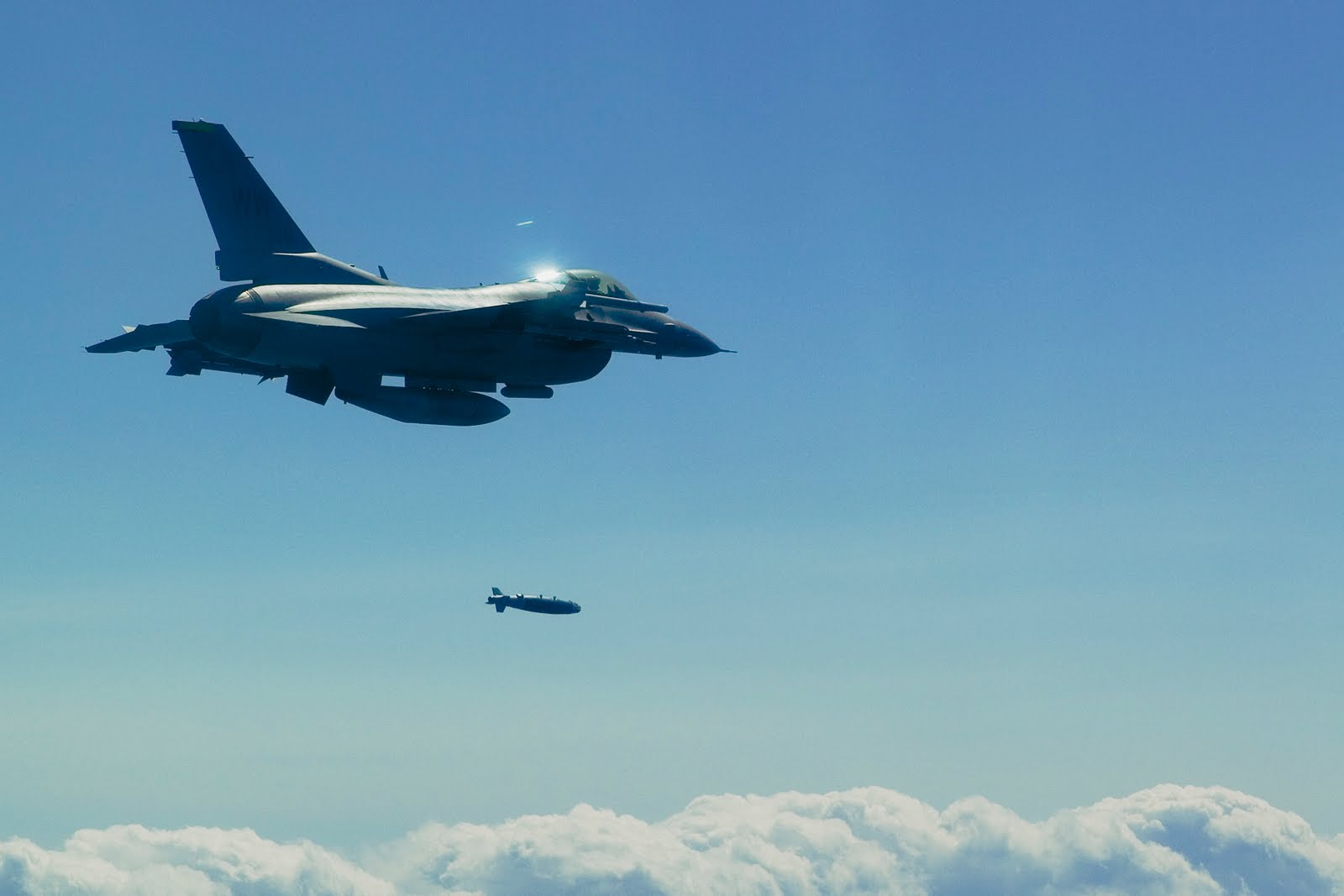
The Defense Security Cooperation Agency (DSCA) also for the first time released GBU-31 and GBU-38 Joint Direct Attack Munitions (JDAM) laser-guided bombs, which the US had hitherto denied Taiwan, given their offensive nature. The GBU-54 laser-guided JDAM, the GBU-10 Enhanced PAVEWAY II and GBU-24 Enhanced PAVEWAY III are also reportedly options for Taiwan.

Added to CBU-105 Sensor Fused Weapons, AIM-9X Sidewinder air-to-air missiles, Embedded Global Positioning System Inertial Navigation Systems, the Terma ALQ-213 Electronic Warfare Management System and helmet-mounted cueing systems, the upgrade is pretty muscular.

But does it meet Taiwan’s defense needs?

In an op-ed published on Friday in the Taipei Times (above post), I address the issue of qualitative and quantitative imperatives for Taiwan’s air force and will not repeat this here. Suffice it to say that even if Taiwan had the most modern aircraft in the world, if that limited number of vehicles, as well as landing strips, cannot withstand the initial missile volley that China would likely commence military operations with, those would be of no use whatsoever.

That said, supporters of the deal could argue that the upgrade, which is to be implemented over a period of 12 years, provides the Taiwanese air force with offensive capabilities. With a range of about 500 miles, its F-16s, now equipped with 500-lb JDAMs, could attack targets inside China, including missile bases, command-and-control centers, as well as airstrips.

Two factors put that assertion into doubt, however. For one, Taiwan will not initiate military operations against China, meaning that the initiative will be with the People’s Liberation Army. As mentioned above, this would likely start with missile attacks against Taiwan’s C4I centers and airbases. In that opening shot alone, Taiwan can expect to lose a good deal of its air force, or to be unable to use it for lack of operational airstrips (China has been working on bomblets specifically designed to damage airstrips).

Secondly, China’s AAA and SAM architecture being what it is, any effort by Taiwanese aircraft to venture into Chinese airspace on a bombing run would be tantamount to suicide, as those aircraft would likely be shot down before they can unload their bombs against Chinese targets (the GBU-31 has a range of 28km).* In fact, some of China’s most advanced surface-to-air missiles already pose a threat to Taiwanese aircraft immediately after takeoff.

What this means, therefore, is that while the US for the first time agreed to release “offensive” weapons to Taiwan, those will only be usable in a defensive scenario — that is, against Chinese ground forces close to, or already on, Taiwan. Consequently, their deterrent value, if not their utility, is for all intents and purposes negated.

* A better option, still unavailable to Taiwan, would be the High Speed Anti-Radiation Missile (HARM) , such as the AGM-88, which has a range of 106km. HARMs would allow Taiwanese aircraft to attack Chinese targets from a much safer distance.

More information on China’s second icebreaker emerges

It nay not own a single centimeter of land in the Arctic, but China is developing the means to flex its muscles in a region that, thanks to global warming, could become the next Mecca for energy sources

China's State Oceanic Administration has provided more information about its first domestically built icebreaker, announcing the expected entry into service in 2013 of an 8,000-tonne vessel with a cruising radius of 20,000 n miles.

The new USD300 million icebreaker will be operational at temperatures below -35 degrees C and will be equipped with helicopters, robots, workboats and other facilities, Chinese reports said.

It will join the 21,250-tonne Xue Long, or Snow Dragon (pictured), the world's largest non-nuclear-powered icebreaker, which was purchased from Ukraine in 1993.

My article, published today in Jane’s Defence Weekly, continues here (subscription required).

China launches ChinaSat-1A, military applications suspected

One launch at a time, China is building its constellation of eyes in the sky. The latest addition, sent into orbit on Sunday, has transmission, data relay, and tracking capabilities

With no prior announcement, China on 18 September launched the ChinaSat-1A (Zhong Xing-1A; ZX-1A, 中星1) vehicle into orbit, which analysts say could serve as a communications relay vehicle for the People’s Liberation Army.

The 11,500-pound ZX-1A was launched into geosynchronous orbit on a Long March 3B/E (長征3B/E) rocket from the Xichang Satellite Launch Center (XSLC/ LC-2) in Sichuan Province. The satellite has an orbital high point of 22,200 miles, a low point of almost 120 miles and an inclination of 27 degrees, US military tracking data shows.

While Chinese state media say the ZX-1A will provide high-quality voice communication, broadcast and data transmission services for users across China, Western analysts believe the vehicle could serve the Chinese military by providing secure digital data and voice communication to its military forces.

The ZX-1A was designed and manufactured by the China Academy of Space Technology (CAST) under the China Aerospace Science and Technology Corp and has a lifespan of 15 years. The satellite is equipped with three receiver antennas and two transmission antennas.

Reports say the satellite could be the Chinese military’s first communications satellite to use the Dongfanghong-4 (DFH-4) bus, China’s most advanced standardized platform for communications missions. In addition to high capacity broadcast communication, DFH-4 buses reportedly also have tracking and data relay capabilities, along with strong capabilities against hostile disturbance and jamming.

The ZX-1A is been referred to as a second-generation Fenghuo (FH) tactical communications satellite. The FH series are believed to be Chinese military comsats and data relay satellites providing both C-band and UHF communication. The first FH satellite, the ZX-22, launched on 25 January 2000, was the first of a series of military communications satellites for China’s Qu Dian C4I system for PLA ground forces.

Sunday’s launch was China’s 10th this year, of which nine have been successful. A launch failure in August destroyed the Shi Jian 11-04 military satellite.

This article was meant to appear in Jane’s Defence Weekly but had to be shelved as this week’s issue was already over budget. A freebie for you readers.

Tuesday, September 20, 2011

Ghosts of Kissinger and Brzezinski

Feuds pitting the NSC against the Department of State over Taiwan and China are nothing new. We are just witnessing the latest round in a long, ugly battle for influence over policy

Last week’s comments in the Financial Times by an unnamed “senior” official in the administration of US President Barack Obama expressing “distinct concerns” about stability in the Taiwan Strait if Democratic Progressive Party (DPP) Chairperson Tsai Ing-wen (蔡英文) is elected president in January caused a storm of indignation among DPP supporters.

The race between Tsai and her main opponent, President Ma Ying-jeou (馬英九), is a very close one, with the implication that any outside interference could tilt the game. It is one thing for authoritarian and undemocratic Beijing to meddle in Taiwan’s elections with money, political pressure and statements on its preference for Ma. It is another one for Taiwan’s principal ally, the democratic US, to do so.

Leaving aside the questionable decision by the FT to run an article based on the comments of an unnamed US official — knowing that doing so would play into the hands of individuals who want to influence Taiwan’s democratic process — the incident confirms yet again the institutional bias that faces Tsai as she enters the election.

The US Department of State has denied any involvement in the “leak” and reaffirmed its position that the Obama administration is neutral in the election. However, history shows us that Washington’s policy on Taiwan and China has often been marked by personal feuds, turf wars, secrecy — and yes, leaks to the press.

My unsigned editorial, published today in the Taipei Times, continues here.

Friday, September 16, 2011

Harper’s inaction in the Dechert scandal

Officials in the Harper government say MP Bob Dechert should be taken at his word when he claims that his exchanges with a journalist for Xinhua did not compromise security

The scandal involving MP Bob Dechert and Shi Rong (施蓉), a female reporter for Xinhua news agency in Toronto, has gained momentum all week, and it seems that my op-ed on the subject, which appeared in the Ottawa Citizen on Tuesday, had something to do with that. In the past few days, I have received several requests for comment and interviews, including a half-hour chat with CJAD radio on Thursday. This was to be followed by my appearance, via telephone, on a segment of CBC television’s Power and Politics with Evan Solomon, which had me up at 5:30am. However, live television being what it is, something went wrong and I didn’t make it on the show. This said, here’s what I had planned to discuss.

In my view, what needs to be emphasized is the fact that this scandal really must be investigated, if only to clear Shi Rong’s name. If this situation is allowed to fester — and ignoring the problem, as the government seems to be doing, would accomplish just that — Shi could find it difficult to continue working in Canada. Canada is not authoritarian China, which means that investigations serve as means to both incriminate and exonerate individuals.

As for Mr. Dechert, who is also a parliamentary secretary to Minister of Foreign Affairs John Baird, regardless of whether Shi was a spy or not (and he could not have known), he ignored three red flags that nobody in his position can afford to ignore: China, Xinhua, and a young woman. China is too aggressive on espionage for those risks to be ignored.

The fact that Mr. Dechert is a member of the Canada-China Legislative Association, which seeks to foster closer ties between the two countries, makes his unprofessional dealings with Shi very problematic. (Mr. Dechert accompanied PM Harper on a trip to China in 2009.) Shi could very well be innocent, and this can only be determined via investigation. Mr. Dechert, however, isn’t innocent, period. He is guilty of seriously bad judgment, and in my opinion he has done irreparable damage to his reputation as someone who can be trusted with the kind of access he likely gets in his position.

What also needs to be emphasized is that as the Harper government seeks closer ties with China, government officials, members of the business community, and even reporters, will need to be educated about China and the risks that arise from such engagement. Canada has several things wanted by China (technology, natural resources, competitive edge, window into the US/NATO, etc), and pretending that we’re the nice guys won’t change that fact.

This scandal should prompt the government into action: First, it needs to address the issue at hand, and second, it needs to educate its officials and the community. In the end, if Mr. Dechert really didn’t know how risky his behavior was, then there’s a problem with the whole government, and this needs to be remedied. It’s an uphill battle for agencies like CSIS, as the political directive is to play down the threat amid efforts to court Beijing. The KMT government in Taiwan is doing the exact same thing at the moment, looking the other way whenever China’s behavior is inconvenient for rapprochement.

My views on this are bipartisan and do not specifically target the Conservative government, as the Liberals were equally “soft” on China, starting with the killing, and then watering down, of the “Sidewinder” report in 1997, which already pointed to the risks of dealing with China. Officials in foreign affairs and at CSIS resigned over the matter.

The decision to play down the Dechert scandal is political, and thus what we are seeing is the politicization of intelligence, where policy drives intelligence (in other words, PMO telling CSIS and other agencies: Don’t look into this, as this will complicate our efforts to create rapprochement with Beijing). In a perfect world, intelligence would be provided regardless of policy and as a means to inform policy decisions. My feeling — and I could be wrong, as there’s no knowing for the moment — is that the Harper government told CSIS not to look into the matter. This finds precedent in CSIS Director Richard Fadden coming under severe fire for alleging that foreign (read Chinese) intelligence had penetrated our government.

Another parliamentary secretary to Baird who appeared on the CBC show and whose name I forget said he, Baird and Harper were taking Mr. Dechert at his word and believed him when he said he hadn’t compromised security. Asked repeatedly if an investigation had been launched, the aide, who said he was a “close friend” of Dechert, kept repeating the PMO took Dechert at his word. Now here’s a government that is taking those matters seriously!

As for Shi Rong, the latest is that she has left Canada on a “scheduled” vacation. It isn’t known whether she will be back.

Chair of Taiwan studies launched at University of Ottawa

The new center hopes to tap into the richness of Taiwanese history to shed light on political developments worldwide

An enthusiastic crowd packed the Tabaret Hall at the University of Ottawa on Wednesday evening for the official launch of the chair of Taiwan Studies at the Canadian capital’s top university.

The chair was made possible following an agreement between the university and Taiwan’s Ministry of Education.

The designated titular of the chair is professor Scott Simon from the department of sociology and anthropology, with professor Andre Laliberte of the school of political studies acting as co-chair.

The chair will be interdisciplinary and extend to fields including political studies, anthropology, sociology, economics and development.

My article, published today in the Taipei Times, continues here, with comments by the two co-chairs, my friends Scott Simon and Andre Laliberte.

Wednesday, September 14, 2011

Sad day for Taiwan’s air force

Two crashes involving ageing aircraft confirm the need for Taiwan to modernize its forces. But to blame the accidents on the Ma administration is invidious

Two Taiwanese Air Force aircraft, one F-5F and a RF-5 crashed into Dongao Mountain (東澳山) in Suhua Township yesterday evening, thirteen minutes after takeoff. All three on board, Lieutenant Colonel Chang Chien-kuo (常建國), 41, Major Wang Hung-hsiang (王鴻祥), 36, and Captain Hsiao Wen-min (蕭文民), 29, perished in the separate crashes.

The following day, the Democratic Progressive Party (DPP) launched a tirade against the Ma Ying-jeou (馬英九) administration and the Chinese Nationalist Party (KMT), accusing them of “sabotaging” attempts by Taiwan to purchase 66 F-16C/Ds from the US, which would replace the F-5s — acquired in 1974 — after they are retired. Implicit in their attacks was that Chang, Wang and Hsiao (and the other eight pilots who lost their lives to crashes since 2008) would be alive today had it not been for the failed efforts to modernize the air force.

While there is absolutely no doubt that Taiwan must acquire more modern and advanced aircraft, it is unlikely that Tuesday’s incident was the result of ageing equipment. Initial reports by the military rather point to pilot error, with the two aircraft, flying at an altitude of about 2,000 feet, deviating from their course and slamming into Dongao. It is hard to imagine that two aircraft on the same nighttime training sortie would crash simultaneously due to mechanical failure, old though the equipment may be.

That being said, older equipment does put the lives of the men and women who serve this country at risk, even more so should there be armed conflict at some point. Although it would be invidious to attribute Tuesday’s deaths to the purported failings of the Ma administration, those lost lives nevertheless highlight the need for both political parties, the Ministry of National Defense and Taiwan’s diplomats abroad to work together to ensure that members of the armed forces get the equipment they need to do their job. Those men and women put their lives at risk every day to ensure that Taiwan retains its free and democratic way of life under the shadow of Chinese invasion. We owe it to them that they be able to do so as safely and effectively as possible.

MND mum on land-attack cruise missile plans for Penghu

Amid fears that US arms sales could dry up, Taiwan could explore ‘more radical’ solutions in the production and deployment of indigenous systems

Taiwan’s military could deploy surface-to-surface missiles on the Penghu Islands as part of efforts to mount a more credible deterrent capability against China, budgetary documents submitted earlier this month say.

According to the documents, the Ministry of National Defense’s Missile Command would deploy three missile squadrons at a fixed base on Penghu as part of a NT$2.5 billion (US$84.8 million) “Ji Zhun” (戟隼) plan for the acquisition of Hsiung Feng IIE (HF-2E) land attack cruise missiles. Part of the budget would reportedly be set aside for the construction of bunkers with dehumidifying systems to store the missiles.

President Ma Ying-jeou (馬英九) in 2008 gave the go-ahead for the production of 300 HF-2Es. The missile, developed by the Chung-Shan Institute of Science and Technology (CSIST), was approved for full production earlier this year.

The HF-2E can be fired from land-based emplacements as well as surface vessels. With an estimated range of 600km, the HF-2E brings some ports in southern China within range, which would now be extended by being deployed on Penghu, located in the middle of the Taiwan Strait.

My article, published today in the Taipei Times, continues here.

Tuesday, September 13, 2011

Memo to Bob Dechert

In light of Harper’s decision to deepen the relationship with China, perhaps it’s time for Canadian officials to get an updated security briefing on the risks that will accompany that engagement

The controversy over Ontario MP Bob Dechert’s “amorous” e-mails to the Xinhua News Agency chief correspondent in Toronto has more to it than the simple infatuation of a mid-aged politician for a beautiful young Asian woman. Above all, it serves as a reminder to the Harper government that, despite warming relations with Beijing, China was and remains an intelligence threat.

Whether the 53-year-old Dechert had sexual intercourse with the thirtysomething Shi Rong or stuck, as he claims, to a “flirtatious” friendship is of little import. As an MP and, more significantly, a parliamentary secretary to Foreign Affairs Minister John Baird, his lapse in judgment has highlighted beyond doubt a vulnerability that raises serious questions as to his suitability to serve in those positions.

It is common knowledge — and Dechert should have known — that journalists at the Chinese Communist Party-run Xinhua News Agency often double as spies for the Chinese intelligence apparatus.

[...]

As the Conservative government intensifies its courtship of Beijing, with a China visit for Harper reportedly in the preparatory stages, Ottawa should pay close attention to the lessons learned by countries with a long history of being targeted by Chinese espionage. One of those countries is Taiwan, over which China claims sovereignty and would be willing to go to war.

My op-ed, published today in the Ottawa Citizen, continues here.

Tsai’s golden opportunity

The KMT is very likely shadowing the DPP candidate on her US visit, but Tsai should nevertheless avoid political bickering and instead use the occasion to show what she is capable of 

Democratic Progressive Party (DPP) Chairperson Tsai Ing-wen (蔡英文) over the weekend said the Chinese Nationalist Party (KMT) was “extending” domestic politics abroad by sending a delegation headed by King Pu-tsung (金溥聰), executive director of President Ma Ying-jeou’s (馬英九) re-election campaign, to the US just days ahead of her long-planned trip.

While Tsai’s assessment of King’s visit was likely right on target, it nevertheless came across as somewhat childish. Yes, as the party in power, the KMT could send delegations to the US any time of the year, and yes, the timing of King’s visit is conspicuous. That being said, there is no rule that says the KMT cannot send a delegation abroad whenever DPP officials embark on a foreign trip.

Both Tsai and King, certainly not by coincidence, are scheduled to give speeches at Harvard University on Thursday. Rather than engage in recriminations and conspiracy theories, the DPP presidential candidate should instead use King’s presence to contrast her policies with those of Ma.

Her main task while in the US should not be to disparage the KMT for trying to “undermine” her visit — rhetoric that is certain to have little appeal with Taiwanese-Americans and potential supporters in academia — but rather to prove to an audience that may be a little skeptical that a new DPP administration would be one that Washington could work with.

My unsigned editorial, published today in the Taipei Times, continues here.

Monday, September 12, 2011

Canadian MP’s flirty e-mails to Xinhua bureau chief made public

It is an open secret that many Xinhua journalists double as intelligence officers for China. MP Bob Dechert apparently did not get the memo

A senior Canadian lawmaker and secretary to the minister of foreign affairs apologized on Friday after his flirtatious e-mails to a journalist with Xinhua news agency were made public.

Bob Dechert, a Conservative MP for the Missisauga-Erindale riding near Toronto, was forced to explain the missives on Friday after a mass e-mail distributed to media, academics and political contacts the previous day described his amorous messages to Shi Rong (施蓉), the Toronto bureau chief for Xinhua. The e-mails, sent from Dechert’s parliamentary account, were dated around April last year.

One, dated April 17 last year and signed “Bob Dechert, MP,” read: “You are so beautiful. I really like the picture of you by the water with your cheeks puffed. That look is so cute, I love it when you do that. Now, I miss you even more.”

Another e-mail, sent three days later, read: “Dearest Rong ... How is your day? Did your interviews at Royal Bank go well? Did you get enough information for your articles?”

Informing her he had just arrived in Ottawa, Dechert then wrote: “I enjoyed the drive by thinking of you.”

“We [the Canadian House of Commons] will be voting at 6:30 p.m. If you have time, watch on TV or on your computer [on the CPAC Web site] and I will smile at you,” the message read, concluding with: “I miss you. Love, Bob.”

My article, published today in the Taipei Times, continues here.

Saturday, September 10, 2011

Death by leaks: Thoughts on the WikiLeaks furor

People who expect to learn about the dirty little secrets of diplomacy will be underwhelmed by the material in the leaked cables on Taiwan

Much has been made in the past week of the hundreds of diplomatic cables concerning Taiwan that were among those released by WikiLeaks on Aug. 30, sparking a war of sorts among newspapers and TV stations to see which one can report most on the subject. Media organizations have been busy sifting through the 80 or so pages listing the Taiwan-related diplomatic cables to identify those that have the most news value. And judging by the Web hit counts, those efforts are not unwarranted.

The diplomatic cables’ appeal with the public stems from one characteristic alone: The great majority of them are classified (standard classification levels in Western government agencies are “unclassified,” “classified,” “secret” and “top secret,” with various means of narrowing the distribution list, such as “Top Secret, NATO/ISAF” or, for example, “UMBRA/ORCON for highly sensitive signals intelligence).

One need not be an intelligence specialist, however, to realize that there is very little in those cables that isn’t already public knowledge. Classified documents can give the reader the impression that he or she is getting a rare glimpse at what lies behind the curtain, but in reality, most such documents do little more than state the obvious.

My op-ed, published today in the Taipei Times, continues here.

Beijing warns ‘madmen’ in Washington on F-16s

Beijing upped the rhetoric against Washington on arms sales to Taiwan, using a mixture of threat and insult that is unlikely to be well-received in Washington

An editorial in the People’s Daily yesterday adopted unusually bellicose language to “warn” Washington against selling advanced weapons to Taiwan, pointing to the “disastrous price” that would be paid if Washington proceeds with the sale.

“At present, some madmen on Capitol Hill are making an uproar about consolidating and expanding this cancer,” the paper said, referring to the Taiwan Relations Act, which requires the US to sell Taiwan the military equipment it needs for its self-defense.

Calling US politicians who support continued arms sales to Taiwan “wildly arrogant,” the editorial said Sino-US relations would find themselves in a predicament if the sale were allowed to proceed.

[...]

“Some people want to turn back the tide of history, but they must be clear about the disastrous price they will have to pay,” the editorial said.

“A word of advice for those muddleheaded congressmen: Don’t go too far, don’t play with fire,” it said.

My article, published today in the Taipei Times, continues here.

Thursday, September 08, 2011

Abe warns on health of US-Japanese alliance

The US and Japan must reinforce their alliance to ensure regional stability. But with both countries facing serious financial difficulties, the time may have come to delegate

Former Japanese prime minister Shinzo Abe told a conference on regional security in Taipei yesterday that the March 11 earthquake and tsunami marked a “turning point” in the US-Japanese alliance and warned that if both countries did not find ways to resolve their financial difficulties, they would have no choice but to cut their defense budgets.

In a keynote speech at the International Symposium on Regional Security of the Asia-Pacific and Peace in the Taiwan Strait (亞太區域安全與臺海和平), Abe said the damage from the tsunami was comparable to that caused by war.

The symposium was organized by the Taiwan National Security Institute and the Taiwan Foundation for Democracy.

While the financial crisis in the US has already forced Washington to cut defense spending, Japan, which is also facing financial problems in the wake of the disaster in March, could also be compelled to do so and that would have a negative impact on troop morale and Japan’s ability to modernize its armed forces, Abe said, referring to such a scenario as a “national security crisis.”

My article, published today in the Taipei Times, continues here.

Tuesday, September 06, 2011

UN was told to drop ‘Taiwan is part of China’ reference: cable

Demarches by the US and Canadian missions at the UN forced the organization and its Beijing-friendly secretary-general to drop references to Taiwan as being part of China

A number of Western governments, with the US in the lead, protested to the UN in 2007 to force the global body and its secretary-general to stop using the reference “Taiwan is a part of China,” a cable recently released by WikiLeaks shows.

The confidential cable, sent by the US’ UN mission in New York in August 2007, said that after returning from a trip abroad, UN Secretary-General Ban Ki-moon had met then-US ambassador to the UN Zalmay Khalilzad to discuss a range of issues, including “UN language on the status of Taiwan.”

“Ban said he realized he had gone too far in his recent public statements, and confirmed that the UN would no longer use the phrase ‘Taiwan is a part of China,’” said the cable, which was sent to the US Department of State and various US embassies worldwide.

[...]

The cable said that the UN missions of Australia, Canada, Japan and New Zealand had also consulted with the UN on the subject, adding that in reaction to the US demarche, the Canadian mission had followed with a demarche of its own and “received the same commitment that the UN would no longer use the phrase.”

My article, published today in the Taipei Times, continues here.

Lack of consistency sows confusion

Who could blame people outside Taiwan for being confused about how to refer to it, when its very government wavers on the issue?

As if the status of Taiwan were not confusing enough to the outside world, inconsistency from President Ma Ying-jeou’s (馬英九) administration as to how the country should be referred to on the international stage often compounds the problem.

In most instances, the Ma government has been content with Taiwan participating in international events under the designation “Chinese Taipei.” In fact, the administration has depicted such a designation at the WHO’s World Health Assembly (WHA) as a great accomplishment and a direct result of its “flexible” diplomacy.

Officials in the Ma government like to tell us that how the nation is referred to at international events is not as important as its ability to participate in the first place.

However, there have been other occasions in which the government took offense at the use of “Chinese Taipei.” The latest such instance involves the country of origin given to the Taiwanese production Seediq Bale (賽德克巴萊), which premiered last week in Venice, Italy.

My unsigned editorial, published today in the Taipei Times, continues here.