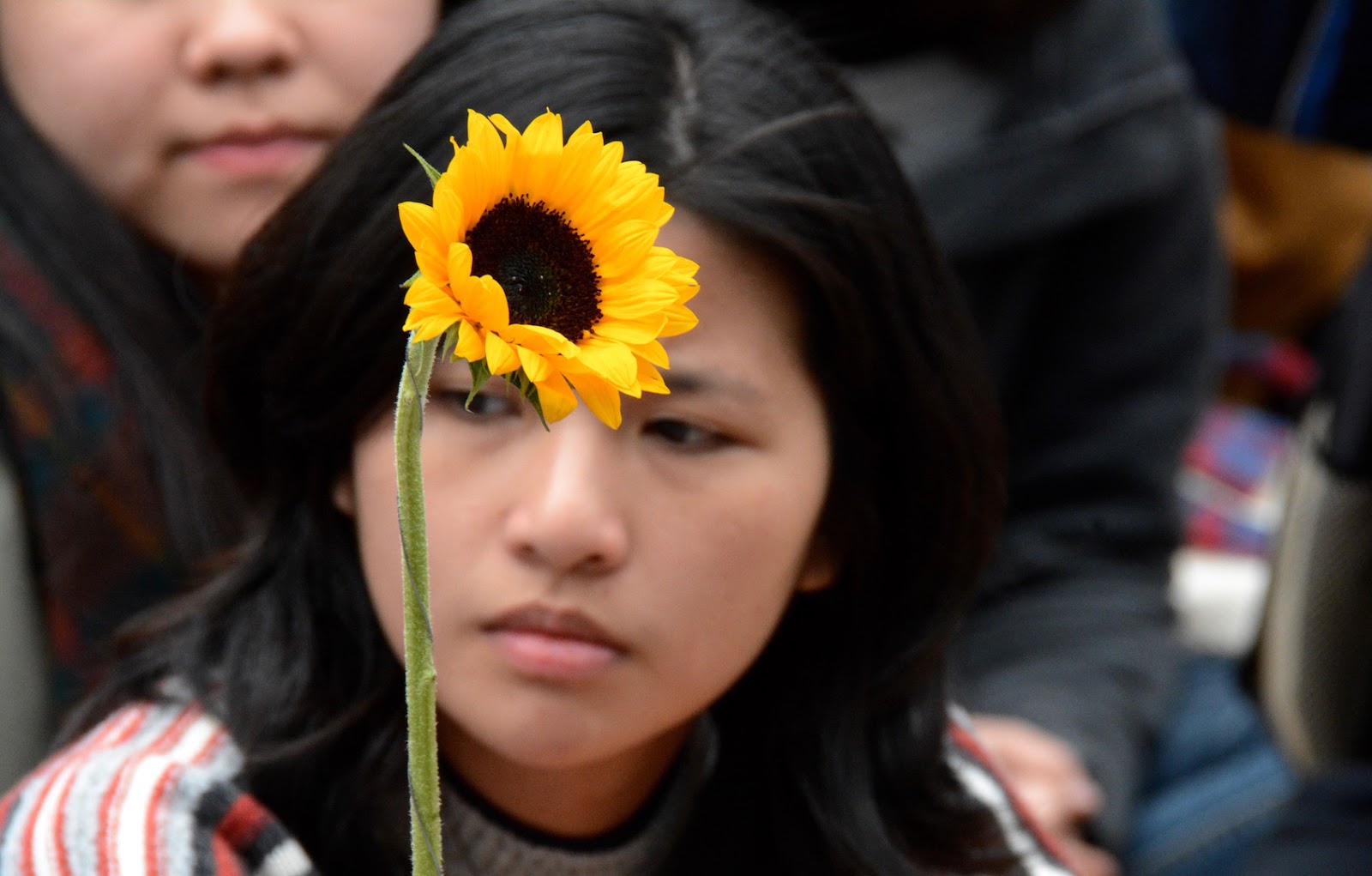
Hung’s election is the worst possible outcome for Taiwan, as it puts the KMT’s formidable assets at the disposal of politicians who should have bowed out a long time ago
As expected, Hung Hsiu-chu (洪秀柱) was elected chairperson of the struggling Chinese Nationalist Party (KMT) by a comfortable margin on Saturday night, ending more than 100 years of male dominance at the helm of a party that suffered a major setback in the presidential and legislative elections in January. While the rise of a female politician within the KMT is in step with prevailing attitudes in Taiwan today (she also ran against Wu Poh-hsiung in 2007), Hung’s ascension represents a shift toward a more conservative stance at the party at a time when social forces are calling for rejuvenation. We take a quick look at the implications for the KMT and the nation’s politics.
Although polls had long indicated that she was likely to prevail against her three opponents (including another woman), Hung’s victory on Saturday was an impressive comeback by a politician who, back in October last year, had been ignominiously dropped as the KMT’s presidential candidate. In the months prior to her demise, Hung’s out-of-step policies and pro-Beijing stance had fueled widespread discontent within the KMT, leading to expulsions and walkouts by party stalwarts and the threat of collapse months before the Jan. 16 elections.
My article, published today in Thinking Taiwan, continues here.
Monday, March 28, 2016
Tuesday, March 22, 2016
China Faces Not One But Two Forces for Independence in Taiwan
Beijing does not only have to contend with traditional 'taidu,' but 'huadu' as well, two forces that, when joined, play a key role in ensuring Taiwan's resilience
With the Democratic Progressive Party (DPP) set to assume office in Taiwan less than two months from now, the Chinese commentariat has shifted into high gear with warnings about Beijing’s “red lines” and the sundry ills that could befall Taiwan should incoming president Tsai Ing-wen (蔡英文) cross any of them. One recurrent red line takes aim at “Taiwan independence,” a concept that is anathema to Beijing. But China has a much bigger problem on its hands, as there is not one but rather two independence movements in Taiwan.
Sometimes overlapping and sometimes clashing, these two movements are united in their opposition to Taiwan or the Republic of China (ROC), as it is officially known, becoming part of the People’s Republic of China. And taken together, these two groups account of the majority of the people in Taiwan regardless of their voting preferences.
My article, published today in the China Policy Institute blog, continues here.
With the Democratic Progressive Party (DPP) set to assume office in Taiwan less than two months from now, the Chinese commentariat has shifted into high gear with warnings about Beijing’s “red lines” and the sundry ills that could befall Taiwan should incoming president Tsai Ing-wen (蔡英文) cross any of them. One recurrent red line takes aim at “Taiwan independence,” a concept that is anathema to Beijing. But China has a much bigger problem on its hands, as there is not one but rather two independence movements in Taiwan.
Sometimes overlapping and sometimes clashing, these two movements are united in their opposition to Taiwan or the Republic of China (ROC), as it is officially known, becoming part of the People’s Republic of China. And taken together, these two groups account of the majority of the people in Taiwan regardless of their voting preferences.
My article, published today in the China Policy Institute blog, continues here.
Friday, March 18, 2016
Yes, China Has Re-established Ties With The Gambia. Now Calm Down
As a post-modern state, Taiwan should not worry too much about its official diplomatic allies, many of which are micro-states. It must instead focus on substance with countries of influence
The rumors, which had been circulating for a while, were confirmed early in the evening of March 17. China was resuming diplomatic ties with The Gambia. The African country had been in political limbo since November 2013, when it had severed ties with Taipei only to be spurned by Beijing, ostensibly because the Chinese government did not want to shatter the “diplomatic truce” it had struck with President Ma Ying-jeou. Now the question on everybody’s lips is whether Beijing’s apparent change of heart constitutes a “warning” to Tsai Ing-wen, who will assume the presidency on May 20, and signals an end to the informal arrangement whereby the two sides of the Taiwan Strait wouldn’t “steal” diplomatic allies from each other. The short answer is maybe, but even if that were the case, there is no reason for Taiwan to panic.
My op-ed, published today in The News Lens International, continues here (photo: Xinhua).
The rumors, which had been circulating for a while, were confirmed early in the evening of March 17. China was resuming diplomatic ties with The Gambia. The African country had been in political limbo since November 2013, when it had severed ties with Taipei only to be spurned by Beijing, ostensibly because the Chinese government did not want to shatter the “diplomatic truce” it had struck with President Ma Ying-jeou. Now the question on everybody’s lips is whether Beijing’s apparent change of heart constitutes a “warning” to Tsai Ing-wen, who will assume the presidency on May 20, and signals an end to the informal arrangement whereby the two sides of the Taiwan Strait wouldn’t “steal” diplomatic allies from each other. The short answer is maybe, but even if that were the case, there is no reason for Taiwan to panic.
My op-ed, published today in The News Lens International, continues here (photo: Xinhua).
Thursday, March 17, 2016
家園、價值與民主:論台灣認同的興起
作為對照及定義自身認同的對象,台灣人在今天的中國身上看見的,正是他們所不願成為的模樣
這個趨勢幾年前就開始了,不論台北和北京的兩個政府是怎樣同步勸誘台灣人回心轉意,大造宣傳還是施以甜頭,都無法阻擋:越來越多台灣人認同自己是台灣人而不是中國人。有幾項人口統計因素對今日台灣人自我認同的穩定成長有所影響,但有一項因素似乎特別催化了整個進程,那就是中國本身。
回顧 1990 年代中期,當時在台灣還只有 44% 的人自認為台灣人,還有超過 30% 的人認為自己是中國人。到了今天,根據《聯合報》的一項民意調查(註1),認定自己就是台灣人而不是其他人的比率達到了 73% ,創下這家親藍營媒體調查以來的新高。自認為就是中國人而不是其他人的比率則下降到 11% 。其他為時多年的調查(註2)也追蹤到類似的進展。
教育在這樣的轉變中無疑發揮了一些作用,尤其是在李登輝政權後期以及陳水扁執政八年之中。可是,如果國家機制(例如教育)足以影響甚至形塑自我認同,那麼我們自然會預期馬英九執政八年以來,中國認同的情感必定有所增長。然而中國認同不但未見增長,台灣人的自我認同更在馬英九任內深化了,這意味著自我認同的產生多半獨立於國家主動培養特定認同的舉動之外,至少在國家的舉動違背社會自發趨勢時是這樣。
有一項或許最為人所知的因素,是世代與人口結構的轉變。隨著時光流逝,由於出生在中國大陸或身為中國移民直系後裔而對中國懷有特殊情感的人數逐漸減少,取而代之的則是生長在台灣的幾代人。因此,一個人的自我認同是從他認定什麼是「家園」形塑而成的,與族群身分並不相干。這可以部分解釋在同一份《聯合報》民調之中,為何 20 到 29 歲這一年齡層的人自認為台灣人的比例高達 85% 。
同樣重要的則是人們成長於其中的社會型態,以及這一社會型態如何與界定另一群他者的行為準則形成對比,特別在後者宣稱前者是自身一部分的情況下。在此尤須指出,20 到 29 歲年齡層的作答者們所知的唯一一種政治體制即是自由民主制度,這與身為台灣人的意義何在是不可分割的。對這些青年而言,如今仍存續在中國的那種專制獨裁只能被看作是外在生成的,但在過去幾代親身體驗戒嚴專制的台灣人來說就並非如此。而對於前幾個世代的台灣人,專制獨裁則是與中國直接相關的,因為那樣一種體制是從中國發源,而後以中國國民黨的形貌強加於台灣社會。因此,那種至今仍在中國運行,在許多方面都延續著長年慣習的政治體制,在他們看來同樣是「異己的」,充斥著各種負面意涵的。只有極少數人對台灣的戒嚴威權時代還戀戀不捨。實際上,就連一度成為國民黨總統候選人,卻在選前最後一刻被撤換的親北京人士洪秀柱,她的死忠支持者們也堅決認定「我們」中華民國和「他們」中華人民共和國不同(註3)。我問他們差別在哪裡,而他們幾乎每一個人都指出價值觀的差異,以及各自政治體制本質的不同。
還有一個更晚近的因素進一步加深了兩個社會的對比,而自我認同多半是將自我與「他者」對比之下產生的:那是中國共產黨說明自己在 1989 年天安門屠殺,以及蘇聯解體之後至今仍能屹立不搖的新說法。中共越來越訴諸於民族主義,訴諸於昔日創傷恥辱與今後榮光的敘事,同時把自己抬舉成了中華民族復興不可或缺的衛道士。根據西東大學(Seton Hall University)汪錚教授的研究,前國家主席江澤民是這一轉向的設計師(註4),他用愛國主義和民族主義替代了共產主義與社會主義,成為中國的新一套意識型態。
台灣與中國敘事之間的對比再強烈不過了,從雙方在第二次世界大戰之前和戰爭期間與日本往來經驗的顯著差異開始,到歷史創傷(「百年國恥」相對於二二八屠殺)都不一樣。說到對未來的展望,中華民族復興敘事則是以文明思維放眼全世界,而這樣的野心對於完全甘願於扮演小型或中等強國的台灣人並沒有多大吸引力。
中國官方敘事在現任國家主席習近平領導下展現對外領土野心、尚武象徵及偏執仇外的走向,也更加凸顯了中國和台灣兩個社會的根本差異。再沒有什麼比最近幾個月來圍繞著「習大大」而生的領袖崇拜更能概括雙方差異的了(註5),這種現象在中國是從毛澤東時代以來僅見,而在當代或許只有鄰近的北韓(朝鮮)差可比擬。
這看來似乎瑣屑,卻非同小可。在習近平被拱上神壇的背後,包藏着一套強調獨裁強人領袖不可或缺的國家敘事。用這種敬拜對照台灣人如何對待他們平凡的總統:台灣的總統並不被看作神人,而是經常被公然嘲弄、丑化,甚至像馬英九好幾次親身遭遇的,成了丟鞋的靶子。
就一切「贏得台灣人心」,並營造台灣人可能支持與中國統一條件的努力來說,北京(更明確地說,就是習近平主席本人)最大的敵人是自己。這倒不是因為中國領導人繼續堅信著經濟決定論的空想,而是互相對反的歷史敘事,加上我們最近在中國所見的過度領袖崇拜與國族野心,在在證實了這兩個社會是由互不相容的價值與行為界定的。於是,作為對照及定義自身認同的對象,台灣人在今天的中國身上看見的,正是他們所不願成為的模樣。
(寇謐將,英文想想論壇總編輯,諾丁罕大學中國政策研究所非常駐資深研究員。)
中譯:William Tsai
Original article: Home, values and democracy: Explaining the rise in Taiwanese identification, China Policy Institute blog, March 16, 2016
這個趨勢幾年前就開始了,不論台北和北京的兩個政府是怎樣同步勸誘台灣人回心轉意,大造宣傳還是施以甜頭,都無法阻擋:越來越多台灣人認同自己是台灣人而不是中國人。有幾項人口統計因素對今日台灣人自我認同的穩定成長有所影響,但有一項因素似乎特別催化了整個進程,那就是中國本身。
回顧 1990 年代中期,當時在台灣還只有 44% 的人自認為台灣人,還有超過 30% 的人認為自己是中國人。到了今天,根據《聯合報》的一項民意調查(註1),認定自己就是台灣人而不是其他人的比率達到了 73% ,創下這家親藍營媒體調查以來的新高。自認為就是中國人而不是其他人的比率則下降到 11% 。其他為時多年的調查(註2)也追蹤到類似的進展。
教育在這樣的轉變中無疑發揮了一些作用,尤其是在李登輝政權後期以及陳水扁執政八年之中。可是,如果國家機制(例如教育)足以影響甚至形塑自我認同,那麼我們自然會預期馬英九執政八年以來,中國認同的情感必定有所增長。然而中國認同不但未見增長,台灣人的自我認同更在馬英九任內深化了,這意味著自我認同的產生多半獨立於國家主動培養特定認同的舉動之外,至少在國家的舉動違背社會自發趨勢時是這樣。
有一項或許最為人所知的因素,是世代與人口結構的轉變。隨著時光流逝,由於出生在中國大陸或身為中國移民直系後裔而對中國懷有特殊情感的人數逐漸減少,取而代之的則是生長在台灣的幾代人。因此,一個人的自我認同是從他認定什麼是「家園」形塑而成的,與族群身分並不相干。這可以部分解釋在同一份《聯合報》民調之中,為何 20 到 29 歲這一年齡層的人自認為台灣人的比例高達 85% 。
同樣重要的則是人們成長於其中的社會型態,以及這一社會型態如何與界定另一群他者的行為準則形成對比,特別在後者宣稱前者是自身一部分的情況下。在此尤須指出,20 到 29 歲年齡層的作答者們所知的唯一一種政治體制即是自由民主制度,這與身為台灣人的意義何在是不可分割的。對這些青年而言,如今仍存續在中國的那種專制獨裁只能被看作是外在生成的,但在過去幾代親身體驗戒嚴專制的台灣人來說就並非如此。而對於前幾個世代的台灣人,專制獨裁則是與中國直接相關的,因為那樣一種體制是從中國發源,而後以中國國民黨的形貌強加於台灣社會。因此,那種至今仍在中國運行,在許多方面都延續著長年慣習的政治體制,在他們看來同樣是「異己的」,充斥著各種負面意涵的。只有極少數人對台灣的戒嚴威權時代還戀戀不捨。實際上,就連一度成為國民黨總統候選人,卻在選前最後一刻被撤換的親北京人士洪秀柱,她的死忠支持者們也堅決認定「我們」中華民國和「他們」中華人民共和國不同(註3)。我問他們差別在哪裡,而他們幾乎每一個人都指出價值觀的差異,以及各自政治體制本質的不同。
還有一個更晚近的因素進一步加深了兩個社會的對比,而自我認同多半是將自我與「他者」對比之下產生的:那是中國共產黨說明自己在 1989 年天安門屠殺,以及蘇聯解體之後至今仍能屹立不搖的新說法。中共越來越訴諸於民族主義,訴諸於昔日創傷恥辱與今後榮光的敘事,同時把自己抬舉成了中華民族復興不可或缺的衛道士。根據西東大學(Seton Hall University)汪錚教授的研究,前國家主席江澤民是這一轉向的設計師(註4),他用愛國主義和民族主義替代了共產主義與社會主義,成為中國的新一套意識型態。
台灣與中國敘事之間的對比再強烈不過了,從雙方在第二次世界大戰之前和戰爭期間與日本往來經驗的顯著差異開始,到歷史創傷(「百年國恥」相對於二二八屠殺)都不一樣。說到對未來的展望,中華民族復興敘事則是以文明思維放眼全世界,而這樣的野心對於完全甘願於扮演小型或中等強國的台灣人並沒有多大吸引力。
中國官方敘事在現任國家主席習近平領導下展現對外領土野心、尚武象徵及偏執仇外的走向,也更加凸顯了中國和台灣兩個社會的根本差異。再沒有什麼比最近幾個月來圍繞著「習大大」而生的領袖崇拜更能概括雙方差異的了(註5),這種現象在中國是從毛澤東時代以來僅見,而在當代或許只有鄰近的北韓(朝鮮)差可比擬。
這看來似乎瑣屑,卻非同小可。在習近平被拱上神壇的背後,包藏着一套強調獨裁強人領袖不可或缺的國家敘事。用這種敬拜對照台灣人如何對待他們平凡的總統:台灣的總統並不被看作神人,而是經常被公然嘲弄、丑化,甚至像馬英九好幾次親身遭遇的,成了丟鞋的靶子。
就一切「贏得台灣人心」,並營造台灣人可能支持與中國統一條件的努力來說,北京(更明確地說,就是習近平主席本人)最大的敵人是自己。這倒不是因為中國領導人繼續堅信著經濟決定論的空想,而是互相對反的歷史敘事,加上我們最近在中國所見的過度領袖崇拜與國族野心,在在證實了這兩個社會是由互不相容的價值與行為界定的。於是,作為對照及定義自身認同的對象,台灣人在今天的中國身上看見的,正是他們所不願成為的模樣。
(寇謐將,英文想想論壇總編輯,諾丁罕大學中國政策研究所非常駐資深研究員。)
中譯:William Tsai
Original article: Home, values and democracy: Explaining the rise in Taiwanese identification, China Policy Institute blog, March 16, 2016
Wednesday, March 16, 2016
Home, values and democracy: Explaining the rise in Taiwanese identification
By making the contrast between the two societies increasingly sharp, Chinese nationalism inadvertently helps consolidate Taiwanese self-identification
The trend began several years ago, and no matter how hard the current government in Taipei and the one in Beijing try to convince them otherwise, with propaganda and sweeteners, there was no stopping it: more and more Taiwanese people identify as Taiwanese rather than Chinese. Several demographic factors have contributed to this steady rise in Taiwanese self-identification, but one in particular seems to be accelerating the process: China itself.
Back in the mid-1990s, only 44 percent of people in Taiwan identified as Taiwanese and more than 30 percent thought of themselves as Chinese. Today, according to a recent poll conducted by the United Daily News, the number of people who regard themselves as Taiwanese-only is 73 percent, a new high for the pan-blue-leaning UDN poll. Those who identify as Chinese-only are down to 11 percent. Other multiyear surveys have tracked a similar progression over time.
My article, published today in the China Policy Institute blog, continues here (photo by the author).
The trend began several years ago, and no matter how hard the current government in Taipei and the one in Beijing try to convince them otherwise, with propaganda and sweeteners, there was no stopping it: more and more Taiwanese people identify as Taiwanese rather than Chinese. Several demographic factors have contributed to this steady rise in Taiwanese self-identification, but one in particular seems to be accelerating the process: China itself.
Back in the mid-1990s, only 44 percent of people in Taiwan identified as Taiwanese and more than 30 percent thought of themselves as Chinese. Today, according to a recent poll conducted by the United Daily News, the number of people who regard themselves as Taiwanese-only is 73 percent, a new high for the pan-blue-leaning UDN poll. Those who identify as Chinese-only are down to 11 percent. Other multiyear surveys have tracked a similar progression over time.
My article, published today in the China Policy Institute blog, continues here (photo by the author).
Why Beijing has no desire to turn the screw on Tsai Ing-wen and threaten stability across the Taiwan Strait
Warnings by the international media and marginal players do not reflect the reality among top leaders
If we believed many of the article headlines that have appeared in international media since the January 16 election of Tsai Ing-wen of Taiwan’s Democratic Progressive Party, we would think the roof was about to come crashing down on the Taiwan Strait. Time and again, articles and editorials have warned that if Tsai refuses to recognise “one China” or the 1992 consensus, Beijing could – or should – punish Taiwan by, among other things, severing all official and unofficial contact. Such alarmism, however, doesn’t pass the reality check.
While ascertaining the future behaviour of any authoritarian regime will always be a challenge, so far, the Chinese leadership has reacted to Tsai’s landslide victory in a predictable fashion, with every indication that it wants a stable relationship across the strait. Therefore, while senior officials have reiterated the predictable lines on, say, Taiwan independence, their language in no way suggests plans for retributive action against Taiwan or escalatory policies that would threaten stability. There are several reasons why.
My op-ed, published today in the South China Morning Post, continues here.
If we believed many of the article headlines that have appeared in international media since the January 16 election of Tsai Ing-wen of Taiwan’s Democratic Progressive Party, we would think the roof was about to come crashing down on the Taiwan Strait. Time and again, articles and editorials have warned that if Tsai refuses to recognise “one China” or the 1992 consensus, Beijing could – or should – punish Taiwan by, among other things, severing all official and unofficial contact. Such alarmism, however, doesn’t pass the reality check.
While ascertaining the future behaviour of any authoritarian regime will always be a challenge, so far, the Chinese leadership has reacted to Tsai’s landslide victory in a predictable fashion, with every indication that it wants a stable relationship across the strait. Therefore, while senior officials have reiterated the predictable lines on, say, Taiwan independence, their language in no way suggests plans for retributive action against Taiwan or escalatory policies that would threaten stability. There are several reasons why.
My op-ed, published today in the South China Morning Post, continues here.
Thursday, March 10, 2016
BOOK REVIEW: Taiwan, the White Terror and the Power of Literature
A Review of Shawna Yang Ryan’s ‘Green Island’
It wasn’t the dreaded knock on the door in the middle of the night. Instead, the undercover military police officers posed as clients wanting to buy tea from Mr. Wei. Their main objective was something of an entirely different nature, however: to recover incriminating documents from the White Terror era that Mr. Wei had in his possession and which he had advertised for sale on the Internet. In all, after luring him out of his residence, eight men accompanied Mr. Wei back to his home, where they made it clear that “bad things” could happen if he refused to let them search his house without a warrant and did not hand over the documents (which he kept hidden in a dehumidifier unit). To keep the matter quiet, the officers later allegedly offered Mr. Wei NT$15,000 (about US$500) in return for his silence.
Mr. Wei did not take the money, nor did he remain silent.
My book review, published today in Thinking Taiwan, continues here.
It wasn’t the dreaded knock on the door in the middle of the night. Instead, the undercover military police officers posed as clients wanting to buy tea from Mr. Wei. Their main objective was something of an entirely different nature, however: to recover incriminating documents from the White Terror era that Mr. Wei had in his possession and which he had advertised for sale on the Internet. In all, after luring him out of his residence, eight men accompanied Mr. Wei back to his home, where they made it clear that “bad things” could happen if he refused to let them search his house without a warrant and did not hand over the documents (which he kept hidden in a dehumidifier unit). To keep the matter quiet, the officers later allegedly offered Mr. Wei NT$15,000 (about US$500) in return for his silence.
Mr. Wei did not take the money, nor did he remain silent.
My book review, published today in Thinking Taiwan, continues here.
Monday, March 07, 2016
McCafé Ad Promoting Acceptance of Gays Draws Fire from Conservative Groups
The latest reaction by a conservative religious alliance in Taiwan occurs just as Beijing passes new controversial regulations banning the depiction of homosexual acts on television
All eyes within the LGBTQI community were turned on China in the past week after Beijing unveiled its new General Rule on TV Productions (電視劇製作通則), which characterizes homosexuality as “unusual sexuality” and bans it along with “other perversions,” sexual abuse, and incest from TV content. While China was taking one major step backwards on the issue, a restaurant chain in Taiwan did the exact opposite with a TV commercial that promotes acceptance — and yet here too, backward forces mobilized to arrest progress and limit our freedom of expression.
In its new McCafé ad campaign, McDonald’s Taiwan introduced a TV spot in which a young man at a McCafé “comes out” to his father by scribbling “I like boys” (我喜歡男生) on a paper cup. After reading the message, the ill-at-ease father walks away, leaving his anxious son alone at table. A few seconds later the father comes back, grabs his son’s cup, and draws an insert symbol with the words, “I accept you” (接受你).
My article, published today in Thinking Taiwan, continues here.
All eyes within the LGBTQI community were turned on China in the past week after Beijing unveiled its new General Rule on TV Productions (電視劇製作通則), which characterizes homosexuality as “unusual sexuality” and bans it along with “other perversions,” sexual abuse, and incest from TV content. While China was taking one major step backwards on the issue, a restaurant chain in Taiwan did the exact opposite with a TV commercial that promotes acceptance — and yet here too, backward forces mobilized to arrest progress and limit our freedom of expression.
In its new McCafé ad campaign, McDonald’s Taiwan introduced a TV spot in which a young man at a McCafé “comes out” to his father by scribbling “I like boys” (我喜歡男生) on a paper cup. After reading the message, the ill-at-ease father walks away, leaving his anxious son alone at table. A few seconds later the father comes back, grabs his son’s cup, and draws an insert symbol with the words, “I accept you” (接受你).
My article, published today in Thinking Taiwan, continues here.
Saturday, March 05, 2016
Country Risk: Taiwanese election tests Chinese strategy
Key Points
China remains committed to eventual unification with Taiwan despite its moderate response to the election of an anti-unification Taiwanese president in January.
The acquisition and development of more advanced weapons capabilities by China has shifted the military balance across the Taiwan Strait, but military conflict remains unlikely.
Instead, Beijing is likely to use economic influence, non-state actors, and intelligence operations to manipulate Taiwan's democratic institutions and build support for unification among the population. The election of the Democratic Progressive Party's (DPP) Tsai Ing-wen as Taiwanese president on 16 January 2016 has ushered in a new era in relations across the Taiwan Strait.
My analysis, published today in IHS Jane's Intelligence Review, is available here (paywalled).
China remains committed to eventual unification with Taiwan despite its moderate response to the election of an anti-unification Taiwanese president in January.
The acquisition and development of more advanced weapons capabilities by China has shifted the military balance across the Taiwan Strait, but military conflict remains unlikely.
Instead, Beijing is likely to use economic influence, non-state actors, and intelligence operations to manipulate Taiwan's democratic institutions and build support for unification among the population. The election of the Democratic Progressive Party's (DPP) Tsai Ing-wen as Taiwanese president on 16 January 2016 has ushered in a new era in relations across the Taiwan Strait.
My analysis, published today in IHS Jane's Intelligence Review, is available here (paywalled).
Friday, March 04, 2016
The Great Cross-Strait Doublethink Act
As long as the governments in Taipei and Beijing remain pragmatic and flexible, the sky won’t fall over the Taiwan Strait
With the May 20 inauguration approaching, it’s increasingly safe to say that the analysts who were predicting a rapid souring of cross-strait relations or punitive action by Beijing following Tsai Ing-wen’s (蔡英文) landslide victory in the Jan. 16 elections were too alarmist. Both sides have demonstrated an ability to act pragmatically, and even though the fundamentals remain unresolved, a new modus vivendi is in the making that will conceivably ensure stability and continuity in the Taiwan Strait for years to come.
The sticking point, of course, is “one China” and the so-called “1992 consensus” that Beijing has repeatedly insisted on as a prerequisite for continued dialogue. During the election campaign, a struggling Chinese Nationalist Party (KMT) repeatedly sought to exploit the consensus—which it has adhered to wholeheartedly—by warning that the Democratic Progressive Party’s (DPP) refusal to recognize it would seriously harm relations with Beijing.
My article, published today on Thinking Taiwan, continues here (Photo: Rick Bajornas).
With the May 20 inauguration approaching, it’s increasingly safe to say that the analysts who were predicting a rapid souring of cross-strait relations or punitive action by Beijing following Tsai Ing-wen’s (蔡英文) landslide victory in the Jan. 16 elections were too alarmist. Both sides have demonstrated an ability to act pragmatically, and even though the fundamentals remain unresolved, a new modus vivendi is in the making that will conceivably ensure stability and continuity in the Taiwan Strait for years to come.
The sticking point, of course, is “one China” and the so-called “1992 consensus” that Beijing has repeatedly insisted on as a prerequisite for continued dialogue. During the election campaign, a struggling Chinese Nationalist Party (KMT) repeatedly sought to exploit the consensus—which it has adhered to wholeheartedly—by warning that the Democratic Progressive Party’s (DPP) refusal to recognize it would seriously harm relations with Beijing.
My article, published today on Thinking Taiwan, continues here (Photo: Rick Bajornas).
Thursday, February 25, 2016
Should He Go?
A controversy over a proposal to remove portraits of Sun Yat-sen in public buildings raises important questions about national symbols and ‘founding fathers’
His portrait is in every public building in Taiwan, the stern look above the gray mustache signaling both vision and undoubted ruthlessness. The man is Sun Yat-sen (孫中山), the “founding father” of the Republic of China (ROC). Now legislators from the Democratic Progressive Party (DPP), which for the first time in Taiwan’s history secured a majority of seats in parliament in the Jan. 16 elections, want those portraits to be removed. As expected, the plan has sparked consternation within the Chinese Nationalist Party (KMT), which has described it as an attempt to “destroy” the ROC and fuel “ethnic divisions” in Taiwan.
The proposal, initiated by DPP Legislator Gao Jyh-peng (高志鵬), wants the requirement that Sun’s portraits be installed in every public building be dropped and for Sun to no longer be referred to as the nation’s “founding father.”
My article, published today on Thinking Taiwan, continues here (photo: Reuters).
His portrait is in every public building in Taiwan, the stern look above the gray mustache signaling both vision and undoubted ruthlessness. The man is Sun Yat-sen (孫中山), the “founding father” of the Republic of China (ROC). Now legislators from the Democratic Progressive Party (DPP), which for the first time in Taiwan’s history secured a majority of seats in parliament in the Jan. 16 elections, want those portraits to be removed. As expected, the plan has sparked consternation within the Chinese Nationalist Party (KMT), which has described it as an attempt to “destroy” the ROC and fuel “ethnic divisions” in Taiwan.
The proposal, initiated by DPP Legislator Gao Jyh-peng (高志鵬), wants the requirement that Sun’s portraits be installed in every public building be dropped and for Sun to no longer be referred to as the nation’s “founding father.”
My article, published today on Thinking Taiwan, continues here (photo: Reuters).
Tuesday, February 16, 2016
Taiwan Needs Unity
Winning the elections was the easy part. Now president-elect Tsai Ing-wen needs to reach across the political spectrum to build a truly unified administration
The bluster and inevitable scorched-earthness of the Jan. 16 elections are at long last behind us. As expected, Tsai Ing-wen (蔡英文) has been elected president, and the Democratic Progressive Party (DPP) has gained a majority in the Legislative Yuan, a first in Taiwan’s history. For all its impressiveness, the DPP’s decisive electoral successes last month were the easy part; the real work will begin on May 20, when the new administration starts governing. If it is to accomplish anything worthy of the mandate that it has been given, the Tsai administration will need to do everything it can to encourage unity — not only in its ranks but, far more importantly, across Taiwan. And that needs to start now, while Tsai puts together her future administration.
For far too long Taiwan has been a house divided, locked in a seemingly interminable conflict pitting “greens” against “blues.” Although civil society managed in recent years to transcend that political-ethnic divide by aiming for the common denominator of civic values, if Taiwan is to move forward as a nation a similar maturing will have to occur at the institutional level. In other words, political parties and government institutions must start reflecting the desires of the society in whose name they govern and leave behind the zero-sum approach to politics that, while conferring tactical benefits, will never yield dividends strategically.
My article, published today in Thinking Taiwan, continues here (photo by the author).
The bluster and inevitable scorched-earthness of the Jan. 16 elections are at long last behind us. As expected, Tsai Ing-wen (蔡英文) has been elected president, and the Democratic Progressive Party (DPP) has gained a majority in the Legislative Yuan, a first in Taiwan’s history. For all its impressiveness, the DPP’s decisive electoral successes last month were the easy part; the real work will begin on May 20, when the new administration starts governing. If it is to accomplish anything worthy of the mandate that it has been given, the Tsai administration will need to do everything it can to encourage unity — not only in its ranks but, far more importantly, across Taiwan. And that needs to start now, while Tsai puts together her future administration.
For far too long Taiwan has been a house divided, locked in a seemingly interminable conflict pitting “greens” against “blues.” Although civil society managed in recent years to transcend that political-ethnic divide by aiming for the common denominator of civic values, if Taiwan is to move forward as a nation a similar maturing will have to occur at the institutional level. In other words, political parties and government institutions must start reflecting the desires of the society in whose name they govern and leave behind the zero-sum approach to politics that, while conferring tactical benefits, will never yield dividends strategically.
My article, published today in Thinking Taiwan, continues here (photo by the author).
Thursday, February 04, 2016
The Unifying Themes Behind ‘Black Island’ and ‘The Convenient Illusion of Peace’
My two recent books look at the impact of civic nationalism in Taiwan, one from a domestic perspective, and the other at the strategic level
I distinctly remember the feeling that something had shifted, that a new, undefined force had installed itself in Taiwan. It was in the air, in the glimmer of determination that showed in the young protesters’ eyes. That was the summer of 2012, following a major rally against a pro-Beijing Taiwanese billionaire’s attempt to expand his media empire. In my nascent excitement, I made the observation that youth seemed poised to change the face of politics in Taiwan. I was immediately accused of being naïve, of placing my hopes in a segment of Taiwanese society that was apathetic, materialistic, and irremediably apolitical.
As recent history has demonstrated, my critics were wrong, though I can understand why they viewed things differently as the mood at the time was indeed pessimistic. Throughout 2013, the fabric of politics in Taiwan was transformed by the intensification of civic activism, which in early 2014 translated into the Sunflower Movement and its three-week occupation of the Legislative Yuan over a controversial services trade agreement with China. Those two intense years were the seeds of the ideological split that brought the once seemingly undefeatable Chinese Nationalist Party (KMT) to its knees and ensured that President Ma Ying-jeou’s ambitions would be dashed.
My article, published today on the China Policy Institute blog, continues here.
I distinctly remember the feeling that something had shifted, that a new, undefined force had installed itself in Taiwan. It was in the air, in the glimmer of determination that showed in the young protesters’ eyes. That was the summer of 2012, following a major rally against a pro-Beijing Taiwanese billionaire’s attempt to expand his media empire. In my nascent excitement, I made the observation that youth seemed poised to change the face of politics in Taiwan. I was immediately accused of being naïve, of placing my hopes in a segment of Taiwanese society that was apathetic, materialistic, and irremediably apolitical.
As recent history has demonstrated, my critics were wrong, though I can understand why they viewed things differently as the mood at the time was indeed pessimistic. Throughout 2013, the fabric of politics in Taiwan was transformed by the intensification of civic activism, which in early 2014 translated into the Sunflower Movement and its three-week occupation of the Legislative Yuan over a controversial services trade agreement with China. Those two intense years were the seeds of the ideological split that brought the once seemingly undefeatable Chinese Nationalist Party (KMT) to its knees and ensured that President Ma Ying-jeou’s ambitions would be dashed.
My article, published today on the China Policy Institute blog, continues here.
Saturday, January 23, 2016
Taiwan’s New Leader Likely to Surprise on Cross-Strait Ties
With pragmatism, creativity and understanding from both sides, there is no reason why relations in the Taiwan Strait should sour under a DPP administration
After nearly eight years of relative tranquility in the Taiwan Strait, voters on January 16th handed Taiwan’s Democratic Progressive Party (DPP) a potentially disruptive strong mandate. The island nation not only elected the country’s first female president, but also gave the pro-Taiwan DPP control of parliament for the first time ever.
Occurring just two months after the historic meeting between Chinese President Xi Jinping and Taiwan’s outgoing Ma Ying-jeou in Singapore, the landslide for Tsai Ing-wen and the DPP has prompted fears that relations between the two sides could quickly sour. However, early signs suggest that Taipei and Beijing may be willing to act pragmatically.
My article, published today in the International Peace Institute’s Global Observatory, continues here.
After nearly eight years of relative tranquility in the Taiwan Strait, voters on January 16th handed Taiwan’s Democratic Progressive Party (DPP) a potentially disruptive strong mandate. The island nation not only elected the country’s first female president, but also gave the pro-Taiwan DPP control of parliament for the first time ever.
Occurring just two months after the historic meeting between Chinese President Xi Jinping and Taiwan’s outgoing Ma Ying-jeou in Singapore, the landslide for Tsai Ing-wen and the DPP has prompted fears that relations between the two sides could quickly sour. However, early signs suggest that Taipei and Beijing may be willing to act pragmatically.
My article, published today in the International Peace Institute’s Global Observatory, continues here.
Saturday, January 16, 2016
The Great Power That Can’t Help Itself
The public humiliation of a young Taiwanese entertainer in South Korea has sparked outrage among the Taiwanese, who retaliated with an even more powerful weapon — their votes
Chou Tzu-yu (周子瑜) isn’t her usual bubbly self in the short video, which has spread like brushfire in social media over the past 24 hours. The Taiwan-born 16-year-old member of the South Korean pop band TWICE has been forced to apologize, on film, for holding a Nationalist flag (symbol for the Republic of China) during a recent filming, and, reading from a script, to “admit” that she is Chinese rather than Taiwanese. Visibly shaken, the young woman doesn’t exactly radiate pride in her avowed Chineseness. In fact, it is clear that the confession, which has drawn many comparisons with videos produced by the Islamic State, was made under duress and under threat by her South Korean agent and Chinese sponsors that her career as an entertainer would be jeopardized had she refused to humiliate herself on camera.
What is most shocking about the incident (besides the idea that Chinese zealots would force a 16-year-old to go through this) is its timing. As the confession was beginning to spread on the Internet (more than 2.5 million views on YouTube since Jan. 15), millions of Taiwanese were readying to vote for their future president and parliament in the sixth free general election since their country democratized after decades of authoritarian rule. By depicting Chou as a “Taiwanese splittist” for displaying the ROC flag, those responsible for this incident confirmed once again why the majority of Taiwanese want nothing to do with becoming part of the People’s Republic of China.
My article, published today on Thinking Taiwan, continues here.
Chou Tzu-yu (周子瑜) isn’t her usual bubbly self in the short video, which has spread like brushfire in social media over the past 24 hours. The Taiwan-born 16-year-old member of the South Korean pop band TWICE has been forced to apologize, on film, for holding a Nationalist flag (symbol for the Republic of China) during a recent filming, and, reading from a script, to “admit” that she is Chinese rather than Taiwanese. Visibly shaken, the young woman doesn’t exactly radiate pride in her avowed Chineseness. In fact, it is clear that the confession, which has drawn many comparisons with videos produced by the Islamic State, was made under duress and under threat by her South Korean agent and Chinese sponsors that her career as an entertainer would be jeopardized had she refused to humiliate herself on camera.
What is most shocking about the incident (besides the idea that Chinese zealots would force a 16-year-old to go through this) is its timing. As the confession was beginning to spread on the Internet (more than 2.5 million views on YouTube since Jan. 15), millions of Taiwanese were readying to vote for their future president and parliament in the sixth free general election since their country democratized after decades of authoritarian rule. By depicting Chou as a “Taiwanese splittist” for displaying the ROC flag, those responsible for this incident confirmed once again why the majority of Taiwanese want nothing to do with becoming part of the People’s Republic of China.
My article, published today on Thinking Taiwan, continues here.
Friday, January 15, 2016
Taiwan's election: Change is a good thing
Administrations tend to ossify over time. Peaceful transitions of power are a healthy way to rejuvenate a democracy
Politics is a bit like sailing through rough seas without proper navigational instruments: there's a general idea as to the destination, but how to get there is very much an exercise of trial and error, triangulation, improvisation and adjustments.
The benefits of adjustments – their indispensability, in fact – are often underappreciated, as the human tendency is to favor the status-quo and predictability. However, as long-serving governments and authoritarian regimes have demonstrated over centuries, state and party institutions tend to ossify over time. As 'group think' sets in, the government becomes less and less capable of generating new ideas or implementing new practices. Rejuvenation cannot be self-generated, and stasis sets in.
Luckily for democratic countries like Taiwan, they have the advantage of having institutionalised the cyclical mechanisms by which citizens, as non-participants in the daily routine of governance, can judge that a regime has reached the limits of its utility and that the time has come for a course correction.
And a course correction is exactly what's in order for Taiwan after nearly eight years of Chinese Nationalist Party (KMT) rule, just as it had become necessary after eight years of Democratic Progressive Party (DPP) rule from 2000-2008. As the 16 January elections approach, it is very clear that President Ma Ying-jeou's KMT has run out of steam and that it is no longer capable of generating the new ideas that will guide Taiwan toward a more prosperous future.
My article, published today in the Lowy Interpreter, continues here.
Politics is a bit like sailing through rough seas without proper navigational instruments: there's a general idea as to the destination, but how to get there is very much an exercise of trial and error, triangulation, improvisation and adjustments.
The benefits of adjustments – their indispensability, in fact – are often underappreciated, as the human tendency is to favor the status-quo and predictability. However, as long-serving governments and authoritarian regimes have demonstrated over centuries, state and party institutions tend to ossify over time. As 'group think' sets in, the government becomes less and less capable of generating new ideas or implementing new practices. Rejuvenation cannot be self-generated, and stasis sets in.
Luckily for democratic countries like Taiwan, they have the advantage of having institutionalised the cyclical mechanisms by which citizens, as non-participants in the daily routine of governance, can judge that a regime has reached the limits of its utility and that the time has come for a course correction.
And a course correction is exactly what's in order for Taiwan after nearly eight years of Chinese Nationalist Party (KMT) rule, just as it had become necessary after eight years of Democratic Progressive Party (DPP) rule from 2000-2008. As the 16 January elections approach, it is very clear that President Ma Ying-jeou's KMT has run out of steam and that it is no longer capable of generating the new ideas that will guide Taiwan toward a more prosperous future.
My article, published today in the Lowy Interpreter, continues here.
Thursday, January 14, 2016
Taiwan’s 2016 Elections: An Exercise in Generational Change
Why the KMT will likely be severely defeated on Saturday
More than ever before in Taiwan’s history, political contention is not defined by ethnicity. A clash of generations, rather, is shaping the positioning of the two leading parties in the 2016 elections. The opposition Democratic Progressive Party (DPP) has understood, and then embraced, this shift most effectively, becoming associated with “youth,” “change” and rejuvenation.
The ruling Chinese Nationalist Party (KMT), in contrast, has proved incapable of acknowledging generational pressures, and its ideology now has traction with an increasingly marginal segment of society.
My article, published today on the University of British Columbia’s Asia Pacific Memo, continues here (photo by the author).
More than ever before in Taiwan’s history, political contention is not defined by ethnicity. A clash of generations, rather, is shaping the positioning of the two leading parties in the 2016 elections. The opposition Democratic Progressive Party (DPP) has understood, and then embraced, this shift most effectively, becoming associated with “youth,” “change” and rejuvenation.
The ruling Chinese Nationalist Party (KMT), in contrast, has proved incapable of acknowledging generational pressures, and its ideology now has traction with an increasingly marginal segment of society.
My article, published today on the University of British Columbia’s Asia Pacific Memo, continues here (photo by the author).
For Millions of Taiwanese Voters, Not All Roads Go Through China
Rule #1 in electoral politics: know what your voters want
Recent developments in Taiwan, from the boisterous campaign leading up to this weekend's presidential election to last November's Singapore meeting between Presidents Xi Jinping of China and Ma Ying-jeou of Taiwan, have resulted in unusual amounts of coverage for a nation that is otherwise far too often ignored by the international community.
Much of this attention, however, has suffered from a tendency among international media and analysts to look at Taiwan almost exclusively through the lens of its challenging relationship with China and from the assumption that China is unremittingly on the minds of the Taiwanese. This fixation on China is not only misleading, but it also denies us the ability to truly comprehend what lies behind the decisions that the island nation's 23 million people will make when they head for the polling stations on Jan. 16.
My article, published today in the Huffington Post, continues here (photo: Sam Yeh, AFP)
Recent developments in Taiwan, from the boisterous campaign leading up to this weekend's presidential election to last November's Singapore meeting between Presidents Xi Jinping of China and Ma Ying-jeou of Taiwan, have resulted in unusual amounts of coverage for a nation that is otherwise far too often ignored by the international community.
Much of this attention, however, has suffered from a tendency among international media and analysts to look at Taiwan almost exclusively through the lens of its challenging relationship with China and from the assumption that China is unremittingly on the minds of the Taiwanese. This fixation on China is not only misleading, but it also denies us the ability to truly comprehend what lies behind the decisions that the island nation's 23 million people will make when they head for the polling stations on Jan. 16.
My article, published today in the Huffington Post, continues here (photo: Sam Yeh, AFP)
Wednesday, January 06, 2016
Taiwanese Election Candidate Denied Entry Into Hong Kong
New Power Party candidate Huang Kuo-chang was invited to appear on a CNN talk show. But the territory’s immigration authorities won’t let him in
Amid mounting speculation surrounding the mysterious disappearance of five Hong Kong booksellers, another development this week suggests a further erosion of freedoms in the Special Administrative Region as Beijing turns the screws on the former British colony.
In a Facebook post on Tuesday evening, Huang Kuo-chang (黃國昌), a candidate of the small New Power Party in Taiwan’s Jan. 16 legislative elections, revealed that Hong Kong authorities had refused to issue him an entry visa. An associate research fellow at the prestigious Academia Sinica in Taipei and a former leader of the Sunflower Movement, Huang was invited by CNN to appear on a special program on Taiwan’s elections, to be filmed in the news network’s Hong Kong studios after the Jan. 16 vote.
My article, published today on Thinking Taiwan, continues here (photo by the author).
Amid mounting speculation surrounding the mysterious disappearance of five Hong Kong booksellers, another development this week suggests a further erosion of freedoms in the Special Administrative Region as Beijing turns the screws on the former British colony.
In a Facebook post on Tuesday evening, Huang Kuo-chang (黃國昌), a candidate of the small New Power Party in Taiwan’s Jan. 16 legislative elections, revealed that Hong Kong authorities had refused to issue him an entry visa. An associate research fellow at the prestigious Academia Sinica in Taipei and a former leader of the Sunflower Movement, Huang was invited by CNN to appear on a special program on Taiwan’s elections, to be filmed in the news network’s Hong Kong studios after the Jan. 16 vote.
My article, published today on Thinking Taiwan, continues here (photo by the author).
Tuesday, January 05, 2016
Mind Your Language: Why Taiwan Isn’t the Provocateur in the Taiwan Strait
On how language often unfairly frames the discussion on Taiwan and China
British author George Orwell, one of the greatest polemicists ever to have put ink to paper, once wrote that “Orthodoxy, of whatever colour, seems to demand a lifeless, imitative style.” In that same essay (“Politics and the English Language”), Orwell also observed that “if thought corrupts language, language can also corrupt thought,” adding that “bad usage can spread by tradition and imitation even among people who should and do know better.” Much of the standard reporting about Taiwan nowadays is affected by “bad usage” that has spread “by tradition” and “imitation” — and China, which denies Taiwan’s sovereign status, has made large contributions toward the continuation of that practice. The corruption that has affected the language used when academics and journalists discuss Taiwan originates with Beijing’s framing of the argument for political ends.
Many writers today uncritically regurgitate Chinese propaganda such as “Taiwan has been part of China since ancient times,” a claim, similarly made about East Turkestan/Xinjiang Uyghur Autonomous Region and Tibet, that can only be substantiated through the routine distortion of verifiable history. The endless references to the “re-unification” of Taiwan with China or “the Mainland” that are encountered in newspaper copy, books and documentaries is a perfect example of bad usage spread by tradition and imitation. While any intelligent person would admit that, logically, that which was never united cannot be re-united, the same mistake continues to pop up on a daily basis.
My article, published today on the China Policy Institute blog, continues here (photo by the author).
British author George Orwell, one of the greatest polemicists ever to have put ink to paper, once wrote that “Orthodoxy, of whatever colour, seems to demand a lifeless, imitative style.” In that same essay (“Politics and the English Language”), Orwell also observed that “if thought corrupts language, language can also corrupt thought,” adding that “bad usage can spread by tradition and imitation even among people who should and do know better.” Much of the standard reporting about Taiwan nowadays is affected by “bad usage” that has spread “by tradition” and “imitation” — and China, which denies Taiwan’s sovereign status, has made large contributions toward the continuation of that practice. The corruption that has affected the language used when academics and journalists discuss Taiwan originates with Beijing’s framing of the argument for political ends.
Many writers today uncritically regurgitate Chinese propaganda such as “Taiwan has been part of China since ancient times,” a claim, similarly made about East Turkestan/Xinjiang Uyghur Autonomous Region and Tibet, that can only be substantiated through the routine distortion of verifiable history. The endless references to the “re-unification” of Taiwan with China or “the Mainland” that are encountered in newspaper copy, books and documentaries is a perfect example of bad usage spread by tradition and imitation. While any intelligent person would admit that, logically, that which was never united cannot be re-united, the same mistake continues to pop up on a daily basis.
My article, published today on the China Policy Institute blog, continues here (photo by the author).
Monday, January 04, 2016
A Fire That Shall Not Be Extinguished
Fire Ex lead singer Yang Ta-cheng shows us what love (and the new Taiwan) is all about
Greatly needing a break from electoral politics, last weekend I began reading Anthony Burgess’ Earthly Powers, a monster of a book that, among its many plot lines, explores the theme of homosexuality through its main character, the octogenarian novelist Kenneth Toomey. Earthly Powers is a challenging book, filled with wonderful punning, references and uses of the English language that one can only hope was still in vogue today. Beyond its artistic appeal, the novel delves into the devastating socio-religious pressures on homosexuals to conform, to un-choose, if you will, that which wasn’t — isn’t — a choice to begin with.
Burgess’ novel is filled with linguistic assaults on homosexuality, the most disastrous by far coming from family members. The narrator, whose reliability is often in doubt, doesn’t always tell us how painful the arrows are and it is left to the reader to imagine the agony. As I read the book I couldn’t help but think about my personal experience, that of my mother’s coming out several years ago, a development in my family that allowed me to experience first-hand both the healing powers of tolerance and the devastating blows of intolerance. Luckily, the reaction in my immediate family fell in the former category, which greatly mitigated the potentially dislocating effects of that new reality.
My article, published today on Thinking Taiwan, continues here.
Greatly needing a break from electoral politics, last weekend I began reading Anthony Burgess’ Earthly Powers, a monster of a book that, among its many plot lines, explores the theme of homosexuality through its main character, the octogenarian novelist Kenneth Toomey. Earthly Powers is a challenging book, filled with wonderful punning, references and uses of the English language that one can only hope was still in vogue today. Beyond its artistic appeal, the novel delves into the devastating socio-religious pressures on homosexuals to conform, to un-choose, if you will, that which wasn’t — isn’t — a choice to begin with.
Burgess’ novel is filled with linguistic assaults on homosexuality, the most disastrous by far coming from family members. The narrator, whose reliability is often in doubt, doesn’t always tell us how painful the arrows are and it is left to the reader to imagine the agony. As I read the book I couldn’t help but think about my personal experience, that of my mother’s coming out several years ago, a development in my family that allowed me to experience first-hand both the healing powers of tolerance and the devastating blows of intolerance. Luckily, the reaction in my immediate family fell in the former category, which greatly mitigated the potentially dislocating effects of that new reality.
My article, published today on Thinking Taiwan, continues here.
Thursday, December 31, 2015
Goodbye 2015, And What Have You in Store for Us, 2016?
Another year
comes to a close, and once again this man-made transition reminds me of the
truth behind what my parents told me, years ago, when I was a small child, and
which sounded utterly preposterous at the time: That as one gets older, the
passage of time — our perception of it, that is — accelerates. Every year that
passes makes me more hurried, more afraid that I will not have enough time to
accomplish all the goals that I’ve set for myself, to try to make the world a
better place through my work, my actions.
The year that is
about to expire was once again a very generous one to me. The highest of many
high points was the publication in late March of my book Black
Island, a project that was very close to my heart and represented the
culmination of three years of hard work covering Taiwan’s social movements. The
publication of 《黑色島嶼:一個外籍資深記者對台灣公民運動的調查性報導》,
the Chinese version of Black Island, in early December was also
a new high, as this was my first book to appear in that language. There will be
a second book in Chinese in early February, and this one will be another new
achievement as it will be my first book to be published in Chinese first, with the English edition to come
later in 2016. Needless to say, having my work translated into Chinese has truly
been a great honor, and something that I’d never imagined would happen when I relocated
to Taiwan in 2005.
The year that’s
about to begin will also be one of transition, as Taiwan will elect a new
leader in January. With that comes some uncertainty, no doubt, but also the
promise of rejuvenation. Change is a positive thing, as the recent election of
Justin Trudeau made perfectly clear in my home country, ending nine long years
of Conservative rule that often took the country in a direction that I would
argue didn’t always reflect Canadian values. After eight years of KMT rule
under President Ma Ying-jeou, irrespective of his accomplishments and failures,
it’s time for change here, too.
My wish for
Taiwan in 2016 is for its people to transcend the political divide that, in the
current election cycle, has become more pronounced (at times vitriolic), and to
genuinely work together to improve their home. As I strive to explain in my
upcoming book, the things that the people of Taiwan have in common greatly
outweigh that which separates them. And yet, the tendency among politicians and
in the media is to focus almost exclusively on the political preferences,
ethnic background, and social status that set them apart from one another.
One thing that I
have discovered during my nearly ten years working as a journalist here, and
especially in the past three years that I have spent documenting civil society,
is that the overlapping values and interests of the people in Taiwan, the
liberal democratic way of life that they enjoy, are far more defining of their
identity than the politicians they vote for or the political parties that they
support. Though generally not acknowledged, that characteristic is not only
Taiwan’s strength and resilience; it is what defines it and what sets it apart
from the authoritarian neighbor that claims ownership over it. My fondest hope
is that in the wake of January 16, regardless of the outcome, people from both
sides of the “divide” will have the wisdom to see in the “other” that which is
equally precious to themselves, and the ability to work together to strengthen
the precious — and fragile — nation that is Taiwan.
I promise to
continue to work to the best of my abilities, and with utmost sincerity, to
serve this beautiful land and its extraordinary people.
Wishing all a happy, prosperous, peaceful, and healthy New Year.
Wednesday, December 30, 2015
Taiwan-China Talks Won’t Collapse…Unless Beijing Lets Them
Forget the 1992 Consensus. What matters is substance, and Tsai Ing-wen has promised it
With Tsai Ing-wen of the Democratic Progressive Party (DPP) well ahead in the polls and a sustained negative campaign by the incumbent Chinese Nationalist Party (KMT) failing to influence the numbers, Taiwan’s ruling party has shifted gear in the past week by fanning the flames of fear. From the unsubstantiated claim that Taiwan stands to lose as many as 18 diplomatic allies if the DPP were elected on Jan. 16 to warnings that tensions could return to the Taiwan Strait after eight years of relative stability, the message is clear: If the DPP wins, the sky’s going to fall. And today Beijing joined the chorus of fear-mongers by threatening the total collapse of bilateral talks if Ms. Tsai doesn’t recognize a “consensus” that may or may not exist.
China’s intervention was ostensibly sparked by remarks by Ms. Tsai during a televised debate between Taiwan’s three presidential candidates on Sunday to the effect that the “1992 consensus,” the framework under which Taipei and Beijing have held negotiations since 2008, was only one of many options. Beijing has long insisted that adhering to the “1992 consensus” was a precondition for talks, and the KMT under President Ma Ying-jeou, who will be stepping down in May next year after serving two four-year terms, was happy to oblige, if only because doing so presumably gave it an edge over the DPP, which refuses to recognize the consensus due in large part to the “one China” clause at its core — not to mention the fact that the very existence of the “consensus” is under question.
My article, published today in the China Policy Institute blog, continues here (photo Xinhua).
With Tsai Ing-wen of the Democratic Progressive Party (DPP) well ahead in the polls and a sustained negative campaign by the incumbent Chinese Nationalist Party (KMT) failing to influence the numbers, Taiwan’s ruling party has shifted gear in the past week by fanning the flames of fear. From the unsubstantiated claim that Taiwan stands to lose as many as 18 diplomatic allies if the DPP were elected on Jan. 16 to warnings that tensions could return to the Taiwan Strait after eight years of relative stability, the message is clear: If the DPP wins, the sky’s going to fall. And today Beijing joined the chorus of fear-mongers by threatening the total collapse of bilateral talks if Ms. Tsai doesn’t recognize a “consensus” that may or may not exist.
China’s intervention was ostensibly sparked by remarks by Ms. Tsai during a televised debate between Taiwan’s three presidential candidates on Sunday to the effect that the “1992 consensus,” the framework under which Taipei and Beijing have held negotiations since 2008, was only one of many options. Beijing has long insisted that adhering to the “1992 consensus” was a precondition for talks, and the KMT under President Ma Ying-jeou, who will be stepping down in May next year after serving two four-year terms, was happy to oblige, if only because doing so presumably gave it an edge over the DPP, which refuses to recognize the consensus due in large part to the “one China” clause at its core — not to mention the fact that the very existence of the “consensus” is under question.
My article, published today in the China Policy Institute blog, continues here (photo Xinhua).
Monday, December 28, 2015
Why Some Young Taiwanese Might Not Be Able to Vote
Abolishing the hukou system and adopting absentee voting would make a lot of sense, but doing so is more complex than you think
It was a problem during the 2012 elections, and it’s going to be a problem again less than three weeks from now: Because of the timing of their final exams set by the Central Election Commission (CEC) and inflexibility on the part of the Ministry of Education (MOE), a number of Taiwanese students probably won’t be able to cast their vote on Jan 16.
At the heart of the problem is the hukou, or household registration, system, which when it comes to elections stipulates that citizens of voting age (currently 20 years old) can only cast their vote where they are registered, and must do so in person. In short, Taiwan has no absentee voting system. Consequently, a number of university students whose last day of finals is Friday Jan. 15 will have a difficult time getting home in time to vote the next day, on the 16th. They might get there late, or could simply be unable to purchase high-speed rail, train, or bus tickets during those two days, when demand for public transportation will be inordinately high, it being the weekend and a nationwide Election Day.
My article, published today on Thinking Taiwan, continues here (composite photo: nownews)
It was a problem during the 2012 elections, and it’s going to be a problem again less than three weeks from now: Because of the timing of their final exams set by the Central Election Commission (CEC) and inflexibility on the part of the Ministry of Education (MOE), a number of Taiwanese students probably won’t be able to cast their vote on Jan 16.
At the heart of the problem is the hukou, or household registration, system, which when it comes to elections stipulates that citizens of voting age (currently 20 years old) can only cast their vote where they are registered, and must do so in person. In short, Taiwan has no absentee voting system. Consequently, a number of university students whose last day of finals is Friday Jan. 15 will have a difficult time getting home in time to vote the next day, on the 16th. They might get there late, or could simply be unable to purchase high-speed rail, train, or bus tickets during those two days, when demand for public transportation will be inordinately high, it being the weekend and a nationwide Election Day.
My article, published today on Thinking Taiwan, continues here (composite photo: nownews)
Monday, December 21, 2015
That ‘One China’ Policy Thing
By convincing us that our Taiwan policy is the same as Beijing’s, the Chinese government has succeeded in imposing limitations on our ability to engage the island-nation that simply do not exist
It’s actually a pretty straightforward matter, but with major elections approaching and more people than usual paying attention to and writing about politics in Taiwan, it is one that is worth revisiting. Despite what Beijing, government officials worldwide, journalists and academics often argue, most countries around the world do not have a “one China” policy regarding Taiwan — Beijing does, of course, but for most countries, their policy vis-à-vis Taiwan and China is one of ambiguity. And that ambiguity makes all the difference.
The “one China” mantra isn’t the result of bad intentions toward Taiwan or special disdain for its claims to sovereign status. It is, rather, the child of institutional ignorance, intellectual laziness, over-cautiousness, and an all-too-human tendency to uncritically repeat a gospel. It goes without saying that all this is also a direct result of Beijing’s constantly “reminding” the international community about their purported “one China” policy, a nakedly Marxist-Leninist strategy whereby, by dint of repetition, a falsehood comes to incarnate reality.
My article, published today on Thinking Taiwan, continues here.
It’s actually a pretty straightforward matter, but with major elections approaching and more people than usual paying attention to and writing about politics in Taiwan, it is one that is worth revisiting. Despite what Beijing, government officials worldwide, journalists and academics often argue, most countries around the world do not have a “one China” policy regarding Taiwan — Beijing does, of course, but for most countries, their policy vis-à-vis Taiwan and China is one of ambiguity. And that ambiguity makes all the difference.
The “one China” mantra isn’t the result of bad intentions toward Taiwan or special disdain for its claims to sovereign status. It is, rather, the child of institutional ignorance, intellectual laziness, over-cautiousness, and an all-too-human tendency to uncritically repeat a gospel. It goes without saying that all this is also a direct result of Beijing’s constantly “reminding” the international community about their purported “one China” policy, a nakedly Marxist-Leninist strategy whereby, by dint of repetition, a falsehood comes to incarnate reality.
My article, published today on Thinking Taiwan, continues here.
Saturday, December 19, 2015
《黑色島嶼:一個外籍資深記者對台灣公民運動的調查性報導》is now available!
《黑色島嶼: 一個外籍資深記者對台灣公民運動的調查性報導》, the Chinese-language version of Black Island: Two Years of Activism in Taiwan, was published by Business Weekly Publications (商周出版) on Dec. 3, 2015, and is now available in bookstores across Taiwan (e.g., Eslite, Sanmin, Kingstone, Books.com.tw) and at select bookstores in Hong Kong. An e-book version was also released on Dec. 9. The translated version includes a new introduction for the Chinese edition and a foreword by Wu Rwei-ren (吳叡人) of Academia Sinica.
Taiwanese publisher site (Chinese): http://www.cite.com.tw/book?id=63502
E-book version (Chinese) available here
Original English version (paperback) available on Amazon
Original English version available on Kindle
作者:寇謐將(J. Michael Cole)
譯者:李明、陳雅馨、劉燕玉
出版社:商周出版
書系:Discourse
出版日期:2015-12-03
ISBN:9789862729335
城邦書號:BK7065
規格:平裝 / 單色 / 544頁 / 15cm×21cm
Taiwanese publisher site (Chinese): http://www.cite.com.tw/book?id=63502
E-book version (Chinese) available here
Original English version (paperback) available on Amazon
Original English version available on Kindle
Thursday, December 17, 2015
Revealed: Washington’s Latest Lethal Arms Sale to Taiwan
"Taipei had to wait through nearly the entire second term of the Obama administration before it could secure a new arms package from Washington"
Washington on December 16 authorized a new and long-awaited arms package for Taiwan, ending an over four year hiatus in U.S. weapons sales to the island-nation—the longest such hiatus since the late 1980s. Although the approximately $1.83 billion arms package does not include any defense article that is remotely close to a “game changer,” notifications to Congress nevertheless send an important signal of continued political support for Taipei—perhaps even more so this time around, as it occurs one month prior to presidential and legislative elections in Taiwan in which the “pro independence” opposition Democratic Progressive Party (DPP) is widely expected to prevail.
Included in the package—which is not a commitment on Taipei’s part but rather a list of articles authorized for sale—are two decommissioned FFG-7 Oliver Hazard Perry-class guided missile frigates (of four that were authorized for transfer to Taiwan in 2014) plus refurbishment and upgrades; 36 AAV-7 Assault Amphibious Vehicles; 13 MK 15 Phalanx Block 1B ship defense Close-In Weapon Systems, upgrade kits, ammunition, and support; 208 Javelin guided missiles; 769 BGM-71F-series TOW 2B Aero Radio Frequency anti-armor missiles; 250 Block I-92F MANPAD Stinger missiles; Taiwan Advanced Tactical Data Link System (TATDLS) and Link 11 communication systems integration; as well as follow-on support for Taiwan’s previously procured MIDS/LVT-1 and JTIDS.
My article, published today in The National Interest, continues here.
Washington on December 16 authorized a new and long-awaited arms package for Taiwan, ending an over four year hiatus in U.S. weapons sales to the island-nation—the longest such hiatus since the late 1980s. Although the approximately $1.83 billion arms package does not include any defense article that is remotely close to a “game changer,” notifications to Congress nevertheless send an important signal of continued political support for Taipei—perhaps even more so this time around, as it occurs one month prior to presidential and legislative elections in Taiwan in which the “pro independence” opposition Democratic Progressive Party (DPP) is widely expected to prevail.
Included in the package—which is not a commitment on Taipei’s part but rather a list of articles authorized for sale—are two decommissioned FFG-7 Oliver Hazard Perry-class guided missile frigates (of four that were authorized for transfer to Taiwan in 2014) plus refurbishment and upgrades; 36 AAV-7 Assault Amphibious Vehicles; 13 MK 15 Phalanx Block 1B ship defense Close-In Weapon Systems, upgrade kits, ammunition, and support; 208 Javelin guided missiles; 769 BGM-71F-series TOW 2B Aero Radio Frequency anti-armor missiles; 250 Block I-92F MANPAD Stinger missiles; Taiwan Advanced Tactical Data Link System (TATDLS) and Link 11 communication systems integration; as well as follow-on support for Taiwan’s previously procured MIDS/LVT-1 and JTIDS.
My article, published today in The National Interest, continues here.
Monday, December 14, 2015
The Wang Controversy is a Symptom of KMT Sclerosis
In the post-Sunflower context, it was downright foolish of the KMT to think that it could pick a running mate who had abused some of society’s most vulnerable elements and get away with it
After the disaster that was Hung Hsiu-chu, the Chinese Nationalist Party’s (KMT) initial pick for presidential candidate, it was expected that Taiwan’s ruling party—a political survivor if ever there was one—would somehow get back on an even keel. With Eric Chu replacing the unpopular Hung in October, it wasn’t unreasonable to assume that the KMT would narrow the immense gap that had developed between it and frontrunner Tsai Ing-wen of the Democratic Progressive Party (DPP). And then the KMT blundered again, this time by picking a vice presidential candidate whose checkered past has succeeded in alienating pretty much every segment of society, including traditional KMT voters.
At first glance, the decision to make Jennifer Wang Chu’s running mate looked like a wise move. A former human rights lawyer, Wang could have helped repair the KMT’s image after a bruising three years, during which Taiwan’s media and civil society exposed a series of human rights violations stemming from urban renewal projects to deaths in the military.
My article, published on Dec. 9 on the China Policy Institute Blog at University of Nottingham, continues here.
After the disaster that was Hung Hsiu-chu, the Chinese Nationalist Party’s (KMT) initial pick for presidential candidate, it was expected that Taiwan’s ruling party—a political survivor if ever there was one—would somehow get back on an even keel. With Eric Chu replacing the unpopular Hung in October, it wasn’t unreasonable to assume that the KMT would narrow the immense gap that had developed between it and frontrunner Tsai Ing-wen of the Democratic Progressive Party (DPP). And then the KMT blundered again, this time by picking a vice presidential candidate whose checkered past has succeeded in alienating pretty much every segment of society, including traditional KMT voters.
At first glance, the decision to make Jennifer Wang Chu’s running mate looked like a wise move. A former human rights lawyer, Wang could have helped repair the KMT’s image after a bruising three years, during which Taiwan’s media and civil society exposed a series of human rights violations stemming from urban renewal projects to deaths in the military.
My article, published on Dec. 9 on the China Policy Institute Blog at University of Nottingham, continues here.
Thursday, December 03, 2015
Xinjiang, Terror, and China’s Contempt for Freedom of the Press
The assault on a French journalist occurs at a time when Beijing authorities are tightening their grip on the media and the Internet, which has further narrowed the space available for those who seek solutions to the formidable challenges facing China
There’s a reason why China ranks No. 176 out of 180 countries in the Reporters Without Borders 2015 World Press Freedom Index, only better than Eritrea, North Korea, Turkmenistan and Syria. Its contempt for journalists, both domestic and foreign, who refuse to toe Beijing’s stridently nationalistic and increasingly paranoid line is boundless. A recent incident involving a French journalist highlights why China fully deserves the dishonor of being in the bottom five.
The controversy started with an article, published on Nov. 18, by Ursula Gauthier, a Beijing-based correspondent for the French news magazine L’Obs (formerly known as Le Nouvel Observateur). Titled “Après les attentats, la solidarité de la Chine n’est pas sans arrière-pensées” (“after the attacks, China has ulterior motives”), Gauthier’s article made the mistake — in Beijing’s eyes, that is — of pointing out the fundamental differences between the type of nihilistic international terrorism by the Islamic State that struck Paris last month and the local retributive violence that has flared occasionally in Xinjiang.
My article, published today on the CPI Blog at the University of Nottingham, continues here.
There’s a reason why China ranks No. 176 out of 180 countries in the Reporters Without Borders 2015 World Press Freedom Index, only better than Eritrea, North Korea, Turkmenistan and Syria. Its contempt for journalists, both domestic and foreign, who refuse to toe Beijing’s stridently nationalistic and increasingly paranoid line is boundless. A recent incident involving a French journalist highlights why China fully deserves the dishonor of being in the bottom five.
The controversy started with an article, published on Nov. 18, by Ursula Gauthier, a Beijing-based correspondent for the French news magazine L’Obs (formerly known as Le Nouvel Observateur). Titled “Après les attentats, la solidarité de la Chine n’est pas sans arrière-pensées” (“after the attacks, China has ulterior motives”), Gauthier’s article made the mistake — in Beijing’s eyes, that is — of pointing out the fundamental differences between the type of nihilistic international terrorism by the Islamic State that struck Paris last month and the local retributive violence that has flared occasionally in Xinjiang.
My article, published today on the CPI Blog at the University of Nottingham, continues here.
Tuesday, December 01, 2015
The ‘Spy Swap’ That Wasn’t
Those who were hoping that a recent prisoner exchange between Taiwan and China was a sign of warmer ties are deceiving themselves
Two jailed spies for Taiwan’s Military Intelligence Bureau were returned to Taiwan in October after Taipei granted early parole to a Chinese spy in what some foreign media outlets described this week as a “spy swap” and a sign of further détente between the two sides of the Taiwan Strait. As with the “historic” Nov. 7 summit between presidents Ma Ying-jeou (馬英九) and Xi Jinping (習近平) in Singapore, international media are reading too much into this development and seeing connections that simply do not exist.
The release and return to Taiwan on Oct. 13 of convicted spies Chu Kung-hsun (朱恭訓) and Hsu Chang-kuo (徐章國), after each had served more than nine years of a life sentence in Chinese prison, was indeed a first, as was the parole granted to Chinese spy Li Zhihao (李志豪).
My article, published today on Thinking Taiwan, continues here.
Two jailed spies for Taiwan’s Military Intelligence Bureau were returned to Taiwan in October after Taipei granted early parole to a Chinese spy in what some foreign media outlets described this week as a “spy swap” and a sign of further détente between the two sides of the Taiwan Strait. As with the “historic” Nov. 7 summit between presidents Ma Ying-jeou (馬英九) and Xi Jinping (習近平) in Singapore, international media are reading too much into this development and seeing connections that simply do not exist.
The release and return to Taiwan on Oct. 13 of convicted spies Chu Kung-hsun (朱恭訓) and Hsu Chang-kuo (徐章國), after each had served more than nine years of a life sentence in Chinese prison, was indeed a first, as was the parole granted to Chinese spy Li Zhihao (李志豪).
My article, published today on Thinking Taiwan, continues here.
Sunday, November 29, 2015
VOTE 2016: The DPP Did Not Mastermind Sino-Skepticism
China’s actions and repressive political system are to blame for public apprehensions about China, not the DPP
Lacking an actual policy platform ahead of the January 2016 elections, Chinese Nationalist Party (KMT) presidential candidate Eric Chu’s (朱立倫) camp appears to have made it a policy to blame the opposition Democratic Progressive Party (DPP) for just about everything, from tainted cooking oil to the state of the economy. On the campaign trail today, Mr. Chu continued that trend with accusations that the DPP had “masterminded,” presumably for political gain, “Sino-skepticism” among a large swath of young Taiwanese.
Mr. Chu is absolutely right: many young Taiwanese today are apprehensive about China and wary of its intentions. A small number of them could even be said to have feelings of hatred for their neighbor and want nothing to do with it.
My article, published today in Thinking Taiwan, continues here (photo by the author).
Lacking an actual policy platform ahead of the January 2016 elections, Chinese Nationalist Party (KMT) presidential candidate Eric Chu’s (朱立倫) camp appears to have made it a policy to blame the opposition Democratic Progressive Party (DPP) for just about everything, from tainted cooking oil to the state of the economy. On the campaign trail today, Mr. Chu continued that trend with accusations that the DPP had “masterminded,” presumably for political gain, “Sino-skepticism” among a large swath of young Taiwanese.
Mr. Chu is absolutely right: many young Taiwanese today are apprehensive about China and wary of its intentions. A small number of them could even be said to have feelings of hatred for their neighbor and want nothing to do with it.
My article, published today in Thinking Taiwan, continues here (photo by the author).
Monday, November 23, 2015
DMG Bid to Buy Taiwan’s Top TV Network Has PLA Twist
The powerful Chinese man behind the attempted acquisition of Eastern Broadcasting Co is the son of a former top PLA leader
The recent announcement that Los Angeles-based Dynamic Marketing Group (DMG) Entertainment is seeking to acquire Eastern Broadcasting Co, Ltd (EBC, 東森), the largest privately owned Mandarin-language TV network in Taiwan, from the private equity firm Carlyle Group for the sum of US$600 million has raised fears in Taiwan that the acquisition may be an indirect attempt by China to further penetrate the island-nation’s media environment.
At first glance there isn’t anything overtly untoward about the transaction, which has been confirmed by a spokesman for Carlyle: Dan Mintz, chief executive of DMG Entertainment, has signed the deal, which will be subject to approval by the National Communications Commission (NCC), Taiwan’s broadcast regulator, and the Investment Commission at the Ministry of Economic Affairs.
My article, published today on Thinking Taiwan, continues here.
The recent announcement that Los Angeles-based Dynamic Marketing Group (DMG) Entertainment is seeking to acquire Eastern Broadcasting Co, Ltd (EBC, 東森), the largest privately owned Mandarin-language TV network in Taiwan, from the private equity firm Carlyle Group for the sum of US$600 million has raised fears in Taiwan that the acquisition may be an indirect attempt by China to further penetrate the island-nation’s media environment.
At first glance there isn’t anything overtly untoward about the transaction, which has been confirmed by a spokesman for Carlyle: Dan Mintz, chief executive of DMG Entertainment, has signed the deal, which will be subject to approval by the National Communications Commission (NCC), Taiwan’s broadcast regulator, and the Investment Commission at the Ministry of Economic Affairs.
My article, published today on Thinking Taiwan, continues here.
Monday, November 09, 2015
The Ma-Xi Summit: Democracy is Thicker than Blood
'In reality, the meeting was a distraction that is unlikely to fundamentally alter the face of politics between the two countries'
The eyes of the international community were turned to Singapore this weekend for the “historic” summit between President Ma Ying-jeou of Taiwan and Xi Jinping of China—the first direct contact between the leaders of the two sides since the creation of the People’s Republic of China in 1949. Eager to portray the unprecedented meeting as a potential game-changer, some commentators flirted with hyperbole: an eighty-second handshake had reversed six decades of hostility, realizing common hopes that, we were told, would propel relations across the Taiwan Strait in an entirely new and hopefully peaceful direction. All of this, however, was overhyped by media that thrive on dramatics. In reality, the meeting was a distraction that is unlikely to fundamentally alter the face of politics between the two countries.
It was certainly tempting to regard the summit as a milestone in cross-Strait relations, especially among latecomers to the issue, who may not have had all the information they needed to fully grasp the hugely complex relationship that exists between China and Taiwan, the democracy of twenty-three million that Beijing regards as a mere breakaway province awaiting “reunification” and the significance (or lack thereof) of the meeting.
My article, published today in The National Interest, continues here.
The eyes of the international community were turned to Singapore this weekend for the “historic” summit between President Ma Ying-jeou of Taiwan and Xi Jinping of China—the first direct contact between the leaders of the two sides since the creation of the People’s Republic of China in 1949. Eager to portray the unprecedented meeting as a potential game-changer, some commentators flirted with hyperbole: an eighty-second handshake had reversed six decades of hostility, realizing common hopes that, we were told, would propel relations across the Taiwan Strait in an entirely new and hopefully peaceful direction. All of this, however, was overhyped by media that thrive on dramatics. In reality, the meeting was a distraction that is unlikely to fundamentally alter the face of politics between the two countries.
It was certainly tempting to regard the summit as a milestone in cross-Strait relations, especially among latecomers to the issue, who may not have had all the information they needed to fully grasp the hugely complex relationship that exists between China and Taiwan, the democracy of twenty-three million that Beijing regards as a mere breakaway province awaiting “reunification” and the significance (or lack thereof) of the meeting.
My article, published today in The National Interest, continues here.
Saturday, November 07, 2015
Ma and Xi Hold ‘Historic’ Meeting in Singapore
Despite the little substance to the summit, President Ma’s reference to ‘one China’ has sparked severe criticism back in Taiwan
For the first time since the creation of the People’s Republic of China after the end of the Chinese Civil War in 1949, the leaders of Taiwan and China met in Singapore on November 7, in a summit that has been widely described as “historic.” Historic it certainly was, and this was the big news internationally on Saturday. But as expected, photo ops and a long handshake aside, the landmark meeting yielded precious little substance and is unlikely to have much of an impact on future relations between Taiwan and China, as that will be decided elsewhere.
Media worldwide, which normally fail to pay attention to Taiwan, took a sudden interest in the place following the sudden announcement, late on November 3, that Chinese President Xi Jinping (習近平) and Taiwanese President Ma Ying-jeou (馬英九) would hold a meeting in a third country on November 7. No sooner had the news spread than talking heads began talking of a “game changer,” of a new phase in relations across the Taiwan Strait, which until a few years ago had been regarded as a dangerous flashpoint.
My article, published today on Thinking Taiwan, continues here.
For the first time since the creation of the People’s Republic of China after the end of the Chinese Civil War in 1949, the leaders of Taiwan and China met in Singapore on November 7, in a summit that has been widely described as “historic.” Historic it certainly was, and this was the big news internationally on Saturday. But as expected, photo ops and a long handshake aside, the landmark meeting yielded precious little substance and is unlikely to have much of an impact on future relations between Taiwan and China, as that will be decided elsewhere.
Media worldwide, which normally fail to pay attention to Taiwan, took a sudden interest in the place following the sudden announcement, late on November 3, that Chinese President Xi Jinping (習近平) and Taiwanese President Ma Ying-jeou (馬英九) would hold a meeting in a third country on November 7. No sooner had the news spread than talking heads began talking of a “game changer,” of a new phase in relations across the Taiwan Strait, which until a few years ago had been regarded as a dangerous flashpoint.
My article, published today on Thinking Taiwan, continues here.
Friday, November 06, 2015
China-Taiwan summit: Empty symbolism or game changer?
Those who look for a game changer on Saturday stand to be disappointed
The oft-neglected island-nation of Taiwan was at the center of international news this week after it was announced that its President, Ma Ying-jeou, and his Chinese counterpart, President Xi Jinping, will hold a summit in Singapore on Saturday.
Described as "historic," the meeting—the first between the leaders of the two sides of the Taiwan Strait since 1949, when Mao Zedong's Communists defeated Chiang Kai-shek's Nationalist forces in a brutal civil war, forcing Chiang and more than a million Nationalists to flee to Taiwan—promises additional drama ahead of Taiwan's upcoming presidential elections and could have repercussions on future relations between Taiwan and China.
My article, published today on the CNN web site, continues here.
The oft-neglected island-nation of Taiwan was at the center of international news this week after it was announced that its President, Ma Ying-jeou, and his Chinese counterpart, President Xi Jinping, will hold a summit in Singapore on Saturday.
Described as "historic," the meeting—the first between the leaders of the two sides of the Taiwan Strait since 1949, when Mao Zedong's Communists defeated Chiang Kai-shek's Nationalist forces in a brutal civil war, forcing Chiang and more than a million Nationalists to flee to Taiwan—promises additional drama ahead of Taiwan's upcoming presidential elections and could have repercussions on future relations between Taiwan and China.
My article, published today on the CNN web site, continues here.
Wednesday, November 04, 2015
BREAKING: Presidents Ma, Xi, to Meet in Singapore Nov. 7
Less than two months before presidential and legislative elections in which the KMT is expected to fare poorly, a bombshell that is sure to shake things up…
The Presidential Office in Taipei confirmed late on the evening of Nov. 3 that President Ma Ying-jeou (馬英九) and President Xi Jinping (習近平) are to meet each other in Singapore on Nov. 7. Both leaders have reportedly been invited by Singaporean authorities. President Xi will head for Singapore after visiting Vietnam.
My article, published today on Thinking Taiwan, continues here.
The Presidential Office in Taipei confirmed late on the evening of Nov. 3 that President Ma Ying-jeou (馬英九) and President Xi Jinping (習近平) are to meet each other in Singapore on Nov. 7. Both leaders have reportedly been invited by Singaporean authorities. President Xi will head for Singapore after visiting Vietnam.
My article, published today on Thinking Taiwan, continues here.
Monday, November 02, 2015
China’s Taiwan Policy Under Xi Jinping and Implications in a Time of Transition
Ideology is a driver of Xi’s policy, but its influence must also be weighed against other, and often more pragmatic, considerations
The challenge of analyzing and writing about China’s Taiwan policy — or any policy that touches on China’s “national security,” for that matter — lies in the country’s authoritarian style of governance, which often makes information difficult to access. Moreover, due to the Chinese Communist Party’s (CCP) Marxist-Leninist-Maoist ideology, more often than not we can only guess what the Chinese leadership really thinks.
China has undeniably been very clear and consistent about its position on Taiwan (it is part of China awaiting “re-unification”), but ironically that clarity does not necessarily help us understand what China’s actual short-term, medium-term and long-term policies regarding Taiwan are.
My article, published today on Thinking Taiwan, continues here.
The challenge of analyzing and writing about China’s Taiwan policy — or any policy that touches on China’s “national security,” for that matter — lies in the country’s authoritarian style of governance, which often makes information difficult to access. Moreover, due to the Chinese Communist Party’s (CCP) Marxist-Leninist-Maoist ideology, more often than not we can only guess what the Chinese leadership really thinks.
China has undeniably been very clear and consistent about its position on Taiwan (it is part of China awaiting “re-unification”), but ironically that clarity does not necessarily help us understand what China’s actual short-term, medium-term and long-term policies regarding Taiwan are.
My article, published today on Thinking Taiwan, continues here.
Subscribe to:
Posts (Atom)